Helicopter Rescue in Nepal: What Trekkers Should Know?
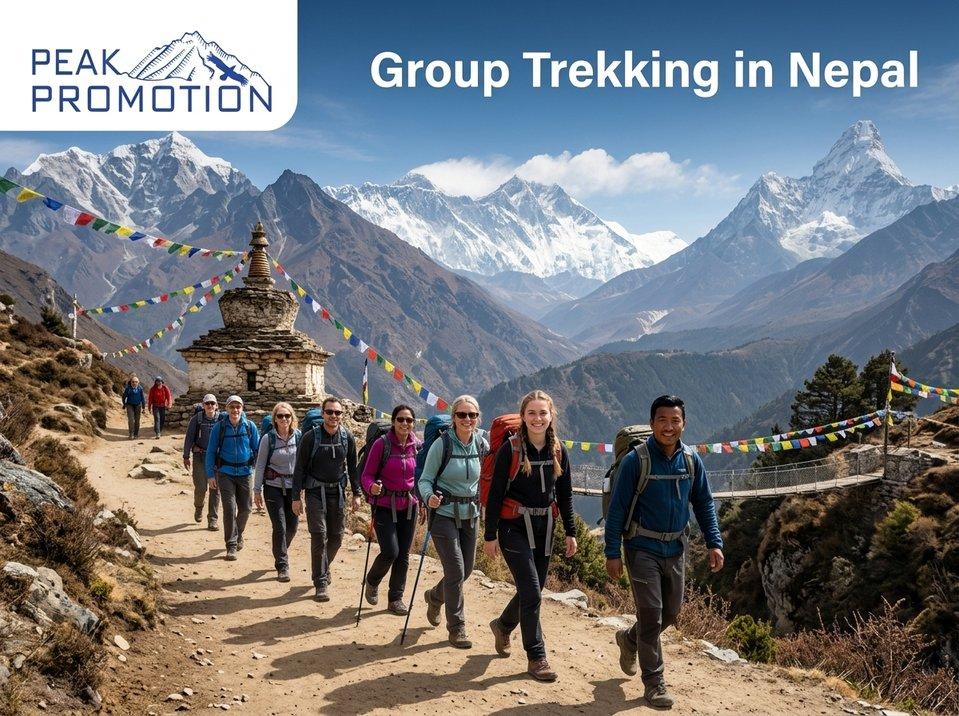
Nepal is home to some of the world's most spectacular trekking routes, from the legendary Everest Base Camp Trek to the Annapurna region, Langtang Valley and remote Himalayan trails. These journeys offer unforgettable mountain scenery, but they also involve challenges such as high altitude, unpredictable weather, difficult terrain and limited access to medical facilities.
When a trekker becomes seriously ill or suffers an injury in a remote mountain area, a helicopter evacuation may be one of the available ways to reach medical care. However, helicopter rescue in Nepal is not as simple as calling a helicopter and immediately flying to a hospital. Weather conditions, landing-site safety, medical urgency, aircraft availability, communication and insurance authorization can all affect the response.
Understanding how mountain rescue works before starting a trek helps travelers make informed decisions, communicate effectively during an emergency and avoid preventable delays or unexpected expenses.
In this guide, we explain when helicopter rescue may be necessary, how the evacuation process works, what trekking insurance should cover and how to prepare for emergencies in the Himalayas.
What Is Helicopter Rescue in Nepal?
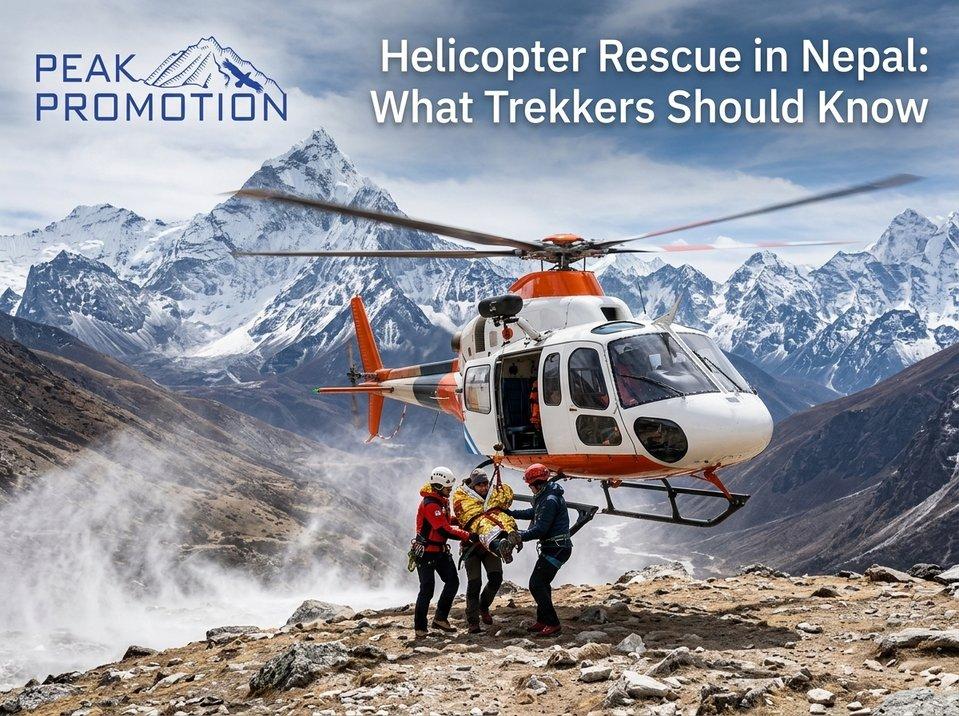
Helicopter rescue is the use of a helicopter to evacuate a person from a trekking route, mountain settlement, climbing area or other location where reaching medical care by road or on foot may be difficult or unsafe.
Depending on the circumstances, the operation may involve transporting an injured or seriously ill trekker to a suitable landing point, clinic or hospital. The helicopter operator and rescue coordinators determine what can be done safely based on the patient's condition, terrain, weather and aircraft capabilities.
Helicopter evacuation is particularly relevant in remote parts of Nepal where roads and advanced medical facilities may be unavailable nearby.
Common trekking destinations where travelers may need to understand emergency evacuation arrangements include:
- Everest region: Everest Base Camp, the Khumbu Valley and surrounding trekking routes.
- Annapurna region: Annapurna Base Camp, the Annapurna Circuit and other mountain trails.
- Langtang region: Langtang Valley and remote settlements beyond road access.
- Manaslu region: Remote sections of the Manaslu Circuit and surrounding high passes.
- Remote climbing areas: Locations where altitude, difficult terrain or expedition conditions complicate evacuation.
Helicopter rescue is one part of a broader emergency response system. Depending on the situation, assistance may also involve trekking guides, local staff, ground transportation, medical facilities and relevant rescue coordinators.
When Might a Trekker Need Helicopter Rescue?
Not every trekking problem requires an aircraft. Many minor issues can be managed with rest, first aid, assessment by a qualified medical professional and changes to the itinerary. However, some emergencies require urgent evacuation.
1. Severe Altitude Illness
Altitude illness is a major concern on high-altitude treks. Acute Mountain Sickness (AMS) can cause headache, nausea, dizziness, fatigue and loss of appetite. More serious conditions include High Altitude Cerebral Edema (HACE) and High Altitude Pulmonary Edema (HAPE).
Warning signs of a potentially life-threatening emergency include confusion, difficulty walking straight, breathlessness at rest, worsening breathing difficulties or a marked decline in consciousness.
These symptoms require urgent medical assessment. Suspected severe altitude illness calls for immediate action, often including descent to a lower altitude and emergency medical assistance. A helicopter may be needed if a safe and timely descent by foot is not possible.
Important: Do not wait for a helicopter if a safe descent is urgently needed and can be started under appropriate guidance. Rescue aircraft may be delayed by weather or operational restrictions.
2. Serious Injuries and Falls
Uneven trails, loose rocks, snow, ice and steep terrain can cause injuries. A fall may result in fractures, head injuries, spinal injuries or other trauma that makes walking dangerous.
A guide or trained responder should assess the situation, provide appropriate first aid and arrange evacuation when required. Avoid moving someone with a suspected spinal injury unless remaining in place presents a greater immediate danger or movement is necessary for emergency care.
3. Severe Illness
A trekker may develop an illness unrelated to altitude, including serious respiratory symptoms, dehydration with complications or another medical emergency.
The need for evacuation depends on the person's condition, available treatment and the distance to suitable medical care. A medical professional or emergency responder should help assess the urgency whenever possible.
4. Weather and Environmental Emergencies
Snowstorms, extreme cold, landslides, avalanches and other environmental hazards can make a trail unsafe or prevent a trekker from continuing.
A helicopter may be considered when evacuation is necessary and flying conditions allow it. However, poor visibility, strong winds, snowfall and other hazards can prevent aircraft operations precisely when conditions on the ground are most difficult.
5. Inability to Continue Safely
Sometimes a trekker becomes too unwell or physically impaired to continue safely, even without an immediately life-threatening injury.
This requires a careful assessment rather than an automatic helicopter booking. Depending on the circumstances, the appropriate response may be rest, medical advice, assisted descent, ground evacuation or helicopter evacuation.
The priority should always be the trekker's health and safety—not simply maintaining the original itinerary.
How Does Helicopter Rescue Work in Nepal?
The exact process varies by location, medical urgency, operator and insurance policy. In general, the following steps help explain what trekkers can expect.
Step 1: Report the Emergency
Contact your trekking guide, trekking agency or designated emergency contact as soon as possible. Share your location, the person's symptoms or injuries, the number of people affected and any immediate hazards.
If your group is using a trekking agency, its staff may help coordinate communications with local responders, medical providers and helicopter operators.
In areas with poor mobile coverage, a satellite communication device can be valuable. Do not assume that a mobile phone will work throughout a remote trekking route.
Step 2: Assess the Trekker's Condition
A qualified responder or medical professional should assess the person's condition to determine the urgency and appropriate next steps.
Share the following information where available:
- The trekker's current location and altitude.
- Symptoms, injuries and when they began.
- Changes in consciousness, breathing or ability to walk.
- Relevant medical history, allergies and medication.
- First aid already provided.
- Weather conditions and the accessibility of the trail.
This information helps the people coordinating the response understand the situation.
Step 3: Contact the Appropriate Rescue and Insurance Contacts
If the situation may require helicopter evacuation, the trekking agency or designated coordinator can contact the appropriate rescue provider and operator.
At the same time, contact the travel insurer's emergency assistance service whenever possible. Many policies require prior authorization or coordination through the insurer before evacuation costs will be covered.
Do not delay urgent lifesaving care solely to resolve paperwork. Follow emergency medical guidance while making the required calls as soon as circumstances allow.
Step 4: Check Weather, Aircraft Availability and Landing Safety
A helicopter cannot necessarily fly to every location at any time. Mountain weather, visibility, wind, altitude, terrain and aircraft performance all affect whether a flight can operate safely.
The operator must determine whether it can reach the area and whether a safe landing or other approved evacuation procedure is possible.
A flight may be delayed, rerouted or cancelled if conditions are unsuitable. The rescue team may need to consider an alternative plan.
Step 5: Prepare for Evacuation
If a helicopter evacuation is approved and can be carried out safely, follow the instructions given by the rescue team and aircraft crew.
Trekkers should:
- Keep the patient warm and provide appropriate first aid.
- Prepare medical and identification information.
- Gather essential documents and medication if doing so does not delay care.
- Keep other group members away from unsafe areas.
- Follow crew instructions about approaching, boarding and remaining clear of the aircraft.
Never approach a helicopter until instructed by the crew.
Step 6: Transfer to Medical Care
The evacuation destination depends on the patient's condition, the available medical facilities and the operational plan. A trekker may be taken to a local facility or a hospital in a larger city.
A helicopter evacuation does not necessarily mean the patient will be taken to their preferred hospital. Where circumstances permit, clarify the destination with the coordinator or medical team.
After arrival, keep medical records, invoices, evacuation documents and other evidence needed for insurance claims.
How Much Does Helicopter Rescue in Nepal Cost?
Helicopter rescue can be expensive, particularly when an operation involves remote locations, long flight times or difficult conditions. The total amount depends on the aircraft, flight duration, route, operational requirements and services included.
The CDC's Nepal travel guidance, updated in April 2025, describes helicopter evacuation costs of approximately US$4,000 per flight hour, with a typical total of around US$8,000–10,000 in the context discussed by the guidance. These are reference figures, not a guaranteed quote or a current price for every rescue. Actual costs can vary substantially.
Before departure, trekkers should understand:
- Whether the insurance policy covers emergency helicopter evacuation.
- The maximum amount payable for evacuation.
- Whether the policy covers the altitude and activity planned.
- Whether medical treatment and hospital admission are included.
- Whether an insurer must approve the evacuation beforehand.
- What happens if communication failure makes prior authorization impossible.
- Whether additional costs, such as ground transportation, are covered.
Do not assume that a helicopter flight is covered simply because the policy includes general travel insurance or adventure activities.
For the latest guidance, consult the CDC's Nepal travel information and the Nepal Tourism Board's travel insurance FAQ.
Does Travel Insurance Cover Helicopter Rescue in Nepal?
It may, but coverage depends on the policy's wording and the specific circumstances of the emergency.
Before buying insurance, ask the provider to confirm in writing that the policy covers your planned trek, maximum altitude and intended activities.
Essential Insurance Features to Check
| Insurance Feature | What Trekkers Should Confirm |
| Helicopter evacuation | Is emergency helicopter rescue explicitly covered? |
| Altitude limit | Does the policy cover the highest elevation on your itinerary? |
| Trekking and climbing activities | Are your planned activities included, including any technical climbing? |
| Medical expenses | Are consultations, hospital treatment and emergency care covered? |
| Pre-authorization | Must the insurer approve the rescue before the helicopter is dispatched? |
| Emergency assistance | Is there a 24-hour emergency number that works from Nepal? |
| Direct payment or reimbursement | Can the insurer arrange payment directly, or must you pay first? |
| Exclusions | Are solo trekking, unlicensed operators, pre-existing conditions or other circumstances excluded? |
| Trip interruption | Are additional accommodation or transport costs covered if the trek ends early? |
| Repatriation | Is transport back to your home country covered when medically necessary? |
Ask specific questions rather than relying on a policy's general description.
For example, if your trek includes Everest Base Camp or a high pass, confirm that your coverage includes the relevant elevation and route. If you are planning a mountaineering expedition, confirm that the policy covers the actual activity rather than ordinary trekking alone.
Keep your policy number, emergency contact details and a copy of your insurance documents accessible offline.
What Should You Do During a Trekking Emergency?
A calm, organized response can make communication easier and help the rescue team assess the situation.
Use this practical checklist.
Immediate Emergency Checklist
- Protect the group: Move away from immediate hazards only when it is safe to do so.
- Assess the patient: Check responsiveness and breathing, and look for serious injuries.
- Provide appropriate first aid: Follow your training and the advice of qualified responders.
- Communicate clearly: Share your location, symptoms, altitude and contact details.
- Contact your guide or agency: Ask them to coordinate local assistance and the rescue process.
- Notify your insurer: Follow its emergency procedures as soon as possible.
- Follow medical advice: Do not continue ascending with symptoms of altitude illness or serious injury.
- Prepare for changing conditions: A rescue may be delayed, so follow instructions for keeping the patient safe while waiting.
If someone is unconscious, struggling to breathe, confused, unable to walk normally at altitude or showing other severe symptoms, treat the situation as an emergency. Seek immediate medical assistance and follow qualified medical guidance.
Why Helicopter Rescue May Be Delayed?
One of the most important facts about mountain emergencies is that rescue cannot always happen immediately.
▸ Unpredictable Mountain Weather
Cloud, wind, snowfall, rain and poor visibility can make flying unsafe. Even if the weather appears acceptable at your location, conditions along the flight route or near the destination may be different.
▸ High-Altitude Operating Conditions
High elevation affects aircraft performance. Terrain, temperature, payload and other operational factors can limit where and how a helicopter can operate.
▸ Remote Locations and Communication Gaps
A rescue coordinator needs reliable information about the patient's location and condition. In remote valleys, communication can be intermittent or unavailable.
Carry your itinerary and emergency contacts, and consider an appropriate satellite messenger or satellite phone for routes where communication coverage is limited.
▸ Limited Aircraft Availability
Aircraft may already be assigned to other operations or unavailable because of maintenance, weather or operational restrictions.
▸ Patient Condition and Landing-Site Safety
A suitable landing area may not be available near the patient. The rescue team must decide how to evacuate safely, which may involve reaching an accessible location by another means first.
Key takeaway: Helicopter evacuation is an important emergency option, but it should never be treated as a guaranteed or instant service.
How to Reduce the Risk of a Trekking Emergency in Nepal?
Although no preparation can eliminate every risk, thoughtful planning can reduce the likelihood of preventable emergencies.
▸ Choose a Route That Matches Your Experience
Consider your fitness, previous hiking experience, altitude exposure, trip duration and comfort with remote conditions.
A shorter trek is not automatically risk-free, and a physically fit trekker can still develop altitude illness. Select an itinerary that allows adequate time for acclimatization and realistic daily walking distances.
Explore Peak Promotion Nepal's trekking routes to compare possible trips.
▸ Acclimatize Gradually
Do not rush to high elevations. Build rest and acclimatization into your itinerary, and avoid ascending further when symptoms suggest altitude illness.
Learn about warning signs and prevention before your trip. For medical guidance, see the CDC's high-altitude travel information.
▸ Trek With Appropriate Local Support
An experienced, properly qualified guide can help with route decisions, local conditions, communication and emergency coordination.
Choose a reputable trekking agency, share your itinerary and make sure the group understands what to do if someone becomes unwell or injured.
▸ Carry Essential Safety Equipment
Depending on the route, useful items include:
- A suitable first-aid kit and personal medication.
- A headlamp and spare batteries.
- Weather-appropriate layers and rain protection.
- Navigation tools and an offline route map.
- A charged mobile phone and power bank.
- Satellite communication equipment where appropriate.
- Water treatment supplies and essential food.
- Copies of identification, insurance details and emergency contacts.
Gear should match the route, season and expected conditions.
▸ Follow Weather and Local Advice
Check conditions before starting each day's walk. Ask your guide about trail hazards, weather changes and any local warnings.
Be willing to change the itinerary or turn back. Reaching a destination is never more important than protecting the health and safety of the group.
Helicopter Rescue and Responsible Trekking
Rescue services are vital in Nepal's mountains, but they are limited by weather, terrain, operational resources and the need to protect patients and rescuers.
Helicopter evacuation should be arranged on the basis of genuine medical or safety needs, with appropriate assessment and coordination. Avoid requesting evacuation for convenience or treating it as a substitute for reasonable planning.
Travelers should also keep clear records and communicate honestly with their guide, agency, insurer and medical team. If any part of a rescue or insurance process is unclear, request an explanation and retain relevant documents.
For official travel safety guidance, consult the Nepal Tourism Board's crisis and emergency information and its advice for trekkers.
How Peak Promotion Nepal Can Help You Prepare?
Good trekking preparation begins well before you reach the trail. Route planning, appropriate local support, realistic schedules and clear emergency arrangements all contribute to a safer and more organized Himalayan journey.
Peak Promotion Nepal has supported Himalayan trekking and expedition activities since 1992. When planning your trek, discuss the route, itinerary, guide arrangements, emergency communication and evacuation procedures with your trekking provider before departure.
For additional planning, explore these resources:
- Everest Base Camp Trek
- Mount Everest Expedition
- First-Time Trekking in Nepal: Which Trek Is Right for You?
- How Much Does Trekking in Nepal Cost?
Frequently Asked Questions (FAQ's):
Q. Is helicopter rescue available on trekking routes in Nepal?
Helicopter evacuation is available for many trekking areas, but access depends on the location, weather, aircraft availability, operational limitations and the urgency of the situation. It cannot be guaranteed at every time or place.
Q. How much does a helicopter rescue in Nepal cost?
Costs vary according to flight time, location, aircraft and operational circumstances. The CDC's Nepal travel guidance has cited approximately US$8,000–10,000 as a typical total in its referenced context, but this is not a guaranteed or universal price. Obtain current details from the appropriate provider and confirm your insurance coverage.
Q. Does travel insurance cover helicopter evacuation in Nepal?
Some policies cover emergency helicopter evacuation, but exclusions and limits vary. Confirm the covered altitude, trekking or climbing activity, maximum evacuation benefit, authorization procedure and medical coverage before traveling.
Q. Can a helicopter rescue operate in bad weather?
Not necessarily. Poor visibility, strong winds, snow and other mountain conditions can make flying unsafe. Rescue may be delayed until conditions improve, and an alternative plan may be needed.
Q. What should I do if I develop altitude sickness during a trek?
Stop ascending and seek medical advice. Symptoms such as confusion, difficulty walking straight or breathlessness at rest may indicate a serious emergency. Seek immediate assistance and follow medical guidance, including descent when indicated and safe. Do not wait for a helicopter if urgent descent can safely begin.
Q. Should I contact my insurance company before requesting helicopter rescue?
Contact your insurer's emergency assistance service as soon as possible because many policies require authorization or coordination. However, do not delay urgent lifesaving care solely to complete an insurance procedure. Follow emergency medical advice and notify the insurer as soon as circumstances allow.
Q. Can I arrange a helicopter rescue myself?
In an emergency, the priority is to get appropriate help. Contact your guide or trekking agency and the relevant emergency or medical contacts. They can help coordinate the response. If you must contact a provider directly, make sure the rescue is appropriately coordinated and follow your insurer's procedures when possible.
Q. What documents should I carry for a trekking emergency?
Carry accessible copies of your passport or identification, insurance policy, insurer emergency contact, policy number, itinerary, medical information, allergies and essential medication details. Keep offline copies in case mobile coverage is unavailable.
Q. Is helicopter rescue guaranteed if I buy trekking insurance?
No. Coverage depends on the policy terms, medical necessity, exclusions, authorization requirements and other conditions. Even when a rescue is covered, weather and operational limitations may prevent an immediate flight.
Q. How can I prepare for emergencies before trekking in Nepal?
Choose a suitable route, acclimatize gradually, use reputable local support, carry essential safety equipment, understand your insurance policy and share your itinerary with a trusted contact. Discuss emergency communication and evacuation procedures before departure.
Ready to Trek Nepal?
Explore Nepal's Himalayas with experienced local support, carefully planned routes and reliable trekking logistics.
Peak Promotion Pvt. Ltd.
Contact: +977 9841135705
Email: info@peakpromotionnepal.com
Location: Lazimpat, Kathmandu 44600, Nepal
Plan Your Trek with Peak Promotion Nepal.