What Is It Like to Trek Above 5,000 Metres in Nepal?
Trekking above 5,000 metres in Nepal is a very different experience from hiking at lower elevations.
The scenery becomes more dramatic, the air noticeably thinner, the landscape more rugged, and every step can require more effort. At this altitude, even simple activities such as walking uphill, putting on your backpack or climbing a short set of rocks can leave you breathing heavily.
Yet this is also where some of Nepal's most unforgettable trekking experiences begin.
From Everest Base Camp at approximately 5,364 metres to Kala Patthar at around 5,545 metres, Gokyo Ri at approximately 5,357 metres, and high Himalayan passes such as Cho La at around 5,420 metres, trekking above 5,000 metres brings you into a genuinely high-altitude environment. Peak Promotion's Everest Base Camp Trek currently reaches 5,364 metres, while its Gokyo Lakes route reaches Gokyo Ri at approximately 5,357 metres and crosses Cho La at approximately 5,420 metres.
So, what does it actually feel like?
The short answer is: slower, colder, harder and more physically demanding—but incredibly rewarding.
Understanding what happens at this elevation can help you prepare realistically and recognize when your body is adapting normally and when altitude-related symptoms require attention.
What Changes Above 5,000 Metres?
The biggest difference is not simply the number on an altitude meter.
As elevation increases, atmospheric pressure decreases and the amount of oxygen available with each breath is lower. The body therefore has to work harder to maintain adequate oxygen supply.
The CDC identifies Everest Base Camp, at approximately 5,400 metres, as a high-altitude environment where travelers are exposed to reduced oxygen pressure, cold, low humidity, increased ultraviolet radiation and other environmental stresses.
This affects almost everything about trekking:
- Your walking pace
- Breathing
- Heart rate
- Energy levels
- Sleep
- Appetite
- Hydration
- Recovery
- Temperature regulation
- Ability to perform physical tasks
This is why a trail that looks relatively short on a map can take much longer than expected.
The First Thing You Notice: Breathing
One of the most noticeable changes above 5,000 metres is your breathing.
You may find yourself breathing more frequently even while walking slowly.
A short uphill section that would normally feel easy at home can suddenly feel demanding.
You may need to:
- Walk more slowly.
- Take shorter steps.
- Pause more frequently.
- Control your breathing.
- Avoid rushing to keep up with faster trekkers.
This is normal to an extent.
At high altitude, your body is responding to reduced oxygen availability. Acclimatization involves physiological changes that help the body cope with hypoxia.
However, severe or worsening breathlessness is not something to simply push through.
Breathlessness at rest, confusion, loss of coordination, severe symptoms or a worsening condition can indicate a serious altitude-related problem and require immediate medical attention and descent.
Walking Above 5,000 Metres Feels Surprisingly Slow
One of the biggest mental adjustments is realizing that speed is no longer the objective.
At lower elevations, you might naturally walk at a comfortable pace and cover several kilometres without thinking about it.
Above 5,000 metres, the same approach can quickly exhaust you.
A better strategy is often:
Slow → steady → controlled → consistent.
Your guide may encourage you to take smaller steps and maintain a sustainable rhythm rather than pushing hard on uphill sections.
This is especially important when crossing a high pass or approaching a viewpoint such as Kala Patthar.
At high altitude, conserving energy can be more valuable than walking quickly.
What Does the Landscape Look Like?
Above 5,000 metres, Nepal's landscape becomes increasingly alpine and barren.
The dense forests and green valleys found at lower elevations gradually disappear.
You may encounter:
- Rock
- Gravel
- Scree
- Glacial debris
- Snow
- Ice
- Frozen streams
- Exposed ridges
- High mountain valleys
- Glaciers
- Massive surrounding peaks
The visual scale can be difficult to describe.
Mountains that looked enormous from the valley can appear even closer and more imposing.
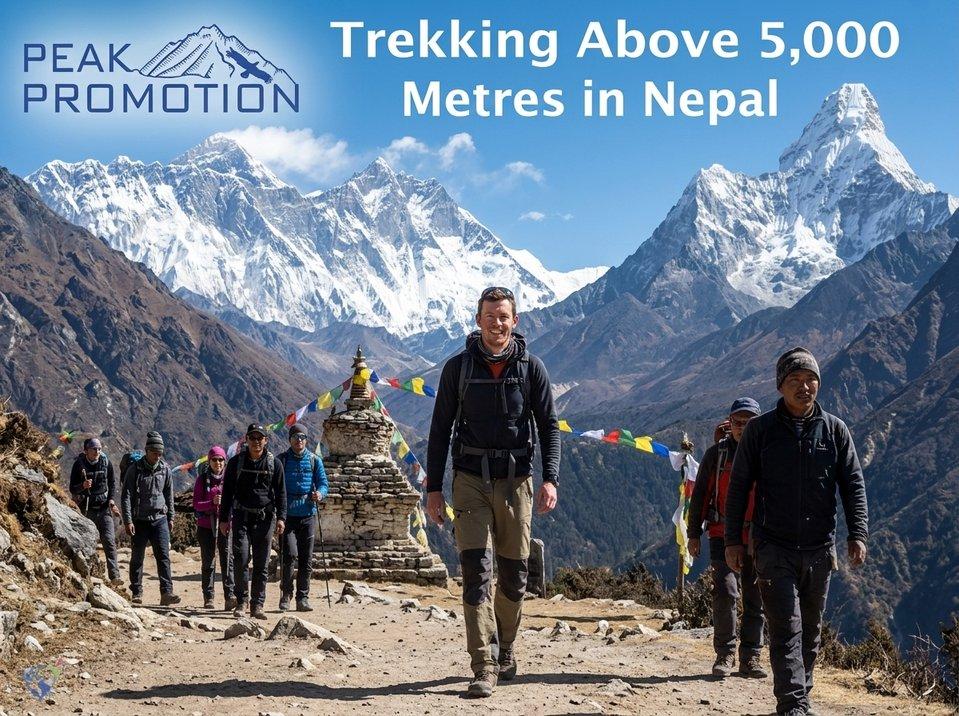
In the Everest region, trekkers may encounter spectacular views of Everest, Lhotse, Nuptse, Ama Dablam, Pumori, Cho Oyu and Makalu, depending on the route and viewpoint.
Peak Promotion's Everest Base Camp route, for example, passes through the Khumbu landscape and reaches Base Camp at approximately 5,364 metres.
The Cold Becomes a Serious Factor
Temperature is another major difference.
Even when the weather feels pleasant in Kathmandu or at lower trekking elevations, conditions above 5,000 metres can be extremely cold, particularly early in the morning, at night and when strong winds arrive.
You may experience:
- Freezing temperatures
- Strong winds
- Wind chill
- Frozen water
- Cold hands and feet
- Difficulty staying warm during rest stops
- Very cold mornings
- Rapid changes in weather
Layering becomes extremely important.
A good system normally includes:
Base layer → insulating layer → warm outer layer → wind/water protection
Your exact clothing system depends on season, route, personal tolerance and expedition support.
Sleeping Above 5,000 Metres Can Be Difficult
Walking is not necessarily the hardest part.
For many trekkers, sleeping at high altitude can be surprisingly uncomfortable.
You may experience:
- Difficulty falling asleep
- Frequent waking
- Headache
- Dry mouth
- Feeling unusually thirsty
- Restlessness
- Periodic breathing during sleep
High altitude can affect sleep because reduced oxygen availability places additional stress on the body.
The CDC notes that hypoxemia is greatest during sleep at high altitude, making sleeping elevation particularly important when planning acclimatization.
This is one reason responsible itineraries do not simply rush trekkers from low elevation directly to 5,000 metres.
Acclimatization Is the Key
If there is one concept every high-altitude trekker should understand, it is acclimatization.
Acclimatization means giving your body time to adjust to the reduced oxygen availability at increasing elevation.
It is not something you can completely accomplish through fitness training at sea level.
The CDC's 2026 Yellow Book recommends gradual ascent and notes that, once above approximately 3,000 metres, sleeping elevation should generally increase by no more than about 500 metres per day, with additional acclimatization time built into the itinerary. Individual itineraries and responses vary, so experienced local guides and medical advice are important.
The Nepal Tourism Board also emphasizes taking time to acclimatize in the Everest region because altitude gains can become rapid.
Why Acclimatization Days Matter?
An acclimatization day does not necessarily mean staying inside a lodge all day.
A common approach is:
Climb higher during the day → return lower to sleep.
This gives your body exposure to higher elevation while allowing recovery at a lower sleeping altitude.
The goal is not to become completely comfortable with 5,000 metres.
The goal is to give your body a better chance to adapt before going higher.
What Does Altitude Sickness Feel Like?
Altitude illness is one of the most important risks associated with high-altitude trekking.
Acute Mountain Sickness
Common symptoms of acute mountain sickness (AMS) can include:
- Headache
- Tiredness
- Loss of appetite
- Nausea
- Vomiting
- Dizziness
- Difficulty sleeping
The CDC emphasizes that physical fitness does not prevent altitude illness. The rate of ascent and individual response to altitude are important factors.
A mild headache or fatigue does not automatically mean an emergency, but symptoms should never be ignored.
Serious Altitude Illness
More severe conditions include:
High-altitude cerebral edema (HACE) and high-altitude pulmonary edema (HAPE).
Warning signs can include:
- Confusion
- Severe drowsiness
- Loss of coordination
- Severe weakness
- Breathlessness at rest
- Persistent or worsening cough
- Significant difficulty breathing
These conditions can become life-threatening.
If serious altitude illness is suspected, immediate descent and medical assistance are essential.
Do not continue climbing simply because you have a fixed itinerary or a summit goal.
Eating Above 5,000 Metres
Your appetite may change at altitude.
Some trekkers become less interested in food even though their bodies are using considerable energy.
This makes nutrition important.
Mountain meals can include:
- Dal bhat
- Rice
- Pasta
- Noodles
- Potatoes
- Eggs
- Soups
- Porridge
- Bread
- Vegetables
- Snacks
- Chocolate
- Dried fruit
You may not always feel hungry, but regular meals and snacks can help provide energy for long trekking days.
Carbohydrate-rich foods are often useful because they provide readily available energy during endurance activity.
Hydration Becomes More Important
Cold temperatures can make it easy to forget about drinking.
You may not feel as thirsty as you would during a hot-weather hike, but high-altitude trekking still requires attention to hydration.
Drink regularly according to your body's needs and your guide's advice.
Carry enough water capacity for the day's route and use appropriate treatment or filtration methods where necessary.
Warm drinks can also be particularly welcome at high altitude.
Avoid relying on excessive caffeine or alcohol as a substitute for proper hydration and rest.
The CDC also recommends avoiding alcohol during the initial period of high-altitude exposure because it can interfere with acclimatization and sleep.
What Happens to Your Energy?
One of the strangest experiences above 5,000 metres is how quickly your energy can disappear.
You might feel strong at breakfast and exhausted several hours later.
A short break may suddenly become extremely valuable.
Your body is working under hypoxic conditions while simultaneously dealing with:
- Cold
- Walking
- Elevation gain
- Heavy clothing
- Backpack weight
- Reduced sleep
- Lower appetite
- Dry air
This is why experienced high-altitude trekkers avoid unnecessarily aggressive schedules.
The goal is sustainable movement, not maximum performance.
The Mental Experience
Trekking above 5,000 metres is physically demanding, but there is also a strong psychological component.
You may experience moments of:
- Excitement
- Nervousness
- Frustration
- Fatigue
- Isolation
- Determination
- Wonder
- Achievement
A trail can appear deceptively close to its destination.
You may see a mountain pass or ridge ahead and think it is only a short distance away, only to discover that the final section takes much longer than expected.
Mental preparation therefore matters.
You need to become comfortable with:
Slow progress.
Every step counts.
The Beauty Is Difficult to Describe
Despite the physical challenges, this is one of the main reasons people trek at extreme elevations.
Above 5,000 metres, the landscape feels almost otherworldly.
There may be fewer trees and fewer signs of ordinary life.
Instead, you see:
- Massive glaciers
- Snow-covered peaks
- Blue skies
- Rugged rock formations
- Deep valleys
- High passes
- Prayer flags moving in the wind
- Remote mountain settlements
- Vast Himalayan panoramas
At Kala Patthar, for example, trekkers can reach approximately 5,545 metres and experience dramatic views of Everest and surrounding peaks.
The physical difficulty can make the visual experience even more memorable.
Popular Nepal Treks That Go Above 5,000 Metres
Not every Nepal trek reaches 5,000 metres.
Several famous routes do, however.
| Trek / Route | High Point | What Makes It Special |
| Everest Base Camp Trek | ~5,364 m | Everest Base Camp and Khumbu scenery |
| Kala Patthar | ~5,545 m | Exceptional Everest viewpoint |
| Gokyo Lakes Trek | ~5,357 m at Gokyo Ri | Lakes, glaciers and panoramic peaks |
| Everest Base Camp via Gokyo | ~5,420 m at Cho La | Combines Gokyo, Cho La and EBC |
| Three Passes Trek | 5,000 m+ passes | High Himalayan passes and remote valleys |
| Other high-pass routes | Varies | Technical or physically demanding high-altitude terrain |
Peak Promotion's Gokyo route reaches Gokyo Ri at approximately 5,357 metres and crosses Cho La at approximately 5,420 metres, while its Everest Base Camp Trek reaches approximately 5,364 metres.
Is Trekking Above 5,000 Metres Dangerous?
It can be.
But risk does not mean that every trekker will experience a serious problem.
The main risks include:
- Altitude illness
- Rapid weather changes
- Extreme cold
- Dehydration
- Exhaustion
- Falls
- Snow and ice
- Remote terrain
- Limited medical access
- Delayed evacuation
Risk management begins before the trek.
A carefully designed itinerary, experienced guide, appropriate acclimatization, weather awareness, suitable equipment and willingness to turn around are all important.
Does Being Fit Make High-Altitude Trekking Easier?
Fitness helps with the physical workload.
However, being fit does not guarantee that you will acclimatize well.
A highly trained athlete can still experience altitude illness.
Conversely, someone with moderate fitness may successfully complete a high-altitude trek with appropriate preparation and acclimatization.
The key is to combine:
Fitness + acclimatization + pacing + preparation + experience + responsible decision-making.
The CDC specifically warns that physical fitness does not protect travelers from altitude illness.
How Should You Prepare for Trekking Above 5,000 Metres?
Preparation should begin several weeks before the trek.
▸ Build Endurance
Focus on:
- Long-distance walking
- Hiking
- Stair climbing
- Incline treadmill
- Cycling
- Running if appropriate
▸ Strengthen Your Legs
Useful exercises include:
- Squats
- Lunges
- Step-ups
- Calf raises
- Split squats
▸ Train With a Backpack
Gradually introduce the type of pack you expect to carry.
This helps your body become accustomed to prolonged movement with additional weight.
▸ Practice Long Hiking Days
Your preparation should include consecutive days of physical activity.
High-altitude trekking is not just one difficult hike.
It is often several demanding days in succession.
▸ Prepare Mentally
Understand that:
- You will walk slowly.
- The weather may change.
- You may feel tired.
- You may not sleep perfectly.
- The trail may take longer than expected.
- Plans can change.
That is part of high-altitude trekking.
What Should You Pack?
Your exact equipment depends on route and season, but essential categories include:
▸ Clothing:
- Moisture-wicking base layers
- Fleece or insulating layers
- Down jacket
- Waterproof/windproof shell
- Trekking trousers
- Warm hat
- Gloves
- Thermal socks
- Sunglasses
- UV protection
▸ Trekking Equipment:
- Comfortable trekking boots
- Backpack
- Trekking poles
- Sleeping bag appropriate for the season
- Headlamp
- Water bottles
- Water purification method
- Personal first-aid kit
- Sunscreen
- Lip balm
- Personal medication
- Power bank
For routes involving glaciers, technical passes or mountaineering sections, additional equipment may be required.
Why Sun Protection Matters at High Altitude?
The cold can make the sun feel less intense than it actually is.
At altitude, UV exposure becomes an important consideration.
Use:
- High-SPF sunscreen
- Sunglasses
- Lip protection
- A hat
- Appropriate face covering when necessary
Snow and ice can also reflect sunlight, increasing exposure.
What Is a Typical Day Like Above 5,000 Metres?
A high-altitude trekking day can feel very different from a normal hiking day.
A typical routine might look like:
Early morning
Wake up in a cold room or tent, prepare your equipment and have breakfast.
Morning
Begin walking while conditions are often relatively stable.
Midday
Continue at a controlled pace, taking short breaks and drinking regularly.
Afternoon
Reach the day's destination, cross a pass or complete a high viewpoint excursion.
Evening
Eat, hydrate, rest and prepare for the next day.
At the highest elevations, the day may start very early because weather and daylight can influence the route.
What Makes Trekking Above 5,000 Metres Different From Normal Trekking?
The biggest difference is that your body becomes part of the challenge.
At lower elevations, you may mainly think about:
“How far do I have to walk?”
Above 5,000 metres, you start thinking:
“How does my body feel?”
That changes the entire trekking experience.
You pay closer attention to:
- Breathing
- Headaches
- Energy
- Hydration
- Appetite
- Sleep
- Weather
- Walking pace
- Recovery
The mountain teaches you to slow down and listen to your body.
Should You Turn Back?
Yes—if conditions require it.
One of the most important principles of high-altitude trekking is that the mountain will still be there.
You should consider stopping or descending if:
- Symptoms are worsening.
- You develop serious altitude symptoms.
- Weather becomes unsafe.
- You are excessively exhausted.
- The route becomes dangerous.
- Your guide recommends descent.
- You no longer feel capable of continuing safely.
Turning around is not failure.
In the Himalayas, good judgment is part of successful trekking.
Trekking Above 5,000 Metres With a Professional Guide
High-altitude trekking involves decisions that can be difficult for first-time visitors to Nepal.
A professional local guide can help with:
- Daily pacing
- Route navigation
- Acclimatization schedules
- Weather awareness
- Accommodation
- Local logistics
- Recognizing altitude symptoms
- Emergency communication
- Route changes
- Cultural and environmental considerations
The Nepal Tourism Board recommends taking sufficient time to acclimatize in the Everest region, while current trekking regulations also require licensed-guide and agency-issued TIMS arrangements on specified routes.
For high-altitude routes, local experience can therefore be an important part of responsible planning.
Is Trekking Above 5,000 Metres Worth It?
For many trekkers, absolutely.
The physical challenge is significant, but the experience is unlike ordinary trekking.
You may stand beneath some of the world's highest mountains, cross high Himalayan terrain, experience Sherpa culture, walk beside glaciers and reach elevations that few people ever experience.
The achievement is not only reaching a number on an altitude meter.
It is learning how to move through a demanding environment responsibly.
Final Thoughts
Trekking above 5,000 metres in Nepal is slow, demanding, cold, exhilarating and unforgettable.
At this elevation, the air is thinner, the terrain becomes more rugged and your body has to work harder for every step. Sleep may be less comfortable, appetite may change and even simple uphill sections can feel surprisingly difficult.
But with gradual acclimatization, proper preparation, suitable equipment, experienced support and careful attention to your health, high-altitude trekking can become one of the most rewarding experiences in Nepal.
Whether you are standing at Everest Base Camp, climbing Kala Patthar, crossing Cho La or reaching Gokyo Ri, the experience is about more than altitude.
It is about discovering what you can accomplish while respecting the limits of your body and the power of the Himalayas.
Ready to Trek Nepal?
Explore Nepal's high Himalayas with experienced local support, carefully planned routes and reliable trekking logistics.
Peak Promotion Pvt. Ltd.
Contact: +977 9841135705
Email: info@peakpromotionnepal.com
Location: Lazimpat, Kathmandu 44600, Nepal
Plan Your Trek with Peak Promotion Nepal.