Langtang Valley Trek: Complete Guide
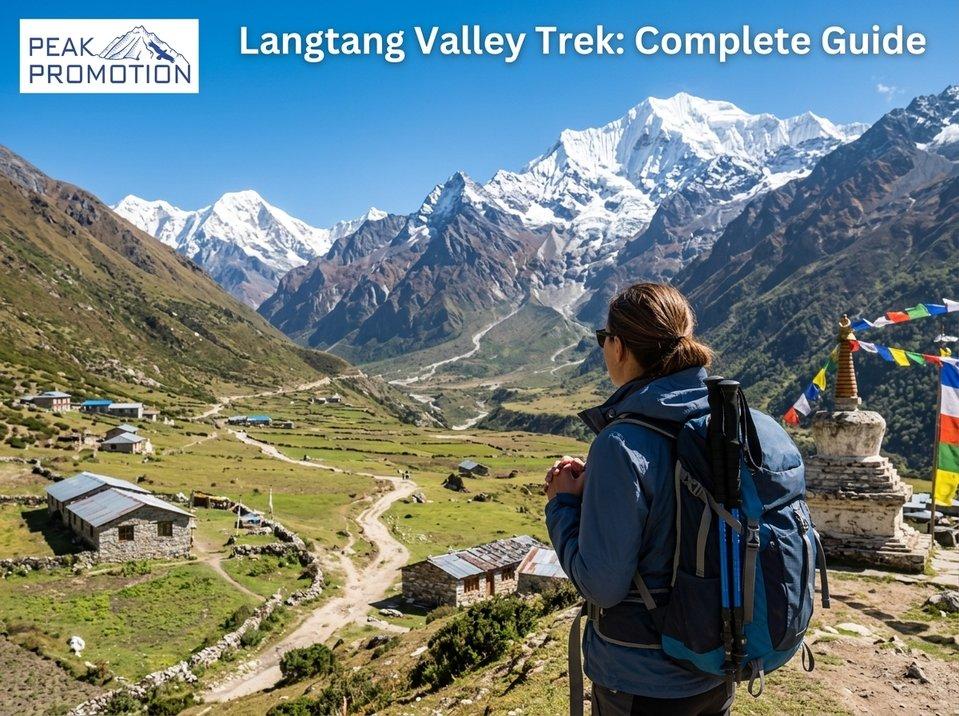
The Langtang Valley Trek is one of Nepal's most rewarding Himalayan trekking experiences, combining mountain scenery, Tamang culture, forests, glaciers, alpine landscapes and traditional mountain villages in a relatively accessible route from Kathmandu.
Located north of Kathmandu and protected by Langtang National Park, the trek takes travelers from lower hill landscapes through rhododendron and bamboo forests toward the high alpine environment around Kyanjin Gompa. Along the way, trekkers encounter traditional settlements, Buddhist monasteries, waterfalls, mountain rivers and spectacular views of Langtang Lirung and surrounding peaks.
The route is particularly attractive for travelers who want a genuine Himalayan trekking experience without committing to the longer travel time required by some Everest or Annapurna routes.
Peak Promotion Nepal currently operates a 10-day Langtang Valley Trek, classified as Easy–Moderate, with Kyanjin Ri reaching approximately 4,773 meters. The company lists March–May and September–November as its preferred trekking seasons.
Whether you are planning your first Himalayan trek or looking for a culturally rich alternative to Everest Base Camp, this complete guide explains what you need to know about the Langtang Valley Trek.
Why Trek the Langtang Valley?
Langtang offers a distinctive combination of Himalayan scenery and cultural experiences.
Unlike some of Nepal's more famous trekking routes, the Langtang Valley is relatively close to Kathmandu. Nepal Tourism Board identifies Dhunche as approximately 117 km from Kathmandu and describes Langtang National Park as a destination for trekking, mountaineering and experiencing Tamang culture.
The trek is particularly appealing because you can experience:
- Dramatic Himalayan mountain views
- Langtang National Park
- Traditional Tamang villages
- Buddhist monasteries and prayer flags
- Rhododendron and bamboo forests
- Waterfalls and mountain streams
- Glaciers and alpine landscapes
- Kyanjin Gompa
- Kyanjin Ri viewpoint
- Yak pastures and mountain settlements
- Himalayan wildlife
- Authentic teahouse trekking
Peak Promotion highlights Langtang Lirung, Dorje Lakpa, Yala Peak and other surrounding Himalayan peaks from viewpoints around the upper valley.
Langtang Valley Trek at a Glance
| Trek Feature | Details |
| Region | Langtang |
| Country | Nepal |
| Typical Duration | Around 10 days |
| Difficulty | Easy–Moderate |
| Highest Trekking Viewpoint | Kyanjin Ri, approximately 4,773m |
| Main Destination | Kyanjin Gompa |
| Starting Area | Syabrubesi |
| Accommodation | Teahouses and lodges |
| Best Seasons | March–May and September–November |
| National Park | Langtang National Park |
| Main Culture | Tamang and Tibetan-influenced Himalayan culture |
| Major Mountain | Langtang Lirung |
| Guide/TIMS | Required under current NTB provisions |
| Trekking Style | Teahouse trekking |
Peak Promotion's current package lists a 10-day duration, Easy–Moderate difficulty and Kyanjin Ri at 4,773m.
Langtang Valley Trek Route
The classic Langtang Valley route generally begins with a road journey from Kathmandu toward Syabrubesi, followed by several days of walking through the Langtang Valley.
A typical route follows:
Kathmandu → Syabrubesi → Lama Hotel → Langtang Village → Kyanjin Gompa → Kyanjin Ri → Lama Hotel → Syabrubesi → Kathmandu
The exact itinerary can vary according to road conditions, acclimatization requirements, trekking pace and the trekking company's planned schedule.
Typical Route Structure:
| Day | Route | Approx. Focus |
| Day 1 | Kathmandu → Syabrubesi | Road journey |
| Day 2 | Syabrubesi → Lama Hotel | Forest trekking |
| Day 3 | Lama Hotel → Langtang Village | Valley and mountain scenery |
| Day 4 | Langtang Village → Kyanjin Gompa | High-altitude valley |
| Day 5 | Kyanjin Gompa → Kyanjin Ri → Kyanjin | Viewpoint and acclimatization |
| Day 6 | Kyanjin Gompa → Lama Hotel | Descending |
| Day 7 | Lama Hotel → Syabrubesi | Return trek |
| Day 8 | Syabrubesi → Kathmandu | Road journey |
| Days 9–10 | Flexible/contingency | Depends on itinerary |
A commercial itinerary may add acclimatization, sightseeing or contingency days, so travelers should always check the exact itinerary before booking.
What Makes the Langtang Valley Trek Special?
1. It Is Close to Kathmandu
One of Langtang's biggest advantages is accessibility.
Compared with some remote Himalayan trekking destinations, the Langtang region can be reached by road from Kathmandu. Nepal Tourism Board lists Dhunche as approximately 117 km from Kathmandu, although the actual journey time depends heavily on road conditions and traffic.
This makes Langtang attractive to travelers with limited time.
2. Tamang Culture and Mountain Villages
The Langtang Valley is home to Tamang communities with strong Himalayan Buddhist cultural traditions.
Villages along the route provide opportunities to experience:
- Traditional homes
- Buddhist prayer flags
- Mani walls
- Chortens
- Monasteries
- Local food
- Mountain hospitality
- Traditional crafts and lifestyles
The experience is not simply about reaching a mountain viewpoint. The communities and culture are an important part of the journey.
3. Langtang National Park
The trek passes through Langtang National Park, an important protected Himalayan ecosystem.
The park includes forests, alpine vegetation and diverse wildlife. Nepal Tourism Board lists species including red panda, Himalayan tahr, musk deer, Himalayan black bear, serow, ghoral, langur and other wildlife.
Wildlife sightings are never guaranteed, but the possibility of encountering Himalayan flora and fauna adds another dimension to the trek.
4. Kyanjin Gompa
Kyanjin Gompa is one of the defining destinations of the Langtang Valley Trek.
Located in the upper valley, the settlement provides an ideal base for exploring the surrounding mountains and viewpoints.
Trekkers can spend additional time here for acclimatization and explore the surrounding alpine landscape.
5. Kyanjin Ri
For many trekkers, the climb to Kyanjin Ri is the highlight of the journey.
The viewpoint provides impressive panoramic views across the Langtang mountains and surrounding valleys.
Peak Promotion lists Kyanjin Ri at approximately 4,773m and identifies it as a major viewpoint on the trek.
Because this is a high-altitude viewpoint, the climb should be approached as a serious acclimatization and endurance activity rather than simply a short sightseeing walk.
Langtang Valley Trek Difficulty
The Langtang Valley Trek is generally considered Easy–Moderate to Moderate, depending on the itinerary, altitude, weather and individual fitness.
Peak Promotion currently categorizes its Langtang Valley Trek as Easy–Moderate.
However, "easy" should not be interpreted as effortless.
The trek involves:
- Multiple hours of walking each day
- Continuous uphill and downhill sections
- Uneven mountain trails
- Stone steps
- Forest paths
- High-altitude trekking
- Cold temperatures at higher elevations
- Potential snow during winter
- Reduced oxygen availability at altitude
The upper valley is considerably more demanding than the lower sections.
Who Can Do the Langtang Trek?
The trek can be suitable for:
- First-time Himalayan trekkers with reasonable fitness
- Experienced hikers
- Couples
- Small groups
- Adventure travelers
- Travelers with limited time
- Photographers
- Trekkers looking for cultural experiences
People with limited hiking experience should prepare beforehand rather than relying on the "Easy–Moderate" classification alone.
Langtang Valley Trek Altitude
Altitude is one of the most important considerations on the Langtang Trek.
The trail gradually rises from the lower valley toward Kyanjin Gompa and the surrounding high viewpoints.
| Location | Approx. Elevation |
| Syabrubesi | ~1,500m |
| Lama Hotel | ~2,470m |
| Langtang Village | ~3,430m |
| Kyanjin Gompa | ~3,870m |
| Kyanjin Ri | ~4,773m |
The exact elevation figures can vary slightly between maps, route descriptions and GPS readings.
The key point is that the trek takes you from relatively low elevation to nearly 4,800m if you climb Kyanjin Ri.
Altitude Sickness on the Langtang Trek
Altitude sickness can affect anyone, regardless of age or fitness.
Common symptoms can include:
- Headache
- Dizziness
- Fatigue
- Nausea
- Loss of appetite
- Difficulty sleeping
Do not ignore worsening symptoms.
Severe altitude illness can become life-threatening. If serious symptoms develop, the appropriate response may involve stopping ascent, seeking professional medical assistance and descending to a lower elevation.
Good acclimatization, gradual ascent, adequate rest and listening to your guide are important parts of responsible high-altitude trekking.
Best Time for Langtang Valley Trek
The best seasons for the Langtang Valley Trek are generally spring and autumn.
Nepal Tourism Board identifies March–May and October–November as favorable periods for the Langtang region, while Peak Promotion lists March–May and September–November for its Langtang itinerary.
▸ Spring: March to May
Spring is popular because of:
- Mild trekking temperatures
- Rhododendron flowers
- Improving mountain visibility
- Longer daylight
- Generally favorable trekking conditions
April and May can become warmer at lower elevations.
▸ Autumn: September to November
Autumn is another excellent period.
Advantages include:
- Generally clearer mountain views
- Comfortable trekking temperatures
- Stable trekking conditions
- Excellent photography opportunities
- Crisp Himalayan scenery
October and November are particularly popular.
▸ Winter: December to February
Winter trekking is possible but conditions become more demanding.
Nepal Tourism Board notes that higher areas can experience snow during winter.
Trekkers should expect:
- Cold nights
- Snow at higher elevations
- Possible trail disruptions
- Shorter daylight
- More challenging high-altitude conditions
▸ Monsoon: June to September
Monsoon brings:
- Heavy rainfall
- Cloud
- Muddy trails
- Possible landslides
- Reduced mountain visibility
- Road-access challenges
The lower parts of the route can become particularly wet.
Langtang Trek Permits and TIMS
Permit requirements should be checked before departure because Nepal's trekking regulations can change.
The Langtang Valley Trek enters Langtang National Park, so trekkers need the applicable national park entry permit.
Current Nepal Tourism Board information lists the Langtang National Park entry fee as:
- Nepali: NPR 100 per person per entry
- SAARC nationals: NPR 1,500
- Other foreign nationals: NPR 3,000
The NTB fee table notes that children below 10 years are free.
TIMS Card
Current Nepal Tourism Board provisions specifically include Langtang Trek among routes where trekkers must be accompanied by a licensed trekking guide and carry an agency-issued TIMS card. The current TIMS charges listed by NTB are NPR 1,000 for SAARC nationals and NPR 2,000 for other foreign nationals.
Therefore, international trekkers should plan the Langtang Trek through a registered trekking agency that can arrange the applicable guide and TIMS requirements.
Accommodation on the Langtang Trek
The Langtang Valley is primarily a teahouse trek.
Typical accommodation includes:
- Basic private rooms
- Twin-sharing rooms
- Shared bathrooms in many lodges
- Dining rooms
- Common areas
- Simple mountain meals
Accommodation becomes more basic as you move higher into the valley.
During peak trekking seasons, popular lodges can become busy, so advance planning is useful.
Food on the Langtang Valley Trek
Teahouses generally provide a selection of local and familiar trekking meals.
Common options include:
- Dal bhat
- Rice and vegetables
- Noodles
- Pasta
- Momo
- Soups
- Eggs
- Tibetan-style bread
- Porridge
- Pancakes
- Potatoes
- Tea
- Coffee
- Hot drinks
Dal bhat remains one of the most practical meals for trekkers because it combines carbohydrates, vegetables and a source of protein.
At higher elevations, food options can become more limited and more expensive because supplies have to be transported into remote mountain settlements.
Langtang Valley Trek Cost
The total cost of a Langtang trek depends on several factors.
Major Cost Components:
| Cost Category | What It Includes |
| Transportation | Kathmandu–Syabrubesi and return |
| Guide | Licensed trekking guide |
| TIMS | Applicable current fee |
| National Park | Langtang National Park entry |
| Accommodation | Teahouse/lodge stays |
| Meals | Breakfast, lunch and dinner |
| Porter | Optional or package-dependent |
| Insurance | Travel and trekking insurance |
| Equipment | Personal trekking gear |
| Tips | Guide and porter gratuities |
| Emergency Fund | Recommended contingency budget |
There is no single fixed "Langtang Trek cost" because travel style and package inclusions differ.
A budget trekker, private guided trek and fully supported package can have significantly different prices.
When comparing trekking packages, look beyond the headline price and check what is actually included.
Langtang Valley Trek Packing List
A good packing strategy should prioritize warmth, comfort, safety and weight.
▸ Clothing:
- Moisture-wicking base layers
- Trekking shirts
- Fleece layer
- Down or insulated jacket
- Waterproof jacket
- Trekking trousers
- Warm thermal layer
- Warm hat
- Gloves
- Hiking socks
- Spare underwear
▸ Footwear:
- Broken-in trekking boots
- Camp shoes or sandals
- Warm trekking socks
Do not begin a multi-day Himalayan trek with brand-new boots.
▸ Backpack and Accessories:
- Daypack
- Duffel bag if using porter support
- Rain cover
- Water bottles
- Headlamp
- Sunglasses
- Sunscreen
- Lip balm
- Trekking poles
- Sleeping bag suitable for the season
- Personal first-aid supplies
▸ Documents:
Carry:
- Passport
- Nepal visa
- Travel insurance details
- Trekking permits
- Emergency contact information
- Copies of important documents
Keep important documents protected from rain and moisture.
Physical Preparation for Langtang Trek
You do not need to be an elite athlete to complete the Langtang Trek, but preparation can significantly improve the experience.
Begin training several weeks before departure.
Focus on:
Walking endurance:
Regular long walks help your body adapt to several hours of movement.
Stairs and uphill walking:
Incline training prepares your legs for Himalayan ascents.
Strength:
Focus on legs, glutes and core.
Downhill training:
Descending can place considerable stress on knees and thighs.
Cardiovascular fitness:
Walking, cycling, running or similar activities can improve endurance.
Backpack training:
Occasionally train while carrying the approximate weight you expect to carry on the trek.
Langtang Trek Safety Tips
Mountain trekking requires preparation even on established routes.
1. Respect Altitude
Do not rush to higher elevations simply because you feel strong at lower elevations.
2. Follow Your Guide
A knowledgeable local guide can help with route conditions, weather, accommodation and altitude-related decisions.
3. Check Weather Conditions
Mountain weather can change quickly.
4. Stay Hydrated
Drink regularly and monitor your body's condition rather than following an arbitrary fixed water target.
5. Protect Yourself From the Sun
UV exposure becomes stronger at higher elevations.
Use:
- Sunglasses
- Sunscreen
- Hat
- Protective clothing
6. Carry Travel Insurance
Your policy should be appropriate for trekking at the maximum elevation of your itinerary and should address emergency evacuation where applicable.
7. Keep Emergency Contacts
Your guide, trekking agency and insurance emergency contacts should be easily accessible.
Langtang Valley Trek vs Everest Base Camp
Both are excellent Himalayan trekking experiences, but they suit different travelers.
| Feature | Langtang Valley Trek | Everest Base Camp Trek |
| Accessibility | Relatively close to Kathmandu | Requires travel deeper into Khumbu |
| Duration | Generally shorter | Generally longer |
| Maximum Trekking Elevation | Around 4,773m at Kyanjin Ri | Around 5,364m at EBC; higher viewpoints available |
| Culture | Strong Tamang/Buddhist influence | Sherpa culture |
| Scenery | Forests, valley, glaciers, peaks | Everest and Khumbu high mountains |
| Difficulty | Easy–Moderate to Moderate | Moderate |
| Crowds | Generally less crowded | More heavily visited |
| Ideal For | Shorter Himalayan adventure | Classic Everest experience |
The choice depends on your available time, fitness, altitude experience and preferred trekking environment.
Is Langtang Valley Trek Good for Beginners?
Yes, it can be a good choice for beginners who prepare properly.
The route offers a combination of:
- Established teahouse infrastructure
- A relatively accessible starting point
- Moderate trekking distances
- Gradual exposure to altitude
- Strong cultural experiences
- Professional guide support
However, reaching nearly 4,800m at Kyanjin Ri means beginners should not underestimate the altitude.
A first-time trekker should train beforehand and follow a sensible acclimatization strategy.
Can You Trek Langtang Without a Guide?
Current Nepal Tourism Board provisions list Langtang Trek among routes requiring a licensed trekking guide and agency-issued TIMS card.
Therefore, international trekkers should not assume that older online information about independent trekking still reflects current regulations.
A registered trekking agency can assist with:
- Licensed guide
- TIMS
- National park entry requirements
- Transportation
- Accommodation
- Route planning
- Emergency coordination
- Porter arrangements
- Trekking logistics
Responsible Trekking in Langtang
Langtang is a protected Himalayan environment and a culturally important region.
Trekkers can help protect the destination by:
- Carrying reusable water bottles
- Reducing plastic waste
- Using established trails
- Respecting wildlife
- Avoiding unnecessary noise
- Respecting monasteries and religious sites
- Asking before photographing local people
- Supporting local teahouses and businesses
- Taking non-biodegradable waste back where appropriate
- Avoiding damage to vegetation
- Following national park regulations
Responsible trekking helps preserve the Langtang region for future generations.
What Wildlife Can You See?
Langtang National Park is known for its biodiversity.
Possible wildlife includes:
- Red panda
- Himalayan tahr
- Himalayan black bear
- Musk deer
- Ghoral
- Serow
- Pika
- Langur
- Rhesus macaque
The park also supports hundreds of bird species. Nepal Tourism Board specifically highlights red panda and several other Himalayan species among the region's wildlife.
Wildlife encounters are unpredictable, so trekkers should never approach, feed or disturb animals.
Best Highlights of the Langtang Valley Trek
If you want to summarize the trek into a few unforgettable experiences, focus on:
- Walking through Langtang National Park
- Experiencing Tamang culture
- Exploring Langtang Village
- Reaching Kyanjin Gompa
- Hiking toward Kyanjin Ri
- Viewing Langtang Lirung and surrounding peaks
- Walking through alpine landscapes
- Experiencing traditional teahouse hospitality
- Seeing glaciers, waterfalls and mountain rivers
- Enjoying a Himalayan adventure relatively close to Kathmandu
Common Mistakes to Avoid on the Langtang Trek
▸ Starting Without Preparation
Even an Easy–Moderate trek requires endurance.
▸ Walking Too Fast
The goal is not to finish each section as quickly as possible.
▸ Ignoring Altitude Symptoms
Do not continue ascending if you are experiencing concerning symptoms.
▸ Packing Too Much
A heavy backpack can make every uphill section harder.
▸ Wearing Uncomfortable Boots
Foot problems can quickly ruin a multi-day trek.
▸ Not Checking Permit Requirements
Trekking regulations can change, so verify requirements before departure.
▸ Underestimating Weather
Mountain conditions can change rapidly.
▸ Relying Completely on Internet Connectivity
Download important information and maps before heading into the mountains.
Langtang Valley Trek Checklist
Before leaving Kathmandu, make sure you have:
- Passport
- Nepal visa
- Travel insurance
- TIMS arrangements
- Langtang National Park entry arrangements
- Licensed guide
- Transportation confirmation
- Accommodation plan
- Proper trekking boots
- Warm clothing
- Waterproof layer
- Sleeping bag
- Sunglasses
- Sunscreen
- Water bottles
- Trekking poles
- Headlamp
- First-aid supplies
- Personal medication
- Power bank
- Offline maps
- Emergency contacts
- Sufficient cash
Why Choose Peak Promotion Nepal for the Langtang Valley Trek?
A successful Himalayan trek depends on more than simply following a route on a map.
Peak Promotion Nepal has been operating in the Himalayan adventure industry since 1992 and currently offers the Langtang Valley Trek as a 10-day Easy–Moderate journey with professional guide support and teahouse accommodation.
With local experience, trekking logistics and Himalayan support, a professional trekking agency can help manage the practical details while you focus on the journey.
Support can include:
- Trekking itinerary planning
- Licensed trekking guide
- TIMS arrangements
- National park entry arrangements
- Transportation
- Teahouse accommodation
- Meals
- Porter arrangements
- Trekking equipment guidance
- Safety planning
- Emergency coordination
Frequently Asked Questions (FAQ's):
Q. How difficult is the Langtang Valley Trek?
The Langtang Valley Trek is generally considered Easy–Moderate to Moderate. However, the altitude and long walking days can make the trek physically demanding.
Q. How many days does the Langtang Valley Trek take?
A classic itinerary commonly takes around 7–10 trekking days, depending on transportation, acclimatization and route planning. Peak Promotion currently offers a 10-day itinerary.
Q. What is the highest point of the Langtang Trek?
Kyanjin Gompa is around 3,870m, while Kyanjin Ri reaches approximately 4,773m according to Peak Promotion's current itinerary.
Q. What is the best month for Langtang Trek?
March, April, May, October and November are generally among the most favorable months, with spring and autumn offering good trekking conditions.
Q. Is Langtang Trek suitable for beginners?
Yes. Beginners with reasonable fitness and proper preparation can undertake the trek, preferably with professional guide support.
Q. Do I need a guide for Langtang Trek?
Under current Nepal Tourism Board TIMS provisions, Langtang Trek is among the routes requiring a licensed trekking guide and agency-issued TIMS card.
Q. Is Langtang Trek expensive?
It is generally less expensive than longer or more remote Himalayan expeditions, but total cost depends on transportation, guide, accommodation, meals, permits, porter services and personal expenses.
Q. Is there Wi-Fi on the Langtang Trek?
Some teahouses may offer internet connectivity, but availability and reliability vary. Trekkers should not depend on continuous internet access.
Q. Can I see Mount Everest from Langtang Valley?
The Langtang Valley is not an Everest viewpoint trek. Its major attractions are Langtang Lirung and the surrounding Langtang Himalaya.
Q. What accommodation is available?
The trek primarily uses teahouses and mountain lodges. Nepal Tourism Board identifies lodges, camping and teahouse accommodation in the Langtang region.
Q. Do I need travel insurance for Langtang Trek?
Strongly consider comprehensive travel insurance that covers trekking at your planned maximum altitude and emergency evacuation.
Q. Can Langtang Trek be combined with other routes?
Yes. Langtang can be combined with routes such as Gosaikunda or the Tamang Heritage Trail, depending on the itinerary and available time. Nepal Tourism Board lists several trekking routes within the Langtang region.
Final Thoughts: Is Langtang Valley Trek Worth It?
The Langtang Valley Trek is an excellent choice for travelers who want a Himalayan adventure that combines spectacular mountain scenery with authentic culture, wildlife and relatively convenient access from Kathmandu.
From the forests of Langtang National Park to the traditional villages and the high alpine landscape around Kyanjin Gompa, the trek offers a remarkable variety of experiences within a relatively compact itinerary.
For first-time trekkers, it can provide an introduction to high-altitude Himalayan trekking. For experienced hikers, it offers an opportunity to explore a culturally rich mountain valley without committing to a much longer expedition.
The key is preparation.
Choose the right season, understand the altitude, arrange the required permits and guide support, pack appropriately and allow your body time to acclimatize.
Ready to Trek Nepal?
Explore the Langtang Himalayas with experienced local support, carefully planned routes and reliable trekking logistics.
Peak Promotion Pvt. Ltd.
Contact: +977 9841135705
Email: info@peakpromotionnepal.com
Location: Lazimpat, Kathmandu 44600, Nepal
Plan Your Langtang Trek with Peak Promotion Nepal.