Group Trekking in Nepal: Complete Guide
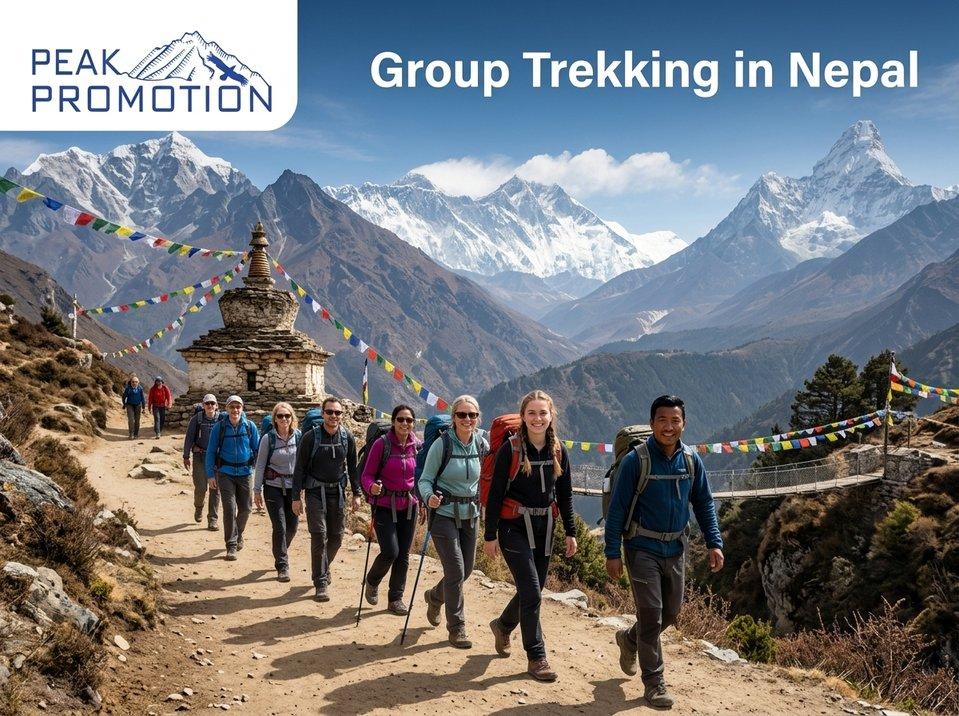
Nepal is one of the world's most rewarding destinations for trekking, offering spectacular Himalayan landscapes, traditional mountain villages, diverse cultures and trails for a wide range of experience levels. For travelers who want to explore the mountains with others, group trekking in Nepal provides an opportunity to share the journey, organize logistics more easily and experience the Himalayas with professional local support.
From the legendary Everest Base Camp route to the scenic Annapurna region, the cultural trails of Langtang and shorter adventures around Ghorepani Poon Hill, Nepal has trekking options for different group sizes, budgets and fitness levels.
Group trekking can mean traveling with friends or family, joining a scheduled departure with other travelers, or organizing a private trek for a company, educational institution or special-interest group. Each option offers a different balance of flexibility, cost, social experience and logistical support.
However, a successful group trek requires more than choosing a beautiful route. Travelers should consider fitness levels, walking pace, altitude, season, permits, accommodation, transportation and emergency arrangements before departure.
This complete guide explains how group trekking in Nepal works, which routes are worth considering, how much it may cost, and how to plan a safe and memorable Himalayan adventure with Peak Promotion Nepal.
What Is Group Trekking in Nepal?
Group trekking involves exploring a trekking route with two or more participants, usually supported by a trekking guide and organized logistics.
Depending on the trip, the group may consist of people who already know one another or travelers who meet for the first time through a scheduled departure.
The three common formats are:
| Group Type | Description | Best For |
| Private Group Trek | A trip organized exclusively for your chosen group | Friends, families and private parties |
| Scheduled Group Departure | Travelers join a departure on a set date, often with other participants | Solo travelers and people seeking a social experience |
| Organized or Corporate Trek | A customized trek arranged for an organization, school or special-interest group | Team-building, educational trips and clubs |
A private group can usually request changes to the itinerary, subject to safety, permits and practical limitations. Scheduled group departures typically follow a more fixed itinerary to coordinate participants, accommodation and transport.
Why Choose Group Trekking in Nepal?
Group trekking offers several advantages, particularly for travelers exploring the Himalayas for the first time.
✔ Share the Experience
Trekking with others creates opportunities to share mountain views, cultural experiences, challenges and memorable moments along the trail.
For solo travelers, joining a scheduled group can also be a way to meet people with similar interests.
✔ Share Certain Costs
Some expenses, such as private vehicle transfers, guide services and group logistics, may be shared among participants. This can make a group trek more economical than arranging the same services for one traveler.
However, not every expense decreases with group size. Permits, food, accommodation and personal equipment are often charged per person.
✔ Benefit From Professional Guidance
A licensed local trekking guide can help coordinate the itinerary, explain local culture, monitor trail conditions and support the group with practical decisions.
This is especially valuable on routes where the current regulations require a guide and agency-issued TIMS card. Nepal Tourism Board lists numerous popular routes under these provisions.
✔ Simplify Logistics
A trekking agency can help arrange:
- Transportation to and from the trailhead
- Licensed guides
- Applicable permits and TIMS
- Teahouse accommodation
- Meal arrangements, depending on the package
- Porter services
- Route planning
- Emergency coordination
✔ Enjoy Different Perspectives
Group trekking brings together people with different backgrounds, experiences and interests. Conversations on the trail and shared time in mountain villages can become just as memorable as the scenery.
Best Group Treks in Nepal
The best route depends on the group's available time, fitness, budget and appetite for altitude. A short trek near Pokhara may suit a mixed-experience group, while Everest Base Camp is better for participants prepared for longer days and higher elevations.
| Trek | Typical Duration | Approx. Highest Point | General Difficulty | Best Suited For |
| Ghorepani Poon Hill | 4–7 days | 3,210m | Easy–Moderate | Beginners and mixed groups |
| Mardi Himal | 5–8 days | Around 4,500m on common high routes | Moderate | Fit hikers seeking mountain views |
| Langtang Valley | 7–10 days | Around 4,773m at Kyanjin Ri | Moderate | Culture and alpine scenery |
| Annapurna Base Camp | 7–12 days | Around 4,130m | Moderate | Groups seeking a classic Himalayan trek |
| Everest Base Camp | 12–15 days | Around 5,364m at base camp | Moderate–Challenging | Fit groups with time for acclimatization |
| Manaslu Circuit | Around 12–16 days | Around 5,106m at Larkya La | Challenging | Experienced, well-prepared groups |
Durations and elevations are approximate and depend on the chosen itinerary, route variations, acclimatization days and viewpoints. The highest point on a trek is not necessarily the overnight elevation.
1. Ghorepani Poon Hill Trek
The Ghorepani Poon Hill Trek is a strong option for groups looking for a shorter Himalayan experience. It combines forest trails, traditional villages, stone stairways and sunrise views over the Annapurna and Dhaulagiri ranges.
Why groups choose it:
- Shorter duration
- Established teahouse accommodation
- Excellent mountain scenery
- Suitable for many first-time trekkers with preparation
- Convenient for travelers with limited vacation time
The stone steps and uphill sections can still be demanding, so participants should prepare with regular walking and stair training.
2. Mardi Himal Trek
Mardi Himal is a good choice for groups wanting a quieter mountain experience and dramatic views of Machhapuchhre and the Annapurna range.
The route climbs through forests and increasingly open mountain landscapes toward high viewpoints. Some itineraries reach approximately 4,500m, making altitude and weather important planning considerations.
Best for: Groups with reasonable fitness who prefer a more adventurous route than a short low-altitude trek.
3. Langtang Valley Trek
Langtang offers an appealing combination of mountain scenery, Tamang culture, forests, traditional settlements and alpine landscapes.
Its road access from Kathmandu makes it attractive for groups that want a Himalayan trek without arranging a domestic flight to the trailhead.
Best for: Groups interested in mountain landscapes, local culture and a trek that can often be completed in around a week or slightly longer.
4. Annapurna Base Camp Trek
The Annapurna Base Camp Trek takes trekkers through villages, forested valleys and mountain terrain into the Annapurna Sanctuary.
It is a popular option for groups seeking an immersive Himalayan experience without committing to the longer Everest Base Camp itinerary.
Best for: Groups with moderate fitness who want a combination of cultural experiences, mountain scenery and a memorable high-mountain destination.
5. Everest Base Camp Trek
Everest Base Camp is one of Nepal's best-known trekking destinations. The route passes through Sherpa settlements, suspension bridges, monasteries and dramatic mountain landscapes.
It requires more time, careful acclimatization and preparation for sustained walking at altitude.
Best for: Groups with good endurance, sufficient vacation time and a shared commitment to a demanding Himalayan adventure.
6. Manaslu Circuit Trek
The Manaslu Circuit offers remote mountain scenery, traditional settlements and high-altitude trekking. The crossing of Larkya La Pass makes this a more demanding option than many shorter Nepal treks.
Manaslu also has restricted-area permit requirements and specific guide and group arrangements. These must be confirmed with a registered trekking agency before booking.
Best for: Experienced or well-prepared groups seeking a longer, more remote trek.
How to Choose the Right Trek for Your Group?
Choosing a route based only on photographs or popularity can create problems later. The best group trek is one that matches the abilities and expectations of the participants.
Consider These Five Factors:
1. Fitness levels
A group with mixed fitness levels may be better suited to a shorter trek with flexible daily distances than a demanding high-altitude route.
2. Available time
Include travel days, acclimatization and contingency time—not just walking days.
3. Altitude
A participant who can comfortably walk at low elevations may still struggle at altitude. No fitness level completely eliminates the risk of altitude sickness.
4. Budget
Agree on a realistic budget before selecting accommodation, transport, guide services and optional activities.
5. Shared interests
Some groups prioritize mountain panoramas, while others prefer cultural experiences, photography, wildlife or remote trails.
Discuss these preferences before making a booking.
Group Trekking Costs in Nepal
The cost of group trekking in Nepal varies according to route, duration, group size, season and service level.
There is no single price that applies to every group trek.
Main Cost Components:
| Expense | What to Consider |
| Guide services | Guide days, language requirements and group size |
| Transportation | Private vehicle, public transport or domestic flights |
| Accommodation | Teahouse rooms and any Kathmandu hotel stays |
| Meals | Whether breakfast, lunch and dinner are included |
| Permits | TIMS, national park or conservation area entry, and restricted-area permits where applicable |
| Porter services | Number of porters, luggage limits and group requirements |
| Equipment | Personal clothing, boots, sleeping bag and trekking poles |
| Insurance | Coverage for the intended altitude and emergency evacuation |
| Tips | Appropriate gratuities for guides and porters |
| Contingency | Delays, weather changes and unexpected expenses |
Does Group Trekking Cost Less?
It can, particularly when several travelers share a vehicle or certain guide and organizational costs.
For example, if a private vehicle costs the same regardless of whether four or six people use it, the cost per passenger can fall as the group grows. But this saving depends on the vehicle capacity and the actual service arrangement.
Per-person charges such as meals and many permits do not automatically become cheaper when more people join.
When comparing packages, check the inclusions, exclusions, group size, room arrangements and cancellation policy rather than choosing based on price alone.
Best Seasons for Group Trekking in Nepal
Spring and autumn are the most popular trekking seasons for many classic routes.
Spring: March to May
Spring offers milder conditions at many elevations, flowering rhododendron forests on suitable routes and longer daylight hours.
It is a good time for groups interested in landscapes and photography, though weather and snow conditions at high passes can vary.
Autumn: September to November
Autumn is another popular season, often offering clear mountain views and favorable trekking conditions.
October and November are particularly busy on many established routes, so groups should arrange guides, accommodation and transportation in advance.
Winter: December to February
Winter can suit some lower-altitude routes, but cold temperatures, snow and icy trails can make higher sections more difficult.
Groups should select routes according to seasonal conditions and the experience of their participants.
Monsoon: June to September
Rain, leeches, muddy trails, landslides and reduced visibility can affect many routes. Rain-shadow destinations may offer alternatives, but conditions and access should be assessed carefully.
Planning tip: If a group has fixed dates, choose the route based on the likely conditions for those dates rather than forcing a preferred route into an unsuitable season.
Permits and Guide Requirements for Group Trekking
Permit requirements depend on the trekking route, protected area and nationality of the participants.
Depending on the itinerary, trekkers may need:
- A TIMS card
- National park entry permit
- Conservation area entry permit
- Restricted-area trekking permit
- Other route-specific documentation
Nepal Tourism Board's current TIMS guidance lists many popular routes—including Everest Base Camp, Langtang, Mardi Himal, Poon Hill–Annapurna Base Camp and Manaslu Circuit—under requirements for a licensed guide and agency-issued TIMS. Its current listed TIMS fees are NPR 1,000 for SAARC nationals and NPR 2,000 for other foreign nationals.
Restricted areas can have additional rules and fees. For example, Manaslu and Tsum Valley have specific permit provisions, and the exact requirements depend on the route and travel dates.
Because rules and fees may change, confirm current requirements with your trekking agency before departure. Do not assume that a permit for one area covers every route or protected area.
What to Expect on a Typical Group Trek?
Although every itinerary is different, a typical day on a teahouse trek follows a fairly consistent routine.
Morning: Wake up, have breakfast, pack your daypack and prepare for the day's walk.
Morning to afternoon: Trek at a sustainable pace, taking breaks for water, rest, photographs and lunch.
Afternoon: Reach the next village or overnight stop, check into accommodation and relax.
Evening: Have dinner, review the following day's route with the guide and prepare equipment.
Groups should agree on a walking approach that prioritizes safety. Faster participants may naturally move ahead, but the group should have a clear plan for regrouping and communication.
The guide should make decisions about pace, route changes and safety based on conditions rather than pressure to keep to an unrealistic schedule.
How to Prepare for a Group Trek in Nepal?
Preparation helps participants enjoy the experience and reduces the chance of avoidable problems.
▸ Physical Preparation
Start regular training several weeks before departure. Useful activities include:
- Brisk walking
- Hiking on uneven terrain
- Stair climbing
- Cardiovascular exercise
- Leg and core strength training
- Practice walks with a daypack
If the group includes beginners, agree on a realistic training plan and encourage participants to build endurance gradually.
▸ Gear and Packing
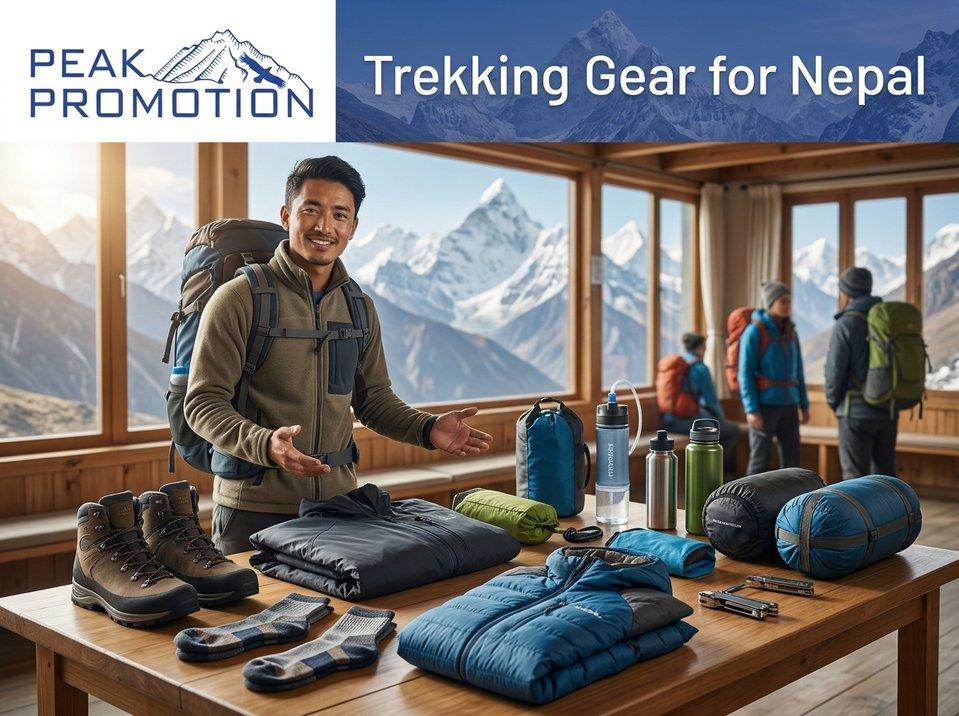
Each trekker should have suitable personal equipment, including:
- Broken-in hiking boots
- Moisture-wicking layers
- Warm insulated jacket
- Waterproof jacket and trousers
- Trekking trousers
- Warm hat and gloves
- Sunglasses and sunscreen
- Reusable water bottles
- Headlamp
- Personal medication
- Basic first-aid supplies
- Backpack and rain cover
- Trekking poles, if preferred
The exact packing list depends on the season, altitude and itinerary.
▸ Travel Documents and Insurance
Participants should check passport validity, visa requirements, insurance coverage and any necessary medical advice before traveling.
Insurance should explicitly cover the planned trekking altitude and emergency evacuation where applicable. Do not assume that a standard travel policy covers high-altitude trekking.
Safety Tips for Group Trekking in Nepal
Group travel can provide support, but it does not remove the risks associated with mountain environments.
▸ Respect Altitude
High-altitude illness can affect anyone. Allow time for acclimatization and do not ascend with worsening symptoms.
▸ Stay Together With a Clear Plan
Groups should agree on meeting points, break arrangements and what to do if a participant needs to stop.
No trekker should be left alone without an agreed plan and appropriate support.
▸ Follow the Guide's Advice
Weather, trail conditions and health concerns may require changes to the itinerary. Safety decisions should take priority over reaching a particular destination on a fixed date.
▸ Maintain Hydration and Nutrition
Eat regularly and drink according to conditions, activity and individual needs. Avoid relying on alcohol to relax at altitude.
▸ Prepare for Weather Changes
Carry suitable rain protection and warm layers, even when conditions look favorable in the morning.
▸ Plan for Emergencies
The group leader and guide should know how to contact the trekking agency and insurance emergency assistance. Make sure each participant understands the emergency plan.
Nepal Tourism Board advises trekkers to use designated routes, prepare basic safety equipment and take altitude risks seriously.
Group Trekking Etiquette
A good group experience depends on consideration for fellow trekkers and local communities.
Follow these simple practices:
- Respect different walking speeds.
- Be punctual for departures.
- Follow the guide's instructions.
- Ask before photographing people.
- Respect local customs and religious sites.
- Keep trails and villages clean.
- Avoid loud behavior in teahouses.
- Share common spaces thoughtfully.
- Discuss concerns early rather than letting frustration build.
- Respect individual dietary needs and personal boundaries.
Group trekking works best when everyone understands that the journey is shared, but participants may have different abilities and needs.
Private Group Trek vs Scheduled Group Trek
Both options can work well, but the right choice depends on how much flexibility your group needs.
| Feature | Private Group Trek | Scheduled Group Trek |
| Participants | Friends, family or a selected group | Travelers joining a set departure |
| Dates | More flexible, subject to availability | Fixed departure dates |
| Itinerary | May be customized | Usually follows a set itinerary |
| Social Experience | Shared with people you know | Opportunity to meet new travelers |
| Cost Structure | Depends on group size and requested services | Based on the operator's published package |
| Pace | Can be adjusted within safe limits | Must accommodate the scheduled group |
| Best For | Families, friends and organizations | Solo travelers and flexible individuals |
Before joining a scheduled trek, ask about minimum group size, maximum group size, guide-to-trekker arrangements, cancellation terms and what happens if the departure does not reach its minimum number.
Is Group Trekking Suitable for Beginners?
Yes, many Nepal trekking routes can suit beginners when the itinerary matches their fitness and preparation.
Shorter routes such as Ghorepani Poon Hill may be a reasonable starting point for many first-time trekkers. Longer and higher routes, including Everest Base Camp and Manaslu Circuit, require more preparation and careful consideration of altitude.
Beginners should:
- Choose a route that matches their current fitness.
- Train before arriving in Nepal.
- Use well-fitting footwear.
- Be honest about health and fitness concerns.
- Follow acclimatization advice.
- Avoid comparing their pace with other participants.
- Select a group whose itinerary suits their abilities.
A good group trek is not a race. The objective is to experience the mountains safely and enjoyably.
Why Choose Peak Promotion Nepal for Group Trekking?
Choosing a trekking operator is an important part of planning a group trip. Clear communication, sensible itineraries and well-managed logistics help participants understand what to expect before they reach the mountains.
Peak Promotion Nepal has operated in Nepal's trekking and Himalayan adventure sector since 1992. For group trips, a professional local operator can help coordinate route planning, guide services, transportation, accommodation, permits and porter arrangements according to the selected itinerary.
When comparing trekking operators, ask about:
- The exact itinerary and daily walking distances
- Group size and guide arrangements
- Permit and TIMS inclusions
- Accommodation and meal arrangements
- Transportation details
- Porter luggage limits
- Safety and emergency procedures
- Insurance expectations
- Cancellation and itinerary-change policies
- Any additional or optional costs
The best package is one that clearly explains the services, realistic expectations and safety arrangements—not simply the lowest price.
Frequently Asked Questions (FAQ's):
Q. What is the best trek in Nepal for a group?
Ghorepani Poon Hill is a useful option for many groups seeking a shorter trek. Langtang, Annapurna Base Camp and Everest Base Camp may suit groups with more time and the appropriate fitness and altitude preparation.
Q. Can solo travelers join a group trek in Nepal?
Yes. Solo travelers can look for scheduled group departures through trekking agencies. Confirm the departure date, minimum group size, room-sharing arrangements and cancellation policy before booking.
Q. Is group trekking cheaper than private trekking?
It can be, particularly when transport and some guide or organizational costs are shared. The final per-person price depends on group size, route, services and package inclusions.
Q. How many people should be in a trekking group?
There is no single ideal size. Small groups can be easier to coordinate, while larger groups may spread some costs across more participants. The appropriate size depends on the route, guide arrangements, accommodation and the group's experience.
Q. Do I need a guide for group trekking in Nepal?
Many popular routes fall under current Nepal Tourism Board provisions requiring a licensed guide and agency-issued TIMS. Requirements should be checked for the specific itinerary before booking.
Q. What is the best season for group trekking?
Spring and autumn are popular seasons for many Nepal trekking routes. The best choice depends on the destination, altitude, weather and the group's available dates.
Q. Is group trekking safe in Nepal?
Group trekking can provide practical support, but it is not risk-free. Safety depends on appropriate route selection, preparation, acclimatization, guide expertise, weather decisions and emergency planning.
Q. What is included in a group trekking package?
Inclusions vary by operator. Packages may cover a guide, transportation, accommodation, meals, permits and porter services. Ask for a written list of inclusions and exclusions before booking.
Q. Can families join group treks in Nepal?
Some shorter routes can work for families, depending on children's ages, fitness, health and the itinerary. Choose a route with suitable daily distances and accommodation, and discuss the plan with a qualified trekking operator.
Q. What should I pack for a group trek?
Essential items include broken-in trekking boots, layered clothing, waterproof protection, warm layers, a headlamp, sun protection, personal medication and a suitable backpack. The exact list depends on the route and season.
Q. Can a group customize its trekking itinerary?
Private groups can often request itinerary changes, subject to route conditions, permit rules, accommodation availability and safety. Scheduled group departures generally have less flexibility.
Q. How do I book a group trek in Nepal?
Choose your preferred route and dates, confirm the group's size and experience, request a detailed itinerary and cost breakdown, and verify permit, guide, insurance and cancellation arrangements before confirming the booking.
Final Thoughts: Experience the Himalayas Together
Group trekking in Nepal offers an excellent way to explore the Himalayas while sharing the experience with friends, family or fellow travelers. From the accessible trails of Ghorepani Poon Hill to the cultural landscapes of Langtang and the iconic Everest Base Camp route, there are options for different schedules, budgets and levels of trekking experience.
The key to a successful group trek is choosing the right route, setting realistic expectations, preparing physically, confirming current permit requirements and working with a reliable local operator.
With thoughtful planning and respect for the mountains, your group can enjoy the landscapes, cultures and hospitality that make trekking in Nepal so memorable.
Ready to Trek Nepal?
Explore the Himalayas with experienced local support, carefully planned routes and reliable trekking logistics.
Peak Promotion Pvt. Ltd.
Contact: +977 9841135705
Email: info@peakpromotionnepal.com
Location: Lazimpat, Kathmandu 44600, Nepal
Plan Your Group Trek with Peak Promotion Nepal.