Gosaikunda Trek: Complete Guide
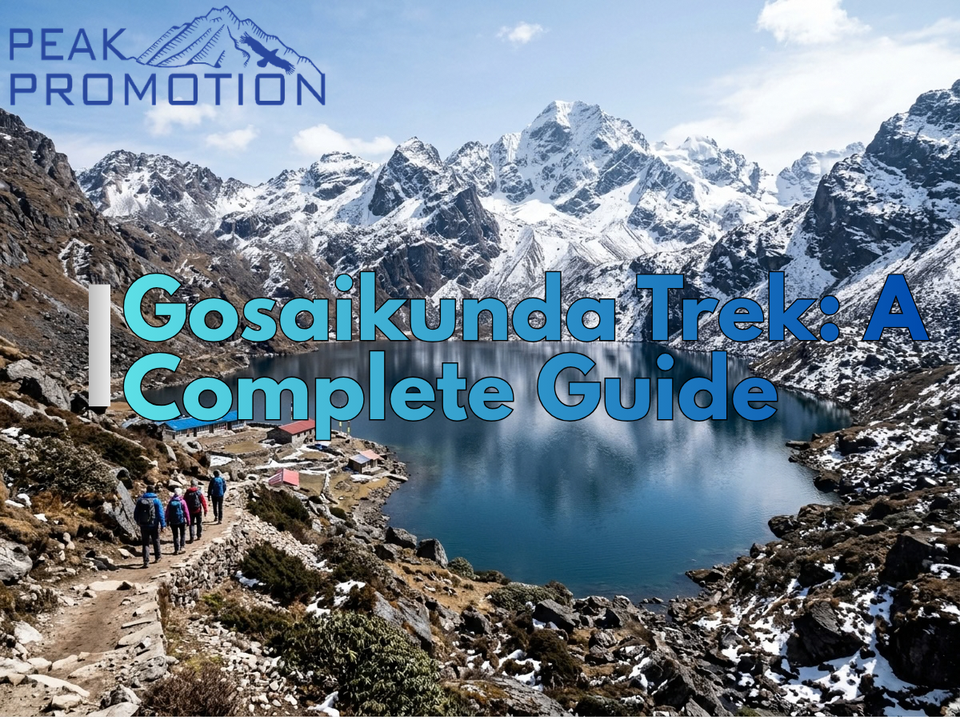
The Gosaikunda Trek is one of Nepal's most rewarding short-to-moderate Himalayan trekking experiences, combining high-altitude landscapes, sacred lakes, mountain views, Tamang culture and the natural beauty of Langtang National Park.
At the heart of the trek is Gosaikunda Lake, situated at approximately 4,380 meters above sea level in Rasuwa district. The lake is both a major Hindu pilgrimage destination and an important high-altitude wetland within the Langtang region. Nepal Tourism Board identifies Gosaikunda as a major pilgrimage site and notes that the lake is regarded as the source of the Trishuli River.
The trek can be completed as a relatively short journey from Kathmandu, or combined with other routes through the Langtang and Helambu regions. For trekkers looking for dramatic Himalayan scenery without committing to a two-week Everest Base Camp itinerary, Gosaikunda can be an appealing option.
This complete guide covers everything you need to know about the Gosaikunda Trek, including the route, itinerary, altitude, difficulty, cost, permits, accommodation, food, best seasons, preparation, packing and safety.
Gosaikunda Trek at a Glance
| Trek Feature | Details |
| Destination | Gosaikunda Lake, Rasuwa, Nepal |
| Region | Langtang |
| Protected Area | Langtang National Park |
| Gosaikunda Elevation | 4,380 m |
| Starting Point | Commonly Dhunche |
| Ending Point | Depends on itinerary; Dhunche or Sundarijal routes are possible |
| Typical Duration | Approximately 5–8 days for a direct route; longer when combined with other treks |
| Difficulty | Moderate to challenging |
| Accommodation | Teahouses and lodges |
| Highest Point on Common Extended Route | Lauribina Pass, approximately 4,609 m |
| Best Seasons | March–May and October–November |
| Main Attraction | Gosaikunda Lake and surrounding Himalayan landscape |
| Cultural Significance | Sacred Hindu and Buddhist site |
| Guide Requirement | Current NTB rules list Gosaikunda Trek among routes requiring a licensed guide and agency-issued TIMS |
| National Park Entry Fee | Foreigners: NPR 3,000 |
| TIMS | Currently NPR 2,000 for non-SAARC trekkers and NPR 1,000 for SAARC applicants |
Current Nepal Tourism Board information identifies Gosaikunda as a trek requiring a licensed guide and agency-issued TIMS under the revised TIMS provisions.
Where Is Gosaikunda?
Gosaikunda is located in Rasuwa district of central Nepal, northwest of Kathmandu, inside Langtang National Park.
The lake sits at approximately 4,380 meters and forms part of a larger group of high-altitude lakes known as Gosaikunda and Associated Lakes.
The Ramsar Convention recognizes Gosaikunda and its associated lakes as a wetland of international importance. The site includes a complex of lakes and ponds ranging from approximately 4,054 to 4,620 meters.
The location makes Gosaikunda particularly attractive because trekkers can experience:
- Alpine landscapes
- Himalayan mountain views
- Forests
- High-altitude lakes
- Traditional villages
- Tamang culture
- Buddhist monasteries
- Hindu pilgrimage traditions
- Langtang National Park biodiversity
Why Is Gosaikunda Lake Important?
Gosaikunda is not simply a trekking destination.
It has deep religious significance, particularly for Hindus.
According to Hindu tradition, Gosaikunda is associated with Lord Shiva and the story of the churning of the cosmic ocean. Nepal Tourism Board describes the traditional belief that Shiva created the lake using his trident after consuming poison during the Samudra Manthan.
The lake attracts thousands of pilgrims, particularly around Janai Purnima, when devotees travel to the lake to take a ritual bath.
The area also has significance for Buddhist communities.
This combination of natural and spiritual importance gives the Gosaikunda Trek a character that differs from purely adventure-focused Himalayan routes.
Gosaikunda Trek Route
One of the most common approaches is:
Kathmandu → Dhunche → Thulo Syabru → Sing Gompa/Chandanbari → Lauribina → Gosaikunda
From Gosaikunda, trekkers can either return along a similar route or continue through the Lauribina Pass toward Ghopte and the Helambu region, eventually finishing around Sundarijal or another chosen endpoint.
Nepal Tourism Board's published route information for the Dhunche–Gosaikunda–Sundarijal itinerary gives the following general sequence:
Dhunche → Thulo Syafru → Sing Gompa → Gosaikunda → Lauribina Pass → Ghopte → Tharepati → Kutumsang → Chisapani → Sundarijal.
Gosaikunda Trek Itinerary
A direct Gosaikunda trek can be customized according to available time and fitness level.
The following is a practical example of an approximately 7-day itinerary from Kathmandu.
Day 1: Kathmandu to Dhunche
The journey begins with a drive from Kathmandu toward Dhunche, the administrative center of Rasuwa district and one of the major gateways to the Langtang region.
The drive takes much of the day because of winding mountain roads and changing road conditions.
Overnight: Dhunche
Altitude: Approximately 1,950–2,030 m
Day 2: Dhunche to Thulo Syabru
The trek begins with a gradual climb through forests and mountain settlements.
The trail passes through beautiful landscapes with views toward the surrounding Himalayan ranges.
Thulo Syabru is an important village in the Langtang region and provides teahouse accommodation.
Walking time: Approximately 4–5 hours
Overnight: Thulo Syabru
Day 3: Thulo Syabru to Sing Gompa / Chandanbari
The trail climbs through forested terrain toward Sing Gompa, also commonly associated with Chandanbari.
As you gain elevation, the landscape gradually changes from dense forests toward alpine terrain.
The area is known for its monastery and local cheese production.
Walking time: Approximately 3–4 hours
Overnight: Sing Gompa / Chandanbari
Altitude: Approximately 3,300–3,350 m
Day 4: Sing Gompa to Gosaikunda
This is one of the most important days of the trek.
The trail climbs steadily toward the high-altitude lake.
As you gain elevation, vegetation becomes increasingly sparse and the landscape opens into alpine terrain.
Eventually, the blue waters of Gosaikunda appear among the surrounding mountains.
Walking time: Approximately 4–5 hours
Overnight: Gosaikunda
Altitude: Approximately 4,380 m
Nepal Tourism Board's route information gives approximately 4–5 hours from Sing Gompa to Gosaikunda.
Day 5: Explore Gosaikunda and Surrounding Lakes
Depending on your itinerary, you can spend additional time around Gosaikunda.
The surrounding area contains several other lakes, including:
- Saraswati Kunda
- Bhairab Kunda
- Surya Kunda
- Ganesh Kunda
Nepal Tourism Board notes several additional kundas in the vicinity of Gosaikunda, while the wider Ramsar site contains a complex of numerous high-altitude lakes and ponds.
An additional day can be useful for photography, exploring the surroundings and allowing your body more time to adjust to the altitude.
Day 6: Gosaikunda to Dhunche
For a shorter itinerary, you can retrace the route toward Dhunche.
The descent is generally easier than the ascent, but long downhill sections can still be demanding on the knees.
Overnight: Dhunche or nearby settlement
Day 7: Dhunche to Kathmandu
After breakfast, drive back to Kathmandu.
This completes the direct Gosaikunda trekking itinerary.
Extended Gosaikunda Trek via Lauribina Pass
For trekkers who want a longer Himalayan experience, Gosaikunda can be combined with the Helambu region.
The route can continue:
Gosaikunda → Lauribina Pass → Ghopte → Tharepati → Kutumsang → Chisapani → Sundarijal
Nepal Tourism Board lists the Lauribina Pass at approximately 4,609 meters on its published Dhunche–Gosaikunda–Sundarijal route.
This extended itinerary offers:
- High-altitude lake scenery
- Mountain views
- Forest trails
- Alpine landscapes
- Traditional villages
- Helambu culture
- A longer Himalayan trekking experience
It is more demanding than simply reaching Gosaikunda and returning.
Gosaikunda Trek Difficulty
The Gosaikunda Trek is generally considered moderate to challenging, particularly because the trail reaches approximately 4,380 meters.
The difficulty comes from a combination of:
- Altitude
- Steep uphill sections
- Long walking days
- Rocky terrain
- Cold temperatures
- Weather changes
- Potential snow
- High-altitude passes on extended routes
The trek does not require technical climbing skills on the standard route, but it should not be underestimated.
A trekker with reasonable fitness and appropriate preparation can undertake the route, but previous hiking experience is helpful.
Gosaikunda Trek Altitude
Altitude is one of the most important factors to consider.
| Location | Approx. Elevation |
| Kathmandu | 1,400 m |
| Dhunche | ~1,950–2,030 m |
| Thulo Syabru | ~2,120–2,390 m |
| Sing Gompa | ~3,350 m |
| Gosaikunda | 4,380 m |
| Lauribina Pass | ~4,609 m |
The significant elevation gain means that trekkers should ascend gradually and pay attention to symptoms of altitude illness.
Nepal Tourism Board describes Gosaikunda as a high-altitude destination at 4,380 m and notes the challenging mountain terrain involved in reaching it.
Altitude Sickness on the Gosaikunda Trek
Because Gosaikunda is above 4,000 meters, altitude sickness should be taken seriously.
Possible symptoms of acute mountain sickness can include:
- Headache
- Nausea
- Dizziness
- Fatigue
- Loss of appetite
- Difficulty sleeping
More serious symptoms require immediate attention and descent.
Important altitude-safety principles:
- Ascend gradually.
- Stay hydrated.
- Avoid excessive alcohol.
- Don't ignore worsening symptoms.
- Tell your guide if you feel unwell.
- Allow additional acclimatization when appropriate.
- Descend if serious altitude illness is suspected.
Physical fitness can help you handle the demands of trekking, but it does not eliminate the risk of altitude illness.
Best Time for Gosaikunda Trek
The best seasons for the Gosaikunda Trek are generally spring and autumn.
Nepal Tourism Board identifies March–May and October–November as the best months for the Langtang region.
Spring: March to May
Spring brings:
- Pleasant trekking conditions
- Rhododendron blooms
- Clear mountain views on favorable days
- Moderate temperatures at lower elevations
This is an excellent period for trekkers who want a combination of mountain scenery and forest landscapes.
Autumn: October to November
Autumn is another popular trekking period.
You can generally expect:
- Clearer skies
- Good mountain visibility
- Comfortable daytime temperatures
- Stable trekking conditions
October and November are particularly popular for Himalayan trekking in Nepal.
Winter: December to February
Winter trekking is possible, but Gosaikunda can become very cold.
Higher sections may receive snow, and icy conditions can make trails more difficult.
If trekking during winter, proper cold-weather equipment and experienced local support become especially important.
Monsoon: June to September
The monsoon season brings substantial rainfall to much of Nepal.
Possible challenges include:
- Wet trails
- Mud
- Leeches at lower elevations
- Cloud cover
- Slippery paths
- Landslides
- Transportation disruptions
Nepal Tourism Board describes June–September as the monsoon period for the Langtang region.
Gosaikunda Trek Cost
The cost of the Gosaikunda Trek depends on the duration, group size, transportation, guide and porter services, accommodation and package inclusions.
A practical planning range for an organized trek is approximately:
USD 900–1,500+ per person
A shorter direct itinerary may fall toward the lower end, while a longer itinerary through Lauribina Pass and Helambu, private arrangements or upgraded services can increase the total.
Typical Cost Components:
| Expense | Approximate Planning Range |
| Organized trekking package | USD 900–1,500+ |
| Guide | Usually included in organized packages |
| Porter | Usually included where selected |
| Accommodation | Usually teahouse/lodge |
| Meals | Often included in packages |
| Langtang National Park entry | NPR 3,000 for foreigners |
| TIMS | NPR 2,000 for non-SAARC applicants |
| Transportation | Depends on itinerary |
| Personal expenses | USD 50–150+ |
| Equipment | Variable |
| Travel insurance | Variable |
These are planning estimates rather than fixed prices. The actual cost should be confirmed with your trekking agency before booking.
Gosaikunda Trek Permits
Two important administrative requirements are relevant to this trek.
Langtang National Park Entry Permit
Gosaikunda lies within Langtang National Park.
Nepal Tourism Board currently lists the entry fee for foreign visitors at:
NPR 3,000 per person
The current listed rate for SAARC nationals is NPR 1,500, while the Nepali citizen entry fee is NPR 25.
TIMS Card
Gosaikunda Trek is specifically listed among the routes covered by Nepal's current mandatory guide and TIMS provisions.
The Nepal Tourism Board currently lists:
- NPR 2,000 for non-SAARC applicants
- NPR 1,000 for SAARC applicants
The TIMS must be arranged through the applicable trekking agency under the current provisions.
Restricted-Area Permit
Some parts of the wider Rasuwa region fall under separate restricted-area regulations.
The Nepal Tourism Board currently lists a USD 20 per person per week permit for the specified restricted area within Gosaikunda Rural Municipality. This is distinct from the standard Gosaikunda Trek route and should not be confused with the ordinary Langtang National Park entry fee.
For a standard Gosaikunda itinerary, your trekking agency should confirm which permits apply to your exact route.
Accommodation During the Gosaikunda Trek
Gosaikunda is a teahouse trekking destination.
Basic lodges and teahouses operate along the main route.
Accommodation generally consists of:
- Twin-sharing rooms
- Basic beds
- Blankets
- Shared bathrooms
- Dining areas
- Hot meals
- Limited electricity
- Charging facilities at some lodges
Facilities become increasingly basic as you approach higher elevations.
Nepal Tourism Board states that the Langtang region is well served by teahouses and lodges, although conditions naturally become more basic at higher elevations.
Food on the Gosaikunda Trek
Teahouses generally provide a variety of meals.
Common options include:
- Dal bhat
- Noodles
- Fried rice
- Pasta
- Soup
- Momos
- Potatoes
- Eggs
- Bread
- Pancakes
- Tea
- Coffee
Dal bhat remains one of the most practical trekking meals because it provides carbohydrates, protein and a substantial portion of calories.
At higher elevations, food prices tend to increase because supplies are more difficult to transport.
Transportation to Gosaikunda
One of the advantages of the Gosaikunda Trek is that it can be accessed relatively easily from Kathmandu compared with trekking regions that require domestic mountain flights.
A common approach is:
Kathmandu → Dhunche → Trek
Nepal Tourism Board states that Dhunche is approximately 117 km by road from Kathmandu and serves as an access point for the Langtang region.
Road travel can take much of the day because mountain roads are winding and conditions can vary.
Private vehicles, tourist vehicles and local transportation can be arranged depending on the itinerary and budget.
Gosaikunda Trek Packing List
Packing correctly is particularly important because of the rapid change in altitude.
Clothing
- Moisture-wicking base layers
- Fleece layer
- Down or insulated jacket
- Waterproof jacket
- Trekking trousers
- Thermal trousers
- Warm hat
- Gloves
- Warm socks
Footwear
- Comfortable trekking boots
- Camp shoes or lightweight footwear
- Extra socks
Trekking Equipment
- Backpack
- Daypack
- Trekking poles
- Sleeping bag
- Headlamp
- Water bottles or hydration system
- Sunglasses
- Sunscreen
- Lip balm
Personal Items
- Passport
- Permits/TIMS documentation
- Travel insurance details
- Personal medication
- First-aid supplies
- Toiletries
- Power bank
- Camera
Gosaikunda Trek Packing Tips
Don't overpack.
A common mistake among first-time trekkers is bringing too many clothes and unnecessary equipment.
Prioritize:
Warmth + waterproofing + footwear + hydration + sun protection + essential personal items.
A porter can carry your main luggage if you choose porter services, while you can keep essential items in your daypack.
Physical Preparation for Gosaikunda Trek
You don't need to be a professional athlete to complete the Gosaikunda Trek.
However, you should prepare for several hours of walking on consecutive days.
Recommended preparation:
Walking
Practice long walks or hikes several times per week.
Cardio
Running, cycling, swimming or stair climbing can improve cardiovascular endurance.
Strength
Focus on:
- Squats
- Lunges
- Step-ups
- Calf raises
- Core exercises
Hiking
The best preparation is hiking itself.
Gradually increase:
- Distance
- Elevation gain
- Walking duration
- Backpack weight
Gosaikunda Trek for Beginners
Gosaikunda can be suitable for fit first-time trekkers, but it is not necessarily an easy beginner trek.
The biggest challenge is altitude.
Someone may be physically fit but still experience difficulty adapting to 4,000+ meters.
If this is your first Himalayan trek:
- Choose a sensible itinerary.
- Don't rush the ascent.
- Use an experienced guide.
- Prepare physically beforehand.
- Monitor your health.
- Allow flexibility in your schedule.
If you want a lower-altitude first trekking experience, routes such as Ghorepani Poon Hill may be more appropriate.
Gosaikunda Trek vs Langtang Valley Trek
Both routes are located in the Langtang region, but they offer different experiences.
| Feature | Gosaikunda Trek | Langtang Valley Trek |
| Main Attraction | Sacred alpine lake | Langtang Valley & mountain scenery |
| Maximum Main Destination | 4,380 m | Kyanjin area ~3,800 m |
| Religious Significance | Very high | High |
| Lakes | Major highlight | Less central |
| Cultural Experience | Tamang + pilgrimage culture | Tamang + Himalayan village culture |
| Difficulty | Moderate–challenging | Moderate |
| Duration | Short–moderate | Moderate |
| Extended Options | Helambu | Kyanjin/Langshisa |
| Best For | Lakes, pilgrimage, high-altitude scenery | Valley scenery, culture and mountains |
For travelers with more time, a Langtang–Gosaikunda combination trek can provide an even broader experience of the region.
Gosaikunda Trek Highlights
The trek offers a combination of natural, cultural and spiritual attractions.
Major Highlights:
Gosaikunda Lake
The central attraction of the trek, located at 4,380 m.
Lauribina Pass
A high point on the extended route at approximately 4,609 m.
Langtang National Park
A protected Himalayan landscape containing forests, alpine habitats and diverse wildlife.
Tamang Culture
The route passes through communities with strong Tamang cultural traditions.
Mountain Views
Trekkers can experience views toward the Langtang and surrounding Himalayan ranges depending on weather and route.
Sacred Landscape
The lakes and mountains hold important religious significance for Hindu and Buddhist communities.
Gosaikunda and Responsible Trekking
Gosaikunda is both an ecologically sensitive and spiritually important destination.
The wider Gosaikunda and Associated Lakes area is recognized as a Ramsar Site, reflecting its international wetland significance. The site includes alpine lakes and supports important biodiversity.
Trekkers should therefore follow responsible travel practices.
Follow these principles:
- Carry your waste back.
- Avoid single-use plastics where possible.
- Do not pollute lakes or streams.
- Respect religious sites.
- Avoid disturbing wildlife.
- Stay on established trails.
- Respect local communities.
- Follow park regulations.
- Use water responsibly.
- Avoid damaging vegetation.
The Ramsar information for Gosaikunda identifies pollution and pressure from large gatherings as environmental concerns, making responsible tourism particularly important in the area.
Gosaikunda Trek During Janai Purnima
One of the most culturally significant times to visit Gosaikunda is around Janai Purnima.
During this Hindu festival, large numbers of pilgrims travel to the lake for religious rituals and bathing.
Nepal Tourism Board notes that thousands of devotees visit Gosaikunda during Janai Purnima.
This can create a very different trekking experience from a normal trekking season.
If your objective is primarily:
- Pilgrimage
- Cultural immersion
- Religious experience
then this period may be particularly meaningful.
If your priority is:
- Quiet trails
- Photography
- Solitude
- Less crowded accommodation
then another trekking period may be preferable.
Is Gosaikunda Trek Worth It?
The Gosaikunda Trek combines several experiences in one journey:
Himalayan trekking + sacred lakes + Tamang culture + alpine landscapes + spiritual heritage.
It also has the advantage of being accessible from Kathmandu without requiring a mountain flight.
For travelers who want to experience a high-altitude Himalayan destination within a relatively compact itinerary, Gosaikunda offers a compelling route.
However, the altitude should be taken seriously.
The trek is not simply a walk to a lake. Reaching 4,380 meters requires proper pacing, preparation and awareness of altitude-related risks.
Tips for a Successful Gosaikunda Trek
1. Start training before the trek
Build endurance rather than relying on last-minute preparation.
2. Don't rush the itinerary
A slightly longer itinerary can be more comfortable than forcing long walking days.
3. Pay attention to altitude
Your body needs time to adjust.
4. Hire a licensed guide
Current Nepal Tourism Board rules list Gosaikunda among the routes requiring a licensed guide and agency-issued TIMS.
5. Check weather conditions
Conditions can change rapidly in the mountains.
6. Pack for cold weather
Even if Kathmandu is warm, Gosaikunda can be very cold.
7. Carry some cash
ATMs and card facilities may not be available along remote sections.
8. Protect the environment
Gosaikunda is an ecologically sensitive wetland and sacred landscape.
9. Have travel insurance
Make sure your insurance covers trekking at your planned altitude and emergency evacuation where applicable.
10. Keep your itinerary flexible
Weather, road conditions and mountain conditions can affect schedules.
Frequently Asked Questions (FAQ's):
Q. How high is Gosaikunda Lake?
Gosaikunda Lake is approximately 4,380 meters above sea level.
Q. How difficult is the Gosaikunda Trek?
The trek is generally moderate to challenging because of the elevation, steep sections and high-altitude terrain. The extended route over Lauribina Pass is more demanding.
Q. How many days is the Gosaikunda Trek?
A direct itinerary can generally be completed in around 5–8 trekking days, depending on the starting point and pace. Longer versions can combine Gosaikunda with Helambu or Langtang.
Q. What is the best month for the Gosaikunda Trek?
March–May and October–November are generally considered the best periods for the Langtang region.
Q. Can beginners do the Gosaikunda Trek?
Fit beginners can undertake the trek with proper preparation and a sensible itinerary, but the 4,380 m altitude makes it more demanding than many lower-altitude beginner treks.
Q. Do I need a guide for Gosaikunda Trek?
Yes. Under the current Nepal Tourism Board TIMS provisions, Gosaikunda Trek is among the routes requiring trekkers to be accompanied by a licensed trekking guide and carry an agency-issued TIMS card.
Q. How much does the Gosaikunda Trek cost?
A practical planning range for an organized Gosaikunda Trek is approximately USD 500–1,000+ per person, depending on duration, transportation, group size, guide and porter services and package inclusions.
Q. Is Gosaikunda inside Langtang National Park?
Yes. Gosaikunda is located within Langtang National Park.
Q. How much is the Langtang National Park entry fee?
The current Nepal Tourism Board information lists the foreign visitor entry fee at NPR 3,000 per person.
Q. How much does a TIMS card cost for Gosaikunda Trek?
The current TIMS provision lists NPR 2,000 for non-SAARC applicants and NPR 1,000 for SAARC applicants.
Q. Can I trek to Gosaikunda in winter?
Yes, but winter conditions can be significantly colder and snow or ice may affect higher sections of the route. Proper equipment and local guidance are important.
Q. Can I trek Gosaikunda during the monsoon?
It is possible, but monsoon conditions can bring rain, cloud, slippery trails and transportation difficulties. The Langtang region's main recommended trekking seasons are spring and autumn.
Q. Can I combine Gosaikunda with Langtang Valley?
Yes. A Langtang–Gosaikunda itinerary can combine the Langtang Valley with the sacred lake and may provide a longer and more varied Himalayan trekking experience.
Q. What is Lauribina Pass?
Lauribina Pass is a high point on the extended Gosaikunda route, at approximately 4,609 meters according to Nepal Tourism Board's published itinerary.
Q. Is Gosaikunda a sacred lake?
Yes. Gosaikunda is a major Hindu pilgrimage destination and also has significance within the Buddhist cultural landscape of the region.
Q. What should I pack for Gosaikunda Trek?
Essential items include trekking boots, warm layers, waterproof clothing, sleeping bag, trekking poles, sunglasses, sunscreen, water bottles, personal medication, first-aid supplies and important travel documents.
Plan Your Gosaikunda Trek With Peak Promotion
The Gosaikunda Trek offers an opportunity to experience one of Nepal's most significant high-altitude lakes while traveling through the diverse landscapes of Langtang National Park.
From the forests and Tamang villages around Dhunche and Thulo Syabru to the alpine environment surrounding Gosaikunda, the journey combines nature, culture, spirituality and Himalayan adventure.
Whether you want a short Gosaikunda itinerary, an extended route through Lauribina Pass and Helambu, or a customized Langtang–Gosaikunda trekking experience, careful planning is essential.
Peak Promotion has been organizing trekking and Himalayan adventures in Nepal since 1992, with local experience in trekking logistics, guides, porters, transportation and expedition support.
Plan your Gosaikunda Trek with an experienced local trekking partner and discover the sacred landscapes of the Langtang Himalayas.
Peak Promotion Pvt. Ltd.
Contact: +977 9841135705
Email: info@peakpromotionnepal.com
Location: Lazimpat, Kathmandu 44600, Nepal