Why You Need a Trekking Guide in Nepal: Safety, Local Expertise and Complete Trekking Support
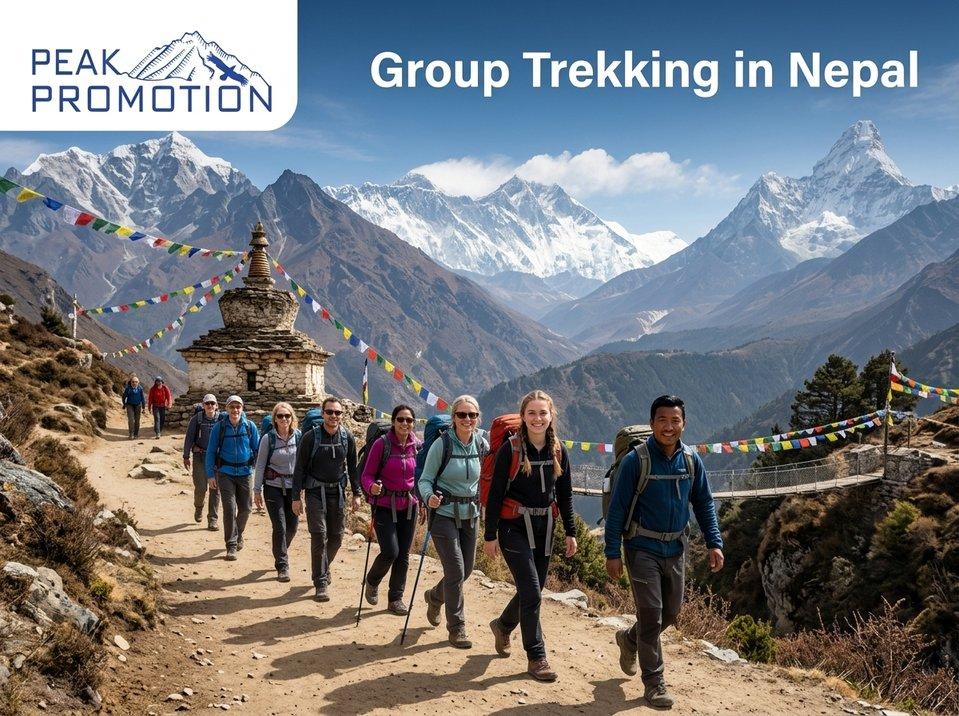
Nepal is home to some of the world's most spectacular trekking destinations, from the legendary trails of the Everest region to the Annapurna mountains, Langtang Valley and remote Himalayan communities. Trekking here offers much more than mountain views. It brings opportunities to experience local cultures, explore traditional villages and discover landscapes that change with every stage of the journey.
However, trekking in Nepal also involves practical challenges. Routes may cross remote terrain, weather can change quickly, accommodation options vary by region, and high-altitude journeys require careful planning. Understanding local trail conditions, permits, daily walking distances and acclimatization is particularly important for a successful trek.
This is why hiring a trekking guide in Nepal can make such a difference.
A knowledgeable guide helps you navigate the route, understand local customs, organize daily logistics and make informed decisions when conditions change. On routes where a licensed guide is mandatory, hiring one through an authorized trekking agency is also an important part of complying with current regulations.
Whether you are planning the Everest Base Camp Trek, the Annapurna Base Camp Trek, Mardi Himal or a remote Himalayan adventure, this guide explains why you need a trekking guide in Nepal, what a guide does, how to choose one and what to consider before booking.
Understanding the Role of a Trekking Guide in Nepal
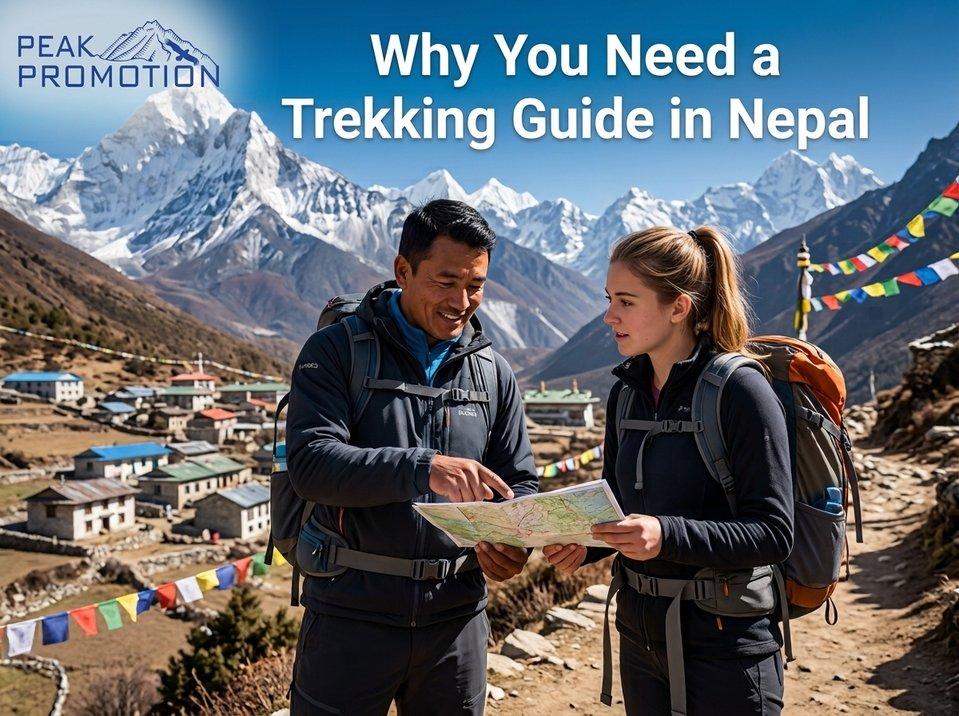
A trekking guide is more than someone who walks ahead of a group and points out the trail. A qualified guide supports the practical, cultural and safety-related aspects of your journey.
Depending on the route, package and agreed responsibilities, a guide may help with navigation, daily itinerary planning, accommodation coordination, local communication, permit checks, weather-related decisions and recognizing situations that require assistance.
A guide's responsibilities should be agreed upon before the trek begins. For example, a trekking guide is not automatically a licensed mountaineering guide, a medical professional or a helicopter-rescue provider.
What does a trekking guide do?
| Responsibility | How it helps trekkers |
| Route guidance | Helps you follow the planned route and navigate trail junctions |
| Itinerary management | Supports realistic walking schedules and daily planning |
| Local knowledge | Explains landscapes, villages, traditions and regional history |
| Permit guidance | Helps the agency arrange required documents and check route requirements |
| Accommodation coordination | Assists with lodging arrangements, subject to availability |
| Communication | Helps bridge language gaps with local communities and service providers |
| Safety awareness | Monitors conditions and helps identify concerns that need attention |
| Altitude awareness | Recognizes potential warning signs and encourages appropriate action |
| Logistics support | Coordinates with the trekking team and helps address practical problems |
The exact level of support depends on whether you book a guide only, a guide-and-porter arrangement or a fully organized trekking package.
Safety and Support on the Trail
Safety is one of the most important reasons to consider a trekking guide in Nepal. Mountain trails can include steep climbs, rocky descents, exposed sections, river crossings and remote stretches where assistance may not be immediately available.
A guide familiar with the region can help you understand the trail, maintain a sensible pace and respond more effectively when plans need to change.
▸ Navigating unfamiliar terrain
Trail conditions are not always the same throughout the year. Rain, snowfall, landslides, construction and seasonal changes can affect particular sections.
A local guide may be familiar with common route conditions and can help you make informed decisions about the day's walk. This does not eliminate every risk, but it provides an additional source of local knowledge.
▸ Responding when conditions change
Suppose heavy snowfall or poor visibility affects a planned section of your trek. A guide can help assess the situation, communicate with local contacts and discuss whether it is appropriate to continue, wait or change the itinerary.
The final decision should prioritize safety over reaching a particular destination on schedule.
▸ Recognizing health concerns
High-altitude trekking can cause altitude-related illness, even in physically fit and experienced hikers. A responsible guide should be familiar with warning signs and the need to stop ascending when altitude illness is suspected.
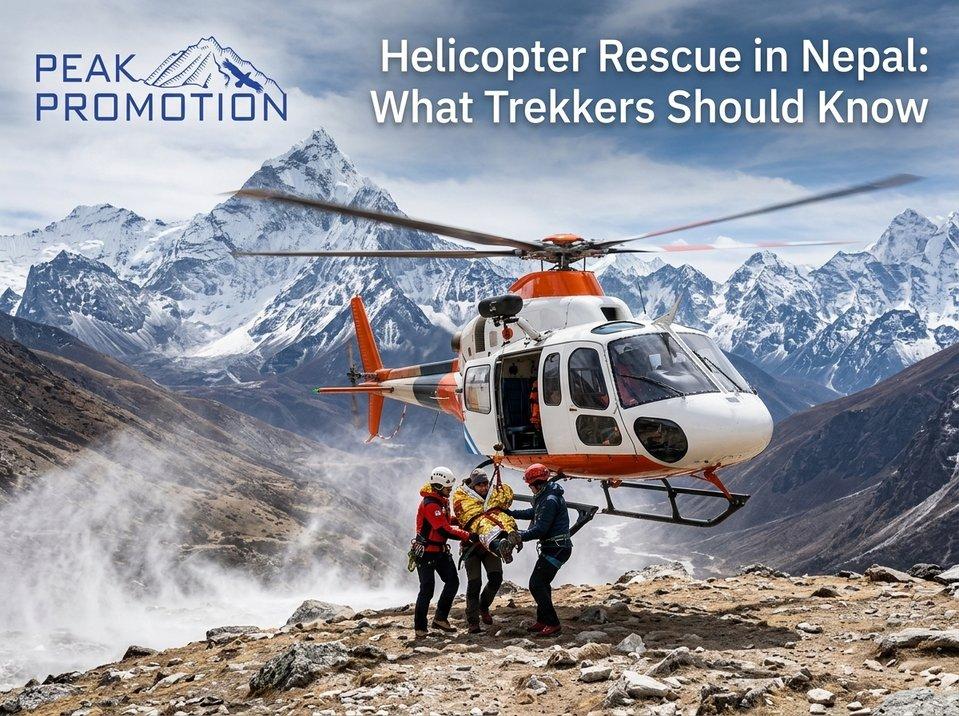
However, a trekking guide is not a substitute for medical care. Severe symptoms, including confusion, difficulty walking straight or breathlessness at rest, require urgent action and appropriate descent or evacuation.
For further information, consult the CDC's high-altitude travel and altitude illness guidance.
Important: A guide improves your access to local knowledge and support, but cannot guarantee that accidents, illness, severe weather or other emergencies will not occur.
Understanding Nepal's Trekking Guide Requirements
One of the most important questions travelers ask is whether a guide is legally required for trekking in Nepal.
The answer depends on the route and the current regulations that apply to it. Nepal Tourism Board publishes a list of trekking routes where trekkers must be accompanied by a licensed trekking guide and obtain a trekking agency-issued Trekkers' Information Management System (TIMS) card.
The published list includes several popular routes and regions, such as Everest Base Camp, Langtang Valley, Mardi Himal, Poon Hill–Annapurna Base Camp and the Manaslu Circuit.
Restricted areas may also require special permits and compliance with additional conditions. Requirements should be checked for the exact itinerary rather than assumed to be identical across Nepal.
Before booking, review the official Nepal Tourism Board TIMS guidance and the official trekking permit information.
Why should you confirm requirements in advance?
- Regulations and official guidance can change.
- Different regions have different permit conditions.
- Restricted-area treks may have additional documentation requirements.
- Your itinerary may include more than one trekking region.
- A permit or guide arrangement suitable for one route may not cover another.
A registered trekking agency can help you verify the current requirements, arrange the appropriate guide and coordinate the necessary documentation.
Do not rely solely on an old blog post, an online forum or another trekker's experience when confirming current rules.
Local Knowledge Makes the Experience More Meaningful
Nepal's trekking routes are not simply paths through the mountains. They connect villages, monasteries, farms, forests, historic settlements and communities with distinct traditions.
A local guide can help you understand what you are seeing instead of experiencing the region only as a visitor passing through.
▸ Learn about local culture and traditions
Depending on the region, your guide may explain local customs, religious practices, traditional architecture, festivals and the significance of monasteries or prayer flags.
In the Everest region, you may learn about Sherpa communities and mountain traditions. In Langtang, you may encounter Tamang cultural heritage. Annapurna-area routes pass through communities with diverse cultural backgrounds.
The details vary from place to place, and a good guide can help you understand local differences without treating every community as the same.
▸ Communicate respectfully
Language differences can make everyday interactions more difficult for international visitors. A guide can assist with communication in guesthouses, local shops and villages, helping you ask questions and understand arrangements.
They can also explain appropriate etiquette, such as asking permission before photographing people or religious spaces.
▸ Discover details you might otherwise miss
A guide may point out local plants, wildlife, historical landmarks, agricultural practices or views that are easy to overlook when concentrating on the trail.
These conversations can turn an ordinary walking day into a richer cultural experience.
Better Route Planning and Daily Itinerary Management
Choosing a trek involves more than selecting a destination from a photograph. You also need to consider the number of walking days, daily elevation changes, available accommodation, transportation, acclimatization and the time required to return.
A guide and trekking agency can help connect these details into a workable plan.
▸ Choosing a route that matches your needs
Not every trek suits every traveler. A beginner may prefer a shorter route with manageable daily distances, while an experienced hiker may want a longer journey with greater elevation gain.
A guide or trekking planner can discuss your experience, available time, interests and expectations before recommending a suitable itinerary.
▸ Managing walking pace
Walking too quickly can contribute to exhaustion and make it harder to enjoy the journey. A guide can help the group establish a sustainable pace and plan appropriate breaks.
The goal is not to finish each day's walk as quickly as possible. It is to complete the itinerary at a sensible pace while paying attention to weather, trail conditions and how the group is feeling.
▸ Planning for acclimatization
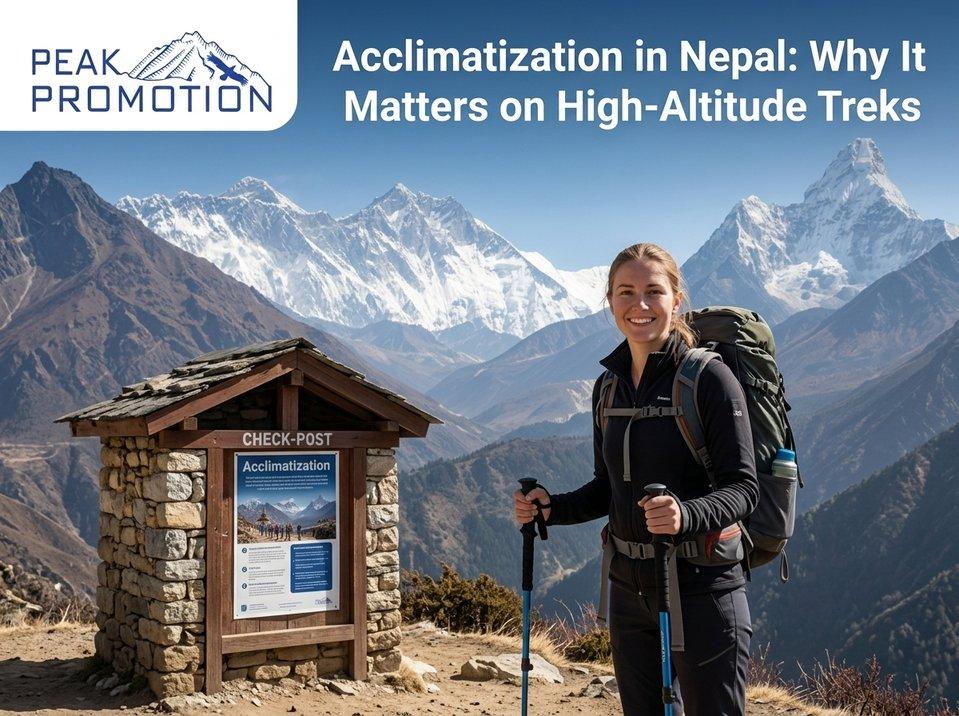
High-altitude itineraries require particular care. Acclimatization days and gradual ascent help reduce altitude-related risk, although they cannot eliminate it completely.
An experienced guide can help you follow the planned schedule and recognize when symptoms need attention. If altitude illness is suspected, safety takes priority over continuing the itinerary.
A guide should never encourage a trekker with concerning altitude symptoms to continue ascending simply to preserve the schedule.
Help With Permits, Documents and Trekking Logistics
Trekking in Nepal can involve several administrative and practical requirements. Depending on the route, you may need trekking permits, protected-area entry permits, TIMS documentation or special restricted-area permits.
A trekking agency can help identify the applicable requirements and arrange the documents that must be obtained through authorized channels.
What can be arranged before departure?
| Requirement | What to confirm |
| Trekking guide | Whether a licensed guide is required and included in your package |
| TIMS card | Whether it applies to your route and how it will be arranged |
| Protected-area entry permit | Whether the itinerary enters a national park or conservation area |
| Restricted-area permit | Whether your route crosses a designated restricted area |
| Transportation | Transfers to and from the trailhead, including contingency plans |
| Accommodation | Lodging availability and the booking arrangements included |
| Porter service | Whether a porter is included and the agreed baggage allowance |
| Insurance | Whether your policy covers trekking at the intended altitude and evacuation |
| Emergency arrangements | How the operator communicates and responds to emergencies |
The guide's personal responsibilities may not include every administrative task. Permit applications and official documentation are often handled by the trekking agency.
Clarify what is included in your package so that you know who is responsible for each part of the arrangement.
Communication and Problem-Solving
Even a carefully planned trek can encounter unexpected difficulties. A flight may be delayed, a vehicle transfer may take longer than expected, a teahouse may be full or a trail may become difficult to pass.
A local guide can help communicate with service providers and discuss practical alternatives.
For international travelers, this support can be especially useful when language differences or unfamiliar local procedures make it difficult to resolve a problem independently.
A guide may help you:
- Confirm accommodation and meal arrangements.
- Communicate with local transport providers.
- Discuss changes to the itinerary.
- Ask about current trail conditions.
- Coordinate with the trekking agency when problems arise.
- Explain local expectations and customs.
A guide cannot control every delay or guarantee that an alternative will always be available. Their value lies in helping you respond to the situation with local knowledge and practical communication.
Enjoy a More Relaxed Trekking Experience
Planning a trek independently can involve extensive research, document checks, accommodation arrangements and daily decision-making.
For some travelers, managing these tasks is part of the adventure. Others would rather concentrate on the landscape and experience without handling every logistical detail.
Hiring a guide can reduce the amount of planning you need to do on the trail.
Instead of repeatedly checking route information or worrying about everyday arrangements, you can focus more on walking, photography, conversations and enjoying the mountain environment.
This does not mean you should stop paying attention to your surroundings. Trekkers should remain aware of the route, listen to safety instructions and communicate any concerns.
The ideal guided trek gives you support while still allowing you to enjoy the independence and personal achievement that make trekking rewarding.
How a Guide Can Support Different Nepal Treks?
The value of a guide depends partly on the route. A trek through accessible villages may involve different challenges from a long journey through remote terrain or a route with high mountain passes.
| Trek | Why a guide can be useful | Important considerations |
| Everest Base Camp Trek | Route planning, local knowledge, logistics and altitude awareness | Multi-day walking, high altitude and acclimatization |
| Annapurna Base Camp Trek | Trail guidance, accommodation coordination and local cultural insights | Repeated ascents and descents, changing weather |
| Mardi Himal Trek | Navigation on mountain trails and daily itinerary management | Steeper sections and changing conditions |
| Langtang Valley Trek | Local cultural knowledge, trail support and logistics | Elevation gain and a multi-day walking schedule |
| Manaslu Circuit Trek | Route logistics, permit coordination and support on a longer journey | Restricted-area rules, high passes and changing conditions |
| Upper Mustang Trek | Permit coordination, cultural context and local arrangements | Restricted-area permit requirements and dry, exposed terrain |
These examples are general. Exact requirements, difficulty and itinerary details depend on the route selected and the current rules.
You can explore Peak Promotion Nepal's trekking routes to compare different destinations.
Trekking Guide vs. Trekking Independently
Some travelers prefer to organize every aspect of a trip themselves. Others value the structure and local support of a guided trek.
The right choice depends on your route, experience, personal preferences and applicable regulations.
| Factor | With a trekking guide | Independent planning |
| Navigation | Local route guidance and support | You manage navigation and route research |
| Local knowledge | Direct explanations and cultural context | Depends on your research and interactions |
| Logistics | Guide or agency may coordinate agreed arrangements | You arrange transport, accommodation and other details |
| Permits | Agency can help confirm and arrange applicable documents | You must verify requirements and follow the permitted process |
| Problem-solving | Local communication support | You handle issues yourself or seek help independently |
| Flexibility | Changes are discussed with the guide and may depend on bookings | More direct control, subject to route rules and availability |
| Cost | Includes guide or package fees | May reduce some service costs but can require more planning |
| Legal compliance | Can help meet guide requirements when properly arranged | Not an option where current rules require a guide |
Independent travel does not mean every route can legally be trekked without a guide. Check current official requirements before deciding.
For a first Himalayan trek, a guided arrangement may be particularly useful because it combines local knowledge with practical support.
How Much Does a Trekking Guide in Nepal Cost?
The cost of hiring a trekking guide in Nepal varies. It depends on the route, trek duration, season, guide experience, group size, language requirements and whether you book a guide only or a complete trekking package.
A package may also include accommodation, meals, transport, permits, porter services and other logistics. These items should be compared separately rather than assuming that every quoted price covers the same services.
Factors that affect guide costs:
- Trek duration: A longer trek generally requires more guide days and may involve additional accommodation and food costs for the trekking team.
- Route and remoteness: Remote destinations may require more complicated transport and logistics.
- Guide experience and language: Specialized route experience and additional language skills may affect the price.
- Group size: A private guide and a shared group arrangement can have different per-person costs.
- Season and availability: Demand can influence the availability of guides and services during busy trekking periods.
- Additional services: Porter support, transport, permits, meals and accommodation may be included or charged separately.
What should you ask before booking?
Request a written breakdown covering:
- Guide fees and the number of trekking days.
- Guide accommodation, meals and transport arrangements.
- Required permits and documentation.
- Porter services and baggage limits, if applicable.
- Accommodation and meals for trekkers.
- Insurance responsibilities and emergency arrangements.
- Gratuities, exclusions and possible additional costs.
Avoid choosing a guide on price alone. Appropriate qualifications, communication, route knowledge and clear arrangements are important parts of the decision.
How to Choose the Right Trekking Guide in Nepal?
The quality of your guide can influence your entire trekking experience. Before booking, take time to verify credentials, discuss expectations and understand what support is included.
▸ Check licensing and relevant experience
Confirm that the guide has the required license and experience for your route. If you are planning a high-altitude trek, ask about their experience with that region and with the specific challenges of your itinerary.
A trekking guide is not automatically qualified to lead technical mountaineering activities. For a climbing expedition, verify the qualifications and permits required for the activity.
▸ Ask about safety and emergency procedures
Discuss how the guide responds to altitude symptoms, injuries, bad weather and itinerary disruptions. Ask how the trekking agency can be contacted and what emergency arrangements are available.
Check that your own travel insurance covers the activity and altitude planned, including emergency evacuation where appropriate.
▸ Discuss communication and group expectations
Before departure, confirm the guide's language skills, the expected walking pace, group size, daily schedule and how changes will be handled.
If you have dietary requirements, mobility concerns or previous trekking experience you want the guide to consider, communicate these before the trip.
▸ Confirm the package in writing
Make sure you understand the cost, inclusions, exclusions, cancellation terms and responsibilities of the guide, agency and trekker.
A clear agreement reduces misunderstandings and allows everyone to focus on the journey.
Responsible Trekking and Supporting Local Communities
Hiring a local guide can also help you engage more thoughtfully with the communities along your route.
Guides can explain local etiquette, help you communicate respectfully and encourage practices that reduce your impact on the environment.
▸ Follow local customs
Dress appropriately in religious and culturally significant places, ask before photographing people and follow guidance about entering monasteries or other sacred spaces.
▸ Reduce environmental impact
Carry waste out when necessary, use designated disposal facilities where available, avoid disturbing wildlife and follow local guidance about water sources and sanitation.
▸ Respect the trekking team
Treat guides, porters and other local workers fairly. Confirm responsibilities, pay arrangements, equipment expectations and working conditions before the trek.
If your package includes a porter, discuss baggage limits and avoid overloading them. Respectful treatment should be part of the entire trekking arrangement, not an afterthought.
▸ Support local businesses
Where practical, use locally operated accommodation, shops and services. Responsible spending can help support communities that depend partly on tourism.
A guide can help you understand how to participate in local life respectfully, but responsible trekking remains a shared responsibility.
Common Misconceptions About Hiring a Trekking Guide
Myth 1: A guide is only necessary for beginners
Reality: Beginners may benefit from structured support, but experienced trekkers can also value local knowledge, logistics and help navigating unfamiliar conditions. Some routes require a licensed guide regardless of experience.
Myth 2: Hiring a guide guarantees safety
Reality: A guide can support risk awareness and decision-making, but mountain weather, injuries, altitude illness and other hazards remain possible.
Myth 3: A guide is responsible for every aspect of the trek
Reality: Responsibilities depend on the agreed service. Permits, transport, accommodation, porter arrangements and insurance may be managed by different parties. Confirm the details before departure.
Myth 4: A guide will make the trek less adventurous
Reality: A guide can provide support while allowing you to enjoy the physical challenge, scenery and personal achievement of trekking.
Myth 5: All trekking guides offer the same service
Reality: Experience, language skills, route knowledge, qualifications and responsibilities vary. Ask specific questions and choose a guide suited to your itinerary.
Prepare for Your Nepal Trek With the Right Support
A trekking guide can add considerable value to your Himalayan journey by helping you understand the route, manage logistics, learn about local culture and respond to changing conditions.
Before choosing a trek, think about your experience, available time, fitness level and the type of adventure you want. Confirm current guide and permit requirements for the exact route, and choose an arrangement that clearly explains its services and responsibilities.
Peak Promotion Nepal has supported Himalayan trekking and expedition activities since 1992. Whether you are considering a classic trekking route or a more demanding journey, thoughtful planning and reliable local coordination can help you prepare for a more informed and rewarding experience.
Explore our trekking routes in Nepal and start planning your Himalayan adventure.
Frequently Asked Questions (FAQ's):
Q. Do I need a trekking guide in Nepal?
It depends on your route and the current regulations. Nepal Tourism Board lists many popular routes where a licensed trekking guide and agency-issued TIMS card are mandatory. Always check the official requirements for your exact itinerary before departure.
Q. Is hiring a trekking guide in Nepal worth it?
For many travelers, yes. A guide can provide local knowledge, help with navigation and logistics, explain cultural traditions and support decision-making when conditions change. The value depends on your route, experience and preferred travel style.
Q. Can I trek alone in Nepal without a guide?
You should not assume that independent trekking is permitted on every route. Current rules require a licensed guide on a number of popular trekking routes, and restricted areas may have additional conditions. Confirm the latest requirements with Nepal Tourism Board or a registered trekking agency.
Q. What qualifications should a trekking guide in Nepal have?
Confirm that the guide holds the required license and has relevant experience for your route. For high-altitude trekking, ask about their experience with altitude awareness, route conditions and emergency procedures. Technical climbing activities may require different qualifications.
Q. Does a trekking guide arrange permits?
A guide or trekking agency can help identify and arrange the permits and documentation applicable to your itinerary. Confirm who is responsible for applications, payments and carrying the required documents before departure.
Q. How much does a trekking guide in Nepal cost?
Prices vary with the route, duration, experience, group size, season and services included. Request a written quote that identifies guide fees, transport, meals, accommodation, permits and any additional costs.
Q. Is a trekking guide necessary for Everest Base Camp?
The Nepal Tourism Board's published TIMS guidance lists Everest Base Camp among the routes requiring a licensed trekking guide and an agency-issued TIMS card. Check the official guidance before booking because requirements can change.
Q. Can a trekking guide prevent altitude sickness?
No. A guide may help identify warning signs and encourage appropriate action, but cannot prevent altitude illness. Gradual ascent, acclimatization and prompt medical attention when symptoms develop remain essential.
Q. Should I hire a guide or a porter in Nepal?
They serve different roles. A trekking guide provides route guidance and agreed trekking support, while a porter primarily carries luggage. Some packages include both services. Confirm the responsibilities, baggage limits and costs before booking.
Q. What should I discuss with a guide before trekking?
Discuss your route, itinerary, walking pace, permits, accommodation, meals, costs, group size, emergency procedures, insurance and the guide's responsibilities. Clear expectations help prevent misunderstandings during the trek.
Ready to Trek Nepal?
Explore Nepal's Himalayas with experienced local support, carefully planned routes and reliable trekking logistics.
Peak Promotion Pvt. Ltd.
Contact: +977 9841135705
Email: info@peakpromotionnepal.com
Location: Lazimpat, Kathmandu 44600, Nepal
Plan Your Trek with Peak Promotion Nepal.