Peak Promotion’s Role in Nepal’s Safa Himal Campaign
Nepal's Himalayas are among the most remarkable natural landscapes in the world. From Mount Everest to other high Himalayan peaks, these mountains attract climbers, trekkers, researchers, and visitors from across the globe.
However, the growth of mountaineering and expedition activity also creates an important responsibility: protecting the mountains from waste and preserving their fragile environment.
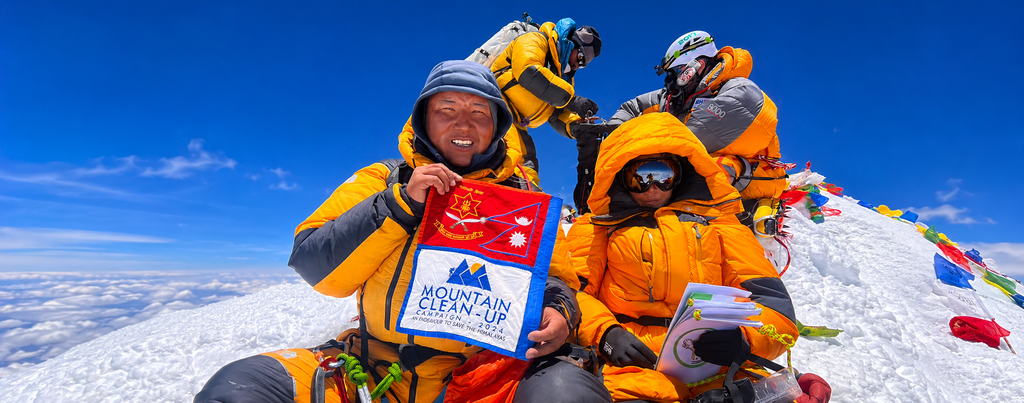
Recognizing this challenge, the Nepal Army's Safa Himal Campaign became an important mountain conservation initiative. The campaign focused on removing accumulated waste from high-altitude areas while also recovering human remains and supporting safer, more responsible mountaineering.
Between 2019 and 2024, the campaign removed approximately 180 metric tons of waste, recovered 12 deceased climbers, and retrieved three sets of human remains, according to the figures provided for the campaign.
Behind such a demanding operation was a complex network of military personnel, mountaineers, Sherpa teams, logistics providers, expedition professionals, and other stakeholders.
Among the organizations supporting the campaign was Peak Promotion Pvt. Ltd., which contributed to the logistics and operational management required to conduct field activities in some of the world's most difficult environments.
What Is the Safa Himal Campaign?
The Safa Himal Campaign, also known as the mountain clean-up campaign, was initiated to address environmental challenges in Nepal's high mountains.
High-altitude environments are particularly vulnerable to pollution because waste collection and transportation become increasingly difficult as elevation increases.
A discarded item at a lower-altitude trekking destination may be relatively easy to remove. At extreme elevations, however, collecting even small amounts of material can require:
- Specialized climbing teams
- Expedition equipment
- Transport planning
- High-altitude workers
- Base camp support
- Weather monitoring
- Route planning
- Safety coordination
- Waste transportation systems
The Safa Himal initiative therefore represents more than a conventional clean-up program.
It is a large-scale high-altitude environmental operation requiring coordination between multiple organizations and professionals.
Why Mountain Clean-Up Is Important for Nepal?
Nepal's mountains are an important part of the country's environmental, cultural, and tourism identity.
The Himalayas provide habitats for unique ecosystems and support communities whose livelihoods are connected to tourism, agriculture, natural resources, and mountain activities.
At the same time, Nepal's mountain tourism industry brings thousands of visitors and expedition members into high-altitude environments.
As mountaineering activity increases, responsible waste management becomes increasingly important.
✔ Protecting Fragile Himalayan Ecosystems
High-altitude ecosystems can be extremely sensitive to environmental disturbance.
Cold temperatures, limited vegetation, and difficult terrain can slow natural decomposition processes. Materials that might break down relatively quickly at lower elevations can remain in mountainous environments for much longer.
Removing waste therefore helps reduce the long-term environmental impact of expedition activity.
✔ Preserving the Beauty of the Mountains
The visual appeal of the Himalayas is one of Nepal's most important tourism assets.
Clean mountain environments help protect the natural character of trekking and climbing destinations.
✔ Supporting Responsible Mountaineering
Mountain clean-up programs also reinforce the idea that mountaineering comes with environmental responsibilities.
Expedition operators, climbers, guides, and tourism organizations all have a role to play in minimizing their impact.
The Scale of the Safa Himal Campaign
The figures associated with the campaign demonstrate the difficult nature of high-altitude conservation work.
| Campaign achievement | Reported figure |
| Waste removed | Approximately 180 metric tons |
| Deceased climbers recovered | 12 |
| Sets of human remains recovered | 3 |
| Campaign period covered | 2019–2024 |
| Primary focus | Mountain clean-up and recovery operations |
These figures illustrate that mountain conservation involves much more than collecting visible rubbish.
The recovery of deceased climbers and human remains represents a particularly difficult and sensitive part of high-altitude operations.
Such work requires careful planning, experienced personnel, appropriate equipment, and strong safety procedures.
Why Cleaning the Himalayas Is So Difficult?
A mountain clean-up operation at extreme altitude is fundamentally different from an ordinary environmental campaign.
The higher the team travels, the more difficult almost every aspect of the operation becomes.
✔ Extreme Altitude
High-altitude environments have reduced oxygen levels, which can significantly affect human performance.
Team members working at extreme elevations must carefully manage their physical condition and acclimatization.
For clean-up teams, this becomes even more challenging because they may need to carry heavy equipment and waste through difficult terrain.
✔ Unpredictable Himalayan Weather
Weather conditions in the Himalayas can change rapidly.
Strong winds, snowfall, storms, freezing temperatures, and poor visibility can make mountain operations dangerous.
A carefully planned operation may need to be delayed or modified because of changing weather conditions.
This makes flexible logistics planning essential.
✔ Difficult Terrain
Mountain waste is not necessarily located in easily accessible areas.
Materials may be found around:
- Base camps
- High-altitude camps
- Climbing routes
- Rocky sections
- Snow-covered areas
- Crevasses
- Steep slopes
Moving people and equipment across these environments requires extensive mountaineering experience.
✔ Limited Accessibility
Road networks do not reach most high-altitude expedition areas.
As a result, equipment and supplies may need to be transported using a combination of vehicles, porters, pack animals, helicopters, and human carriers, depending on location and operational requirements.
This makes logistics one of the most important components of any major Himalayan campaign.
Peak Promotion’s Role in the Safa Himal Campaign
Peak Promotion Pvt. Ltd. contributed to the campaign through logistics planning and operational support.
Working in the Himalayas requires detailed coordination long before teams reach the mountain.
Peak Promotion's responsibilities included areas such as:
- Logistics planning
- Transportation coordination
- Base camp operations
- Equipment management
- Supply management
- Manpower deployment
- Field support
- Expedition coordination
Each component contributes to the overall effectiveness of a high-altitude operation.
Managing High-Altitude Logistics
One of the most important contributions of an expedition logistics company is making sure that people, equipment, and supplies reach the right location at the right time.
For a mountain conservation campaign, this can involve coordinating multiple stages of transportation.
➜ Planning
Before an operation begins, teams need to determine:
- What equipment is required?
- How much food and water is needed?
- What transportation methods are available?
- Where will teams stay?
- What routes will be used?
- What emergency resources are required?
- How will collected waste be transported back down?
A detailed logistics plan helps reduce delays and operational risks.
➜ Transportation
Transporting supplies to high-altitude locations can be challenging.
Heavy equipment may need to move through multiple stages before reaching the operational area.
This requires coordination among drivers, porters, mountain workers, expedition teams, and other logistics personnel.
➜ Base Camp Operations
Base camps serve as important operational hubs during Himalayan expeditions.
They can support:
- Personnel
- Equipment
- Communications
- Food and supplies
- Medical resources
- Expedition coordination
- Waste management
Efficient base camp management can significantly improve the organization of field operations.
The Importance of Sherpa Expertise
No discussion of high-altitude operations in Nepal is complete without recognizing the contribution of the Sherpa community.
Sherpa mountaineers possess generations of knowledge about the Himalayan environment.
Their expertise includes:
- Mountain navigation
- High-altitude climbing
- Route knowledge
- Weather awareness
- Expedition support
- Load transportation
- Safety procedures
- Emergency response
For demanding conservation operations, this knowledge is particularly valuable.
Ang Babu Sherpa and High-Altitude Leadership
Sherpa Sardar Ang Babu Sherpa played an important operational role in the campaign, according to the information provided.
His extensive mountaineering experience supported activities involving high-altitude field operations, route coordination, expedition teams, and operational safety.
Leadership in a high-altitude environment requires more than technical climbing ability.
It involves making decisions under changing conditions, coordinating people across difficult terrain, and ensuring that operational objectives do not compromise safety.
Experienced mountain leaders therefore form an essential part of large-scale Himalayan expeditions.
From Mountain Expedition to Environmental Conservation
Traditionally, mountaineering expeditions have focused primarily on reaching summits.
Today, however, the concept of responsible mountaineering increasingly includes environmental stewardship.
A successful expedition should consider its impact before, during, and after the climb.
This includes:
• Before the Expedition
Teams can reduce unnecessary waste by planning supplies carefully and selecting reusable equipment wherever possible.
• During the Expedition
Waste should be collected, separated, and stored appropriately rather than abandoned along climbing routes or camps.
• After the Expedition
Teams should transport collected waste to appropriate disposal or recycling facilities whenever feasible.
Large-scale campaigns such as Safa Himal can complement these efforts by addressing accumulated waste and environmental challenges across major mountain areas.
Sustainable Tourism and Nepal’s Himalayan Future
Nepal's tourism economy is closely connected to its natural and cultural attractions.
The Himalayas are among the country's strongest tourism assets, attracting visitors interested in:
- Mountaineering
- Trekking
- Adventure tourism
- Nature
- Photography
- Cultural experiences
- Research
Protecting these resources is therefore important not only from an environmental perspective but also from a long-term tourism perspective.
Sustainable tourism seeks to balance tourism development with environmental protection and community interests.
For Nepal's mountain regions, this means ensuring that tourism does not permanently damage the very landscapes that attract visitors.
The Growing Importance of Mountain Waste Management
Mountain waste management is particularly challenging because conventional municipal waste systems generally cannot operate effectively at extreme elevations.
A comprehensive approach can involve several stages:
Waste Generation → Collection → Sorting → Transportation → Lower-Altitude Transfer → Processing/Disposal
Each stage requires coordination.
At high altitude, the most difficult stage may be collection and transportation. Once waste reaches lower elevations, conventional waste-management systems can become more practical.
This is why expedition logistics providers can play an important supporting role in environmental programs.
Why Logistics Matters in Himalayan Conservation?
Environmental conservation is often associated with scientists, environmental organizations, and government agencies.
However, large-scale conservation programs also depend heavily on logistics.
Consider the basic requirement of removing one kilogram of waste from a remote mountain.
Someone must:
- Locate the waste.
- Collect it safely.
- Package it.
- Move it through difficult terrain.
- Transport it to a lower elevation.
- Transfer it to an appropriate disposal or processing system.
Multiply this process across approximately 180 metric tons, and the scale of the logistical challenge becomes much clearer.
This is where experienced expedition operators and logistics providers become valuable partners.
Peak Promotion and Responsible Mountain Operations
Peak Promotion's involvement in the Safa Himal Campaign reflects a broader role that professional expedition companies can play in Nepal's mountain sector.
Rather than viewing mountain operations solely through the lens of tourism, responsible expedition management considers:
- Environmental protection
- Operational safety
- Efficient resource use
- Local expertise
- Waste management
- Community involvement
- Sustainable tourism
These principles can help Nepal maintain its position as a major international mountaineering destination while protecting its Himalayan environment.
Working Together to Protect the Himalayas
Mountain conservation cannot be achieved by a single organization.
The Safa Himal Campaign demonstrates the importance of collaboration between different groups, including:
- Nepal Army
- Government institutions
- Expedition companies
- Sherpa communities
- Mountaineers
- Environmental stakeholders
- Local communities
- Tourism organizations
Each group contributes different expertise.
Government institutions can provide coordination and oversight. Military and emergency teams can contribute personnel and operational capabilities. Sherpa mountaineers provide high-altitude expertise. Expedition companies can support logistics and field operations.
Together, these capabilities can make complex mountain conservation projects possible.
Beyond Clean-Up: Building a Culture of Responsible Mountaineering
Mountain clean-up campaigns are important, but long-term environmental protection requires prevention as well.
The mountaineering industry can contribute by promoting better practices throughout the expedition lifecycle.
This includes:
Reduce → Reuse → Recover → Remove
Reducing unnecessary materials lowers the amount of waste generated.
Reusable equipment can reduce disposable materials.
Recovering waste from camps prevents accumulation.
Removing waste after expeditions ensures that materials do not remain in the mountain environment.
A culture of responsible mountaineering can therefore complement large-scale clean-up initiatives.
What the Safa Himal Campaign Means for Nepal?
The campaign represents an important part of Nepal's broader effort to protect its Himalayan environment.
Its achievements demonstrate that environmental conservation at extreme altitude is possible when government institutions, mountain professionals, local communities, and private-sector organizations work together.
The reported recovery of approximately 180 metric tons of waste also highlights the importance of maintaining environmental standards as mountain tourism continues to develop.
For Nepal, protecting the Himalayas means protecting both a globally significant natural environment and an important part of the country's tourism identity.
The Future of Sustainable Mountain Tourism in Nepal
The future of Himalayan tourism will increasingly depend on balancing access with environmental responsibility.
Nepal can continue developing its mountaineering sector while strengthening practices related to:
- Mountain waste management
- Responsible expedition planning
- Environmental monitoring
- High-altitude safety
- Sustainable tourism
- Community participation
- Conservation partnerships
Technology may also play an increasing role in this process.
Digital mapping, GPS, satellite communication, geographic information systems, and improved expedition tracking can help organizations plan and monitor operations more efficiently.
Key Takeaways
The Safa Himal Campaign highlights several important lessons about mountain conservation:
- High-altitude conservation requires specialized expertise.
- Logistics is a critical part of successful mountain clean-up operations.
- Sherpa knowledge is essential for safe Himalayan field operations.
- Mountain waste management requires long-term planning.
- Government and private-sector collaboration can strengthen conservation efforts.
- Responsible mountaineering is essential for sustainable tourism.
- Protecting Nepal's mountains benefits both the environment and future tourism.
Frequently Asked Questions (FAQ's):
Q. What is the Safa Himal Campaign?
The Safa Himal Campaign is a mountain clean-up initiative focused on removing waste and addressing environmental challenges in Nepal's high Himalayan regions.
Q. Who conducted the Safa Himal Campaign?
The campaign was conducted under the leadership of the Nepal Army, with support and participation from various organizations, mountain professionals, and other stakeholders.
Q. How much waste was removed during the Safa Himal Campaign?
According to the figures provided for the campaign, approximately 180 metric tons of waste were removed between 2019 and 2024.
Q. How many deceased climbers were recovered?
The campaign recovered 12 deceased climbers, according to the campaign figures provided.
Q. Why is Himalayan mountain clean-up difficult?
High-altitude clean-up operations are difficult because of extreme elevation, low oxygen, unpredictable weather, steep terrain, snow and ice, and limited transportation access.
Q. What was Peak Promotion's role in the Safa Himal Campaign?
Peak Promotion Pvt. Ltd. provided support in areas including logistics planning, transportation, base camp operations, equipment and supply management, manpower deployment, and field operations.
Q. Why are Sherpa teams important in mountain clean-up operations?
Sherpa mountaineers provide valuable expertise in high-altitude climbing, route management, mountain navigation, logistics, and safety.
Q. Who is Ang Babu Sherpa?
Ang Babu Sherpa is an experienced Nepali mountaineering professional who contributed high-altitude leadership and operational expertise during the campaign.
Q. Why is mountain waste a problem?
Waste can remain in high-altitude environments for extended periods because of cold temperatures and difficult natural conditions. Accumulated waste can affect the mountain environment and its visual and ecological quality.
Q. How does mountain conservation support tourism?
Clean and well-managed mountain environments help protect Nepal's natural attractions and contribute to responsible and sustainable mountain tourism.
Q. What is sustainable mountaineering?
Sustainable mountaineering involves conducting expeditions while minimizing environmental impact, managing waste responsibly, respecting local communities, and prioritizing long-term protection of mountain environments.
Q. How can expedition companies contribute to Himalayan conservation?
Expedition companies can contribute through responsible waste management, efficient logistics, environmental planning, safety practices, local employment, and participation in conservation programs.
Conclusion
The Safa Himal Campaign demonstrates the enormous effort required to protect Nepal's high Himalayan environment.
Removing approximately 180 metric tons of waste, recovering deceased climbers, and retrieving human remains from extreme mountain environments required much more than physical effort. It required planning, experienced mountaineers, specialized equipment, transportation, leadership, and coordination between multiple organizations.
Peak Promotion Pvt. Ltd.'s contribution to logistics and operational management formed an important part of this effort. From transportation and base camp support to equipment management and manpower coordination, effective logistics helped enable operations in some of the world's most challenging environments.
The contribution of experienced mountain professionals such as Ang Babu Sherpa further highlights the importance of local Himalayan knowledge and leadership.
Ultimately, protecting Nepal's mountains is a shared responsibility. Government institutions, the Nepal Army, expedition companies, Sherpa communities, climbers, tourism businesses, and visitors all have a role to play.
As Nepal's mountaineering and tourism industries continue to develop, responsible expedition practices and environmental conservation will remain essential to protecting the Himalayas for future generations.
Peak Promotion Pvt. Ltd. remains committed to supporting safe mountaineering, responsible expedition operations, mountain conservation, and sustainable tourism in Nepal, helping preserve the country's extraordinary Himalayan heritage while supporting its future as a world-class mountain destination.