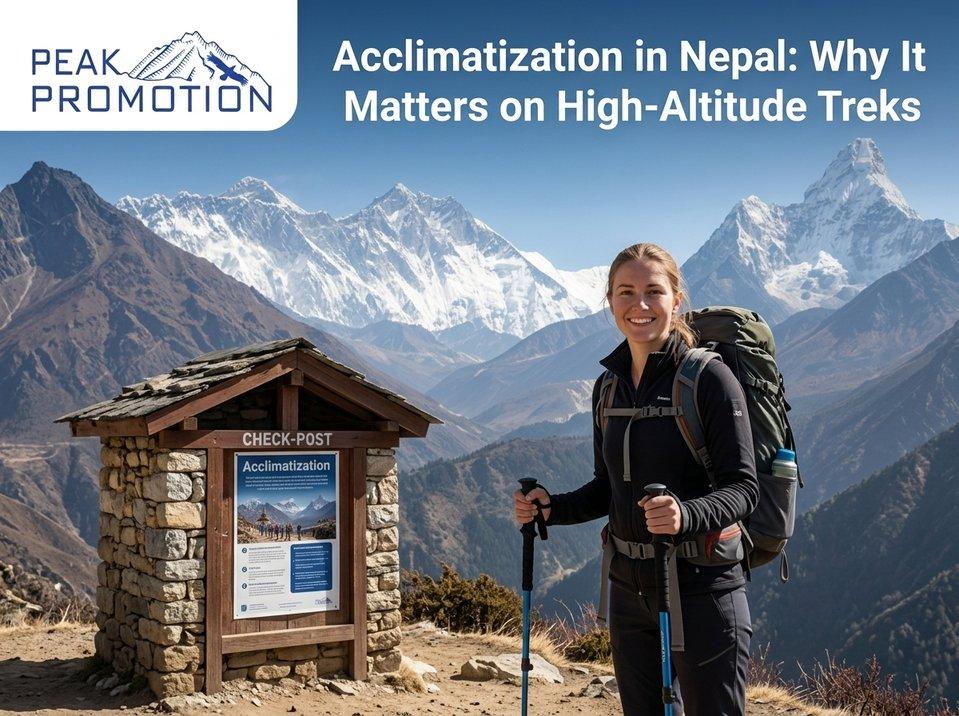
Acclimatization in Nepal: Why It Matters on High-Altitude Treks
Nepal is home to some of the world's most spectacular trekking destinations, from Everest Base Camp and the Annapurna Circuit to Langtang Valley and the challenging high passes of the Himalayas. These routes offer breathtaking scenery, traditional mountain villages and unforgettable adventures. However, trekking at high altitude also presents a significant physical challenge: the body needs time to adjust to lower oxygen availability.
This adjustment is known as acclimatization, and it is one of the most important considerations when planning a high-altitude trek in Nepal.
As trekkers ascend, atmospheric pressure decreases, meaning less oxygen is available with each breath. The body gradually responds by increasing breathing and making other physiological adjustments. Without sufficient time to adapt, trekkers may develop altitude-related illnesses that can disrupt a trip and, in severe cases, become life-threatening.
Whether you are preparing for the Everest Base Camp Trek, Annapurna Circuit, Langtang Valley Trek or another Himalayan adventure, understanding acclimatization can help you make better decisions, recognize warning signs and prepare for a safer journey.
In this guide, Peak Promotion Nepal explains why acclimatization matters, how to plan your ascent, which symptoms to recognize and how to approach high-altitude trekking responsibly.
What Is Acclimatization?
Acclimatization is the process through which the human body gradually adjusts to the lower oxygen availability experienced at high altitude.
At sea level, oxygen is readily available at the pressure your body is accustomed to. As you climb higher into the Himalayas, atmospheric pressure falls. Although the proportion of oxygen in the air remains approximately the same, each breath delivers less oxygen to your body.
Your body begins making adjustments, including:
- Breathing faster and more deeply
- Changes in blood oxygen levels
- Adjustments in circulation and fluid balance
- Physiological changes that develop over time with continued altitude exposure
Some adjustments begin within hours, while others develop over days or weeks. The early period after ascent is particularly important for trekkers because altitude-related illness can occur before acclimatization has progressed sufficiently.
According to the CDC's high-altitude travel guidance, the body's initial acclimatization process is especially important during the first several days after ascending. The rate of adjustment varies between individuals.
The essential principle is simple: ascending gradually gives your body more time to adapt.
Why Acclimatization Matters on Nepal Treks?
Many popular Nepal trekking routes rise above 2,500 meters, where travelers who are not acclimatized may be at risk of acute altitude illness. Risk depends on factors including sleeping altitude, ascent rate, individual susceptibility and previous experience at altitude.
▸ It Helps Reduce the Risk of Altitude Sickness
Acute mountain sickness (AMS) can develop after ascending to altitude too quickly.
Common symptoms include headache, nausea, dizziness, fatigue and reduced appetite. Symptoms may interfere with walking, eating and sleeping.
Gradual ascent and an appropriate itinerary help reduce the risk, although no schedule can guarantee that altitude sickness will not occur.
▸ It Supports Your Body's Adjustment to Lower Oxygen Availability
As you spend time at altitude, your body makes physiological adjustments that help it function under reduced oxygen availability.
However, acclimatization does not restore sea-level conditions. Physical performance generally remains reduced at high altitude, even after adjustment.
▸ It Can Improve Comfort and Sleep
Some trekkers experience disrupted sleep, breathlessness during exertion and reduced appetite at altitude.
Allowing time to adjust may improve comfort, but symptoms should not automatically be dismissed as normal acclimatization. A worsening headache, vomiting, unusual weakness or breathing difficulty requires attention.
▸ It Helps You Make Better Trekking Decisions
A realistic itinerary gives guides and trekkers more opportunities to monitor symptoms, adjust the walking pace and respond to changing conditions.
Without sufficient flexibility, a group may feel pressured to continue ascending even when someone is unwell. A well-planned trek prioritizes health over a fixed timetable.
What Happens to Your Body at High Altitude?
Understanding the body's response to altitude helps explain why acclimatization days are important.
| Physiological Change | What It Means for Trekkers |
| Increased breathing | Your body attempts to take in more oxygen |
| Changes in oxygen saturation | Blood oxygen levels may be lower than at sea level |
| Changes in fluid balance | Hydration and fluid management become important |
| Sleep disruption | Rest may be less comfortable at altitude |
| Reduced exercise capacity | Familiar walking distances may feel harder |
| Longer-term adaptation | Some physiological changes continue over days and weeks |
These changes are not identical for everyone. Two people following the same itinerary may respond differently to the same altitude.
Being young, physically fit or an experienced hiker does not eliminate the risk of altitude sickness.
Understanding Altitude Sickness
Altitude illness is an important safety consideration for anyone trekking in the Himalayas. Three conditions are particularly important to understand: acute mountain sickness, high-altitude cerebral edema and high-altitude pulmonary edema.
▸ Acute Mountain Sickness (AMS)
AMS is a common form of altitude illness. It often develops after a recent ascent and can cause:
- Headache
- Nausea
- Dizziness
- Fatigue
- Loss of appetite
- Difficulty sleeping
Headache combined with other symptoms after ascending can indicate AMS. Other conditions can produce similar symptoms, so assessment should consider the overall situation.
What should you do?
Do not continue ascending while experiencing suspected AMS. Inform your guide, rest at the current altitude and seek appropriate medical advice. If symptoms worsen or do not improve, descent may be necessary. Severe symptoms require prompt descent and medical assistance.
▸ High-Altitude Cerebral Edema (HACE)
HACE is a severe, potentially life-threatening altitude illness involving swelling of the brain.
Warning signs include:
- Confusion or unusual behavior
- Difficulty walking in a straight line or loss of coordination
- Severe weakness
- Altered consciousness
What should you do?
Treat suspected HACE as a medical emergency. Arrange immediate descent with assistance and emergency medical support. Do not leave the affected person alone or ask them to descend independently.
▸ High-Altitude Pulmonary Edema (HAPE)
HAPE is a serious condition involving fluid accumulation in the lungs.
Warning signs may include:
- Breathlessness that is unusual for the level of activity
- Breathlessness at rest
- Persistent cough
- Chest tightness or congestion
- Marked weakness
- Blue or gray lips in severe cases
What should you do?
Suspected HAPE requires urgent medical assistance, supplemental oxygen when available and prompt descent. Minimize exertion and arrange evacuation or other appropriate assistance if needed.
The Wilderness Medical Society's altitude-illness guidelines emphasize that descent is a key treatment for serious altitude illness.
Important: Do not assume that severe symptoms will disappear after one night's rest. Never continue ascending with worsening altitude-illness symptoms.
When Should You Start Acclimatizing?
Acclimatization planning should begin before you leave for the mountains.
The most important consideration is not simply the maximum elevation you reach during the day. The elevation at which you sleep and how quickly your sleeping altitude increases are especially important.
The CDC recommends considering staged ascent and spending time at a moderate altitude before proceeding higher when appropriate. Its guidance notes that spending two to three nights around 2,450–2,750 meters before further ascent can help reduce AMS risk. Individual itineraries must still be assessed according to the entire ascent profile.
Before booking your trek:
- Review the altitude of each overnight stop.
- Identify planned acclimatization days.
- Avoid itineraries with unnecessarily rapid gains in sleeping altitude.
- Discuss previous altitude sickness with a healthcare professional.
- Build flexibility into the schedule.
- Confirm that the guide and operator have a plan for illness and emergency descent.
The Importance of Gradual Ascent
Gradual ascent is one of the central principles of altitude-illness prevention.
Rather than climbing rapidly from a low elevation to a high sleeping altitude, trekkers should follow an itinerary that allows time for adjustment.
The exact schedule depends on the route and individual circumstances. A common planning principle above approximately 3,000 meters is to limit increases in sleeping elevation to roughly 300–500 meters per day where practical, with additional acclimatization days as needed. This is a planning guideline, not a guarantee of safety or a substitute for route-specific medical advice.
A responsible itinerary considers:
- Sleeping elevation each night
- Total elevation gain
- Previous acclimatization
- Time spent at intermediate elevations
- Health and previous altitude response
- Weather and route conditions
- Availability of lower sleeping elevations and evacuation options
Why Is Sleeping Altitude Important?
Your body continues to experience the effects of altitude while you sleep. A trekker who climbs high during the day but returns to a lower sleeping elevation may experience a different altitude exposure from someone who sleeps at the highest point reached.
For this reason, an itinerary should be evaluated by its full ascent profile—not simply by its highest viewpoint.
What Is an Acclimatization Day?
An acclimatization day is a planned day that allows trekkers to adjust to altitude before continuing to a higher sleeping elevation.
It does not necessarily mean staying indoors or avoiding all physical activity.
Depending on the route, the group may take a shorter walk, explore nearby villages or climb to a higher point before returning to sleep at the same elevation.
What Should You Do on an Acclimatization Day?
- Follow your guide's plan.
- Keep activity comfortable rather than exhausting.
- Eat regular meals.
- Drink fluids according to your needs.
- Monitor headache, nausea, dizziness and unusual fatigue.
- Avoid alcohol and sedatives that may worsen sleep or breathing.
- Report symptoms promptly.
- Avoid ascending to a higher sleeping elevation if you are unwell.
Acclimatization days are not wasted days. They are part of the trekking plan and can help reduce the risk of illness.
Climb High, Sleep Low: What Does It Mean?
"Climb high, sleep low" is a commonly used principle in high-altitude trekking.
It means that, when appropriate for the route and the trekker's condition, you may walk to a higher elevation during the day and return to a lower elevation to sleep.
For example, a group staying at a mountain village might take a supervised acclimatization walk to a nearby viewpoint before returning to the same lodge.
This approach can provide additional altitude exposure without requiring the group to sleep at the highest point reached that day.
However, it is not suitable in every circumstance. The walk must be appropriate for the route, weather, fitness and health of the group. It should never be used to justify pushing through altitude symptoms.
Acclimatization on Popular Nepal Trekking Routes
Different trekking routes require different acclimatization strategies. The following examples illustrate why the route and sleeping elevations matter.
| Trekking Route | High-Altitude Consideration | Planning Priority |
| Everest Base Camp | Overnight elevations rise progressively toward the high Khumbu | Include acclimatization stops and monitor symptoms |
| Annapurna Circuit | The route crosses high terrain, including Thorong La Pass | Plan a suitable ascent profile and pass-crossing day |
| Langtang Valley | The route rises toward Kyanjin Gompa, with higher optional viewpoints | Allow time to adjust before higher excursions |
| Manaslu Circuit | The route includes remote high-altitude sections and Larkya La Pass | Use a carefully planned itinerary with contingency time |
| Mardi Himal | Higher sections can approach 4,500 meters | Assess sleeping altitude, pace and symptoms carefully |
| Ghorepani Poon Hill | Lower maximum elevation than many major Himalayan treks | Still prepare for sustained walking and elevation gain |
Exact itineraries vary. A viewpoint's elevation does not necessarily represent the altitude where you sleep, and reaching a high point during a day hike does not automatically mean the itinerary is well acclimatized.
✦ Everest Base Camp Trek
The Everest Base Camp Trek reaches approximately 5,364 meters at base camp, with some popular viewpoints higher still.
Because of the altitude and the route's progressive ascent, the itinerary should include appropriate acclimatization stops. Trekkers should not rush through the Khumbu simply to save a day.
Learn more about the Everest Base Camp Trek.
✦ Annapurna Circuit Trek
The Annapurna Circuit includes a high-altitude crossing at Thorong La Pass, approximately 5,416 meters.
The route requires careful preparation, a suitable acclimatization schedule and attention to changing weather and trail conditions. The crossing should not be treated as an ordinary hiking day.
✦ Langtang Valley Trek
The Langtang Valley Trek offers a gradual journey from lower elevations toward Kyanjin Gompa and nearby high viewpoints.
Trekkers planning to climb Kyanjin Ri should consider the extra elevation gain and avoid treating the viewpoint as an essential objective if they are not feeling well.
Learn more about the Langtang Valley Trek.
✦ Manaslu Circuit Trek
The Manaslu Circuit is a more remote and demanding option, with high-altitude terrain and a pass crossing.
Groups should allow suitable time for acclimatization, understand the challenges of remote trekking and confirm their emergency and evacuation arrangements before departure.
Does Physical Fitness Prevent Altitude Sickness?
No. Physical fitness is valuable for trekking, but it does not guarantee protection against altitude sickness.
A well-trained runner or experienced hiker can still develop AMS if they ascend too quickly. Conversely, a moderately fit trekker may acclimatize successfully when following an appropriate itinerary, although fitness remains important for completing the physical demands of the route.
Fitness preparation helps with:
- Walking endurance
- Uphill climbing
- Downhill control
- Carrying a daypack
- Recovering between walking days
Acclimatization addresses a different challenge: the body's response to reduced oxygen availability.
The best preparation combines physical conditioning with gradual ascent, sensible scheduling and awareness of symptoms.
Can You Prepare for Acclimatization Before Arriving in Nepal?
You can prepare for a high-altitude trek before arriving in Nepal, but sea-level exercise alone cannot reproduce the full process of acclimatization.
What Helps Before Your Trek?
Build endurance: Regular walking, hiking and cardiovascular exercise can help you manage long trekking days.
Practice uphill walking: Stairs and inclines prepare your legs for sustained climbs.
Strengthen your legs and core: Strength training may help with balance, stability and carrying a pack.
Review your itinerary: Understand the sleeping elevations and acclimatization days before booking.
Seek medical advice when appropriate: Discuss altitude risks, previous altitude illness and preventive medication with a qualified healthcare professional.
What Does Not Replace Acclimatization?
- Being physically fit
- Completing intense workouts at sea level
- Taking a rest day at a low elevation when the route requires adjustment at a higher elevation
- Relying on supplements or traditional remedies
- Assuming that a previous successful trek guarantees the same result next time
Your body must still adjust to the actual altitude exposure during the journey.
Hydration, Food and Rest During Acclimatization
Good daily habits can support your overall well-being while trekking, but they do not eliminate altitude-illness risk.
▸ Stay Hydrated
Drink regularly according to your activity, thirst, weather and individual needs. Cold conditions can reduce the sensation of thirst, so make a conscious effort to drink throughout the day.
Avoid forcing excessive amounts of water. Overhydration can also be dangerous.
▸ Eat Regular Meals
Long trekking days require energy. Teahouse meals such as dal bhat, rice, potatoes, soups, vegetables and other available foods can help you maintain your energy intake.
At altitude, appetite may decrease. Choose meals you can tolerate and tell your guide if nausea or loss of appetite becomes significant.
▸ Prioritize Rest
Allow time to sleep and recover between trekking days. Poor sleep can occur at altitude, but severe or worsening symptoms should not be dismissed as ordinary tiredness.
▸ Avoid Alcohol and Sedatives
Alcohol can impair judgment and contribute to dehydration, while sedatives and some other medications can depress breathing. Discuss medication concerns with a healthcare professional before travelling to altitude.
Should You Take Medication for Altitude Sickness?
Some travelers may benefit from preventive medication, including acetazolamide, depending on their personal risk and ascent plan.
However, medication decisions should be made with a qualified healthcare professional who understands the travel itinerary, medical history, allergies and other medications.
Do not self-prescribe altitude medication or use it as a substitute for gradual ascent.
The Wilderness Medical Society recommends considering acetazolamide for travelers at moderate or high risk of acute mountain sickness, but the decision should be individualized.
If medication is recommended, understand how and when to use it, its possible side effects and what to do if symptoms occur despite taking it.
Medication does not make an unsafe ascent safe, and no preventive medicine guarantees that altitude illness will not occur.
What Should You Do if You Develop Altitude Symptoms?
Recognizing symptoms early can prevent a manageable problem from becoming an emergency.
If you develop a headache, nausea, dizziness or unusual fatigue after ascending:
- Tell your guide or trekking companion immediately.
- Stop ascending while suspected altitude sickness is assessed.
- Rest at the current elevation if symptoms are mild and you are being appropriately monitored.
- Seek medical advice and follow the guide's safety plan.
- Descend if symptoms worsen, fail to improve as advised or become severe.
- Arrange urgent medical assistance for confusion, loss of coordination, breathlessness at rest or other serious symptoms.
Do not continue ascending simply because the group has a fixed departure date or a summit objective.
Severe AMS, suspected HACE and suspected HAPE require urgent action. Descent and emergency care should not be delayed while waiting to see whether symptoms resolve on their own.
Common Acclimatization Mistakes Trekkers Should Avoid
▸ Ascending Too Quickly
A packed itinerary may leave insufficient time to adjust to higher sleeping elevations.
Better approach: Choose an itinerary that accounts for altitude and includes appropriate acclimatization opportunities.
▸ Ignoring Early Symptoms
Headaches, nausea and unusual fatigue may be dismissed as normal trekking discomfort.
Better approach: Report symptoms early and monitor whether they improve or worsen.
▸ Believing Fitness Guarantees Safety
Good endurance does not prevent altitude sickness.
Better approach: Prepare physically, but treat acclimatization as a separate priority.
▸ Skipping Planned Acclimatization Days
Removing an acclimatization day to shorten a trek may increase risk.
Better approach: Preserve the days included for altitude adjustment and allow flexibility for health or weather concerns.
▸ Taking Medication Without Advice
Unsupervised medication use can create avoidable risks.
Better approach: Discuss preventive options and emergency plans with a qualified healthcare professional before departure.
▸ Continuing to Ascend When Unwell
Group pressure or a desire to reach a destination can lead trekkers to make unsafe decisions.
Better approach: Make health the priority and follow appropriate medical and guide advice.
How a Trekking Guide Helps With Acclimatization?
A qualified local guide can play an important role in planning and monitoring a high-altitude trek.
Support may include:
- Reviewing the itinerary and sleeping elevations
- Identifying suitable acclimatization days
- Explaining common altitude-illness symptoms
- Monitoring the group's general condition
- Adjusting the walking pace
- Recommending a halt or descent when needed
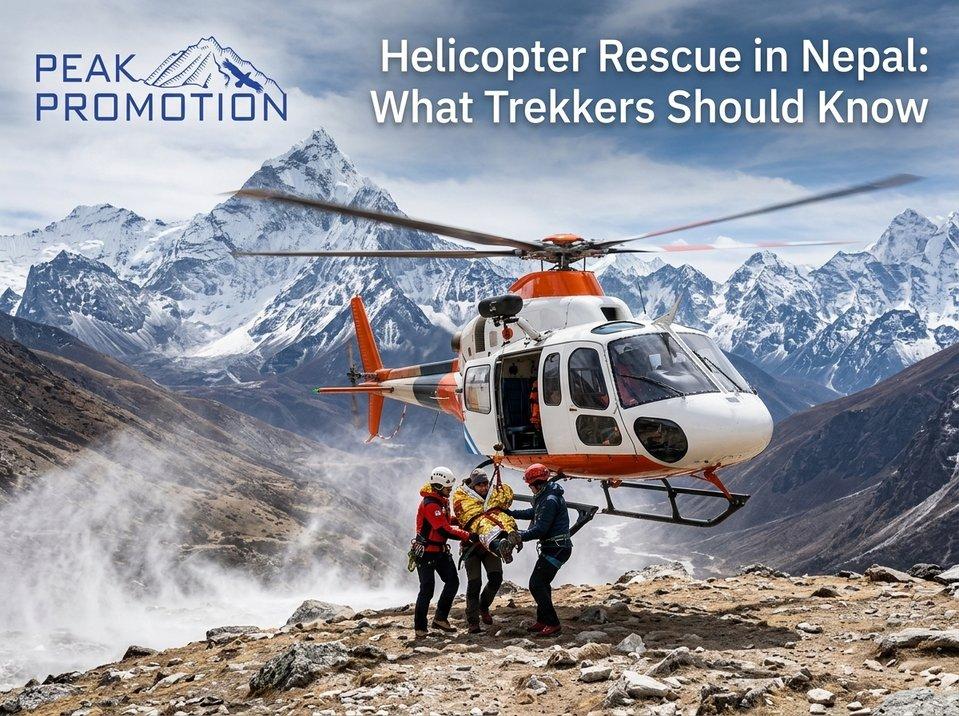
- Coordinating medical assistance and evacuation arrangements
A guide is not a replacement for a medical professional, and having a guide does not eliminate altitude risks. Trekkers should communicate symptoms honestly and follow appropriate medical guidance.
Acclimatization Checklist Before a Nepal Trek
Before heading into the mountains, confirm that you have considered the following:
- Reviewed the sleeping altitude for every overnight stop
- Included suitable acclimatization days
- Avoided unnecessarily rapid ascent
- Discussed previous altitude sickness with a healthcare professional
- Understood common AMS symptoms
- Learned the warning signs of HACE and HAPE
- Discussed preventive medication where appropriate
- Arranged suitable travel insurance
- Confirmed guide and emergency arrangements
- Planned flexibility for weather and health issues
- Agreed that no one will continue ascending when seriously unwell
Frequently Asked Questions (FAQ's):
Q. What is acclimatization in trekking?
Acclimatization is the body's gradual adjustment to lower oxygen availability at high altitude. It takes time and varies between individuals.
Q. Why is acclimatization important in Nepal?
Many Nepal trekking routes reach elevations where altitude illness can occur. Appropriate acclimatization helps reduce risk and gives trekkers time to adjust before ascending further.
Q. At what altitude does acclimatization become important?
Altitude illness becomes a concern for many unacclimatized travelers above approximately 2,500 meters, although individual responses vary and illness can sometimes occur at lower elevations.
Q. How many acclimatization days do I need?
There is no universal number. The appropriate schedule depends on the route, sleeping elevations, ascent rate, previous acclimatization and individual risk. Follow a carefully planned itinerary rather than relying on a fixed number of rest days.
Q. Can I prevent altitude sickness completely?
No. Gradual ascent and other preventive measures reduce risk but cannot guarantee prevention.
Q. Does being physically fit prevent altitude sickness?
No. Fitness can help you manage the physical demands of trekking, but it does not guarantee that you will acclimatize successfully.
Q. What are the first symptoms of altitude sickness?
Common symptoms of AMS include headache, nausea, dizziness, fatigue and loss of appetite after ascent. Symptoms should be reported rather than ignored.
Q. Should I continue trekking if I have a headache?
A headache at altitude can have several causes. If it occurs after ascent, especially with nausea or dizziness, tell your guide and do not continue ascending until the situation has been assessed. Worsening or severe symptoms require prompt medical attention.
Q. Is one acclimatization day enough?
Not necessarily. The required schedule depends on the itinerary and how quickly sleeping altitude increases. Some routes need multiple acclimatization stops.
Q. Can I take medicine to prevent altitude sickness?
Preventive medication may be appropriate for some travelers. Discuss the risks, benefits and correct use with a qualified healthcare professional before the trek.
Q. Does drinking more water prevent altitude sickness?
No. Adequate hydration supports general health, but drinking excessive amounts of water does not prevent altitude sickness and can itself be dangerous.
Q. Is acclimatization necessary on the Everest Base Camp Trek?
Yes. The route reaches high elevations, so a suitable ascent profile and planned acclimatization stops are important parts of responsible itinerary planning.
Q. What should I do if someone shows signs of severe altitude sickness?
Arrange urgent medical assistance and descent. Confusion, loss of coordination, breathlessness at rest and other serious symptoms may indicate a life-threatening emergency. Do not leave the person alone or allow them to continue ascending.
Q. Can I acclimatize before arriving in Nepal?
Spending time at an appropriate moderate altitude before ascending higher may help some travelers, but ordinary sea-level exercise does not replace acclimatization at altitude. Seek advice based on your planned itinerary.
Final Thoughts: Give Your Body Time to Adjust
Acclimatization is a fundamental part of responsible high-altitude trekking in Nepal. The Himalayas reward preparation, patience and sound decision-making, and allowing your body time to adjust is just as important as choosing the right boots or training before departure.
Whether you are heading to Everest Base Camp, crossing the Annapurna Circuit, exploring Langtang Valley or trekking another high-altitude route, plan your sleeping elevations carefully, include appropriate acclimatization time and recognize symptoms early.
Remember: the goal is not simply to reach a destination, but to complete the journey as safely as possible.
Ready to Trek Nepal?
Explore Nepal's Himalayas with experienced local support, carefully planned itineraries and reliable trekking logistics.
Peak Promotion Pvt. Ltd.
Contact: +977 9841135705
Email: info@peakpromotionnepal.com
Location: Lazimpat, Kathmandu 44600, Nepal
Plan Your Trek with Peak Promotion Nepal.