What Do You Eat While Trekking in Nepal?
One of the most common questions first-time trekkers ask before visiting Nepal is simple:
What do you actually eat while trekking in the Himalayas?
The good news is that you are unlikely to survive on trail mix and energy bars alone.
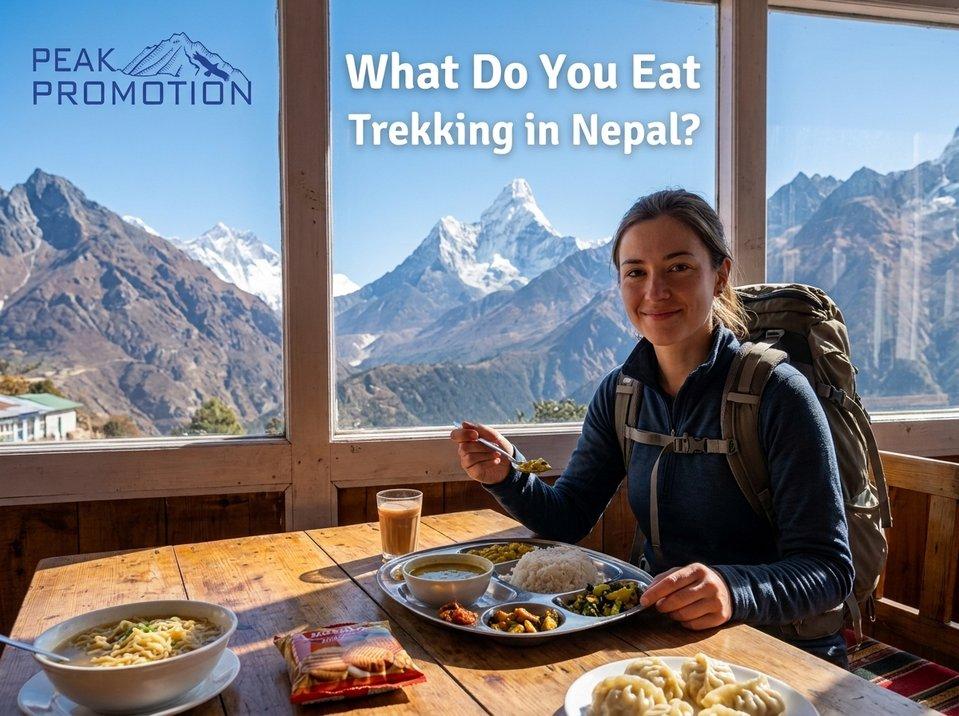
Nepal's popular trekking routes have an extensive teahouse and lodge food culture, with menus offering a mixture of traditional Nepali meals, Tibetan-influenced dishes, Asian staples and familiar international food.
You can find everything from dal bhat and vegetable curry to noodles, pasta, soup, potatoes, eggs, pancakes, porridge and momo, depending on the route and altitude.
However, food choices become more limited as you travel higher and farther from major settlements. At high altitude, the priority also shifts from eating for variety to eating for energy, hydration and recovery.
Whether you are preparing for the Everest Base Camp Trek, Annapurna Circuit, Annapurna Base Camp, Langtang Valley Trek, Manaslu Circuit or another Himalayan route, understanding the food available can make your trek more comfortable.
This guide explains what you eat while trekking in Nepal, what meals are commonly available, what to eat at high altitude, vegetarian and vegan options, food safety, snacks, hydration and what you should pack.
What Is Food Like on a Nepal Trek?
Food on Nepal's trekking routes is generally simple, filling and designed to provide energy for long days of walking.
Most teahouses offer a menu with some combination of:
- Dal bhat
- Rice
- Lentils
- Vegetable curry
- Noodles
- Pasta
- Fried rice
- Soups
- Potatoes
- Eggs
- Pancakes
- Porridge
- Bread
- Momo
- Sandwiches
- Sherpa/Tibetan-style dishes
- Tea
- Coffee
- Hot chocolate
The selection depends heavily on the trekking region and altitude.
A lodge in Namche Bazaar may offer significantly more variety than a small teahouse several days farther up the Everest route.
Likewise, food options on popular Annapurna routes can differ from those available on remote restricted-area treks.
The general rule is:
The higher and more remote you go, the simpler the menu tends to become.
Dal Bhat: The Classic Trekking Meal
If there is one meal trekkers should know before coming to Nepal, it is dal bhat.
Dal bhat is traditionally a combination of:
- Rice
- Lentil soup
- Vegetable curry
- Pickles
- Other vegetable sides
The exact preparation varies from household to household and lodge to lodge.
For trekkers, dal bhat has a major advantage:
It is filling, familiar after a few days, and provides a substantial carbohydrate-based meal with protein from lentils.
Many trekking lodges offer dal bhat, making it one of the most dependable meals on a Nepal trek.
For long trekking days, having a substantial meal in the evening can be especially useful for replenishing energy.
Is Dal Bhat Really Unlimited?
You may hear travelers describe dal bhat as an “unlimited” trekking meal.
In many traditional settings, additional servings of rice, dal or selected sides may be offered, although practices vary by lodge and location.
Don't assume every restaurant or teahouse operates under exactly the same policy.
The important point is that dal bhat is widely associated with generous portions and is one of the most practical meals for hungry trekkers.
What Do You Eat for Breakfast?
Breakfast is important because you may have several hours of walking ahead.
Typical trekking breakfasts can include:
▸ Porridge
Oatmeal or porridge can provide a warm and filling start to the day.
You may find it served with:
- Milk
- Honey
- Sugar
- Fruit
- Dried fruit
▸ Eggs
Eggs are commonly available in different preparations:
- Boiled
- Fried
- Scrambled
- Omelette
They can be combined with bread, toast or potatoes.
▸ Pancakes
Pancakes are popular among trekkers and may be served with:
- Honey
- Jam
- Peanut butter
- Chocolate
- Banana
▸ Tibetan Bread
Tibetan-style bread can be a filling breakfast option and is particularly associated with Himalayan trekking areas.
▸ Toast and Jam
Simple, familiar and easy to eat.
▸ Muesli or Cereal
Some teahouses offer muesli or cereal, particularly on popular routes.
What Do You Eat for Lunch?
Lunch is often eaten at a teahouse or restaurant along the trail.
Common choices include:
- Dal bhat
- Fried rice
- Fried noodles
- Pasta
- Soup
- Momo
- Sandwiches
- Potatoes
- Eggs
- Vegetable curry
Lunch should ideally provide enough energy to continue walking without leaving you overly full or uncomfortable.
A warm meal can also be particularly satisfying in cold mountain environments.
What Do You Eat for Dinner?
Dinner is often the largest meal of the day.
Popular choices include:
▸ Dal Bhat
Rice, lentils, vegetables and curry.
▸ Pasta
Simple tomato, cheese or vegetable-based pasta may be available.
▸ Noodles
Fried or soupy noodles are common.
▸ Fried Rice
A practical carbohydrate-rich option.
▸ Momo
Nepal's popular dumplings may be filled with:
- Vegetables
- Cheese
- Meat
Availability depends on the location.
▸ Soup
Common options include:
- Garlic soup
- Vegetable soup
- Mushroom soup
- Noodle soup
- Sherpa stew
A warm bowl of soup can be especially appealing after a cold trekking day.
What Are Momo?
Momo are steamed or fried dumplings popular throughout Nepal and the Himalayan region.
They can be:
- Vegetable
- Chicken
- Buff
- Cheese
- Other locally available fillings
They are usually served with a dipping sauce.
Momo can make a great snack or meal, but food hygiene still matters. Choose busy, reputable teahouses where food turnover is likely to be good.
What Is Sherpa Stew?
On some Everest-region menus, you may encounter Sherpa stew, a hearty soup-like meal containing ingredients such as vegetables, noodles, potatoes and other locally available ingredients.
The exact recipe varies by lodge.
It is particularly appealing after a long day because warm liquid and carbohydrates can be easy to consume when you are tired or cold.
What Snacks Can You Buy While Trekking?
Snacks are an important part of trekking nutrition.
Depending on the route, you may find:
- Chocolate
- Biscuits
- Energy bars
- Nuts
- Dried fruit
- Potato chips
- Popcorn
- Cookies
- Peanut butter
- Chocolate bars
- Fresh fruit
- Instant noodles
However, prices generally increase as you move higher because transporting supplies into remote mountain areas becomes more difficult.
This is one reason many trekkers carry some favorite snacks from Kathmandu.
Should You Bring Your Own Snacks?
Yes.
Even though food is available along most popular routes, carrying a personal supply is useful.
Good options include:
- Energy bars
- Trail mix
- Nuts
- Dried fruit
- Chocolate
- Peanut butter packets
- Granola
- Biscuits
- Electrolyte products
Choose foods you already know you enjoy.
At high altitude, your appetite may change, so having familiar foods can make eating easier.
What Do You Drink While Trekking?
Hydration is essential during trekking.
Common drinks include:
- Water
- Tea
- Black tea
- Milk tea
- Lemon tea
- Ginger tea
- Mint tea
- Hot chocolate
- Coffee
- Soup
- Electrolyte drinks
Tea is particularly popular in Nepal's trekking regions.
After several hours of walking in cold weather, a hot cup of tea can be one of the most enjoyable parts of arriving at a teahouse.
Is Tap Water Safe to Drink?
Trekkers should not assume that untreated tap, stream or spring water is automatically safe to drink.
Water treatment is an important part of trekking preparation.
Depending on the route and your preferences, options include:
- Water purification tablets
- Water filters
- UV purification devices
- Treated bottled water
Ask your trekking operator about the safest water strategy for your specific route.
Carrying a reusable bottle or hydration system also helps reduce dependence on disposable plastic bottles.
How Much Water Should You Drink?
There is no single universal amount that every trekker must drink.
Your hydration needs depend on:
- Temperature
- Exercise level
- Elevation
- Individual body size
- Sweating
- Food intake
- Health conditions
Drink regularly and pay attention to your body's signals.
Avoid both dehydration and forcing excessive amounts of water simply because someone told you that you must drink a fixed number of litres.
Your guide can also help you understand practical hydration needs for the route and day's conditions.
What Should You Eat at High Altitude?
At high altitude, food serves an important purpose:
Energy.
Walking at elevation is physically demanding, and many trekkers find that their appetite changes.
Carbohydrate-rich foods can be particularly useful for endurance activity.
Good trekking choices can include:
- Rice
- Potatoes
- Pasta
- Noodles
- Porridge
- Bread
- Dal
- Fruits
- Soups
Protein is also important for normal recovery and can come from:
- Eggs
- Lentils
- Beans
- Dairy
- Nuts
- Meat
- Other available protein sources
The goal is not to create a perfect sports-nutrition plan.
The goal is to eat enough varied, familiar food to support the physical demands of the trek.
Does Altitude Affect Appetite?
It can.
Some trekkers experience reduced appetite or nausea at altitude.
This can make eating difficult precisely when the body is working hard.
If large meals become uncomfortable, smaller portions and frequent snacks may be easier.
Useful options can include:
- Soup
- Porridge
- Potatoes
- Rice
- Fruit
- Crackers
- Chocolate
- Nuts
- Energy bars
If persistent nausea, vomiting, severe headache or other concerning symptoms develop at altitude, don't assume the problem is simply a lack of appetite. Altitude illness needs to be taken seriously.
What Is the Best Food for Everest Base Camp Trek?
There is no single “best” food for the Everest Base Camp Trek.
A practical combination might be:
Breakfast:
Porridge + eggs + bread + tea
Lunch:
Dal bhat or noodles + soup
Snack:
Nuts + chocolate + dried fruit
Dinner:
Dal bhat, pasta, potatoes or soup
Drinks:
Water + tea + other suitable fluids
The ideal choice is food that:
- You enjoy
- You tolerate well
- Provides enough energy
- Is available at your lodge
- Does not cause digestive problems
Food on the Annapurna Circuit
The Annapurna Circuit passes through many settlements, so trekkers can often find a relatively broad selection of food.
Common meals include:
- Dal bhat
- Momo
- Noodles
- Pasta
- Rice
- Potatoes
- Soups
- Eggs
- Tibetan-style dishes
- Bread
- Pancakes
Food availability changes as the route enters higher and more remote sections.
As you approach high passes such as Thorong La, the focus becomes increasingly practical: warm food, hydration and enough energy to complete the day's demanding section.
Food on the Annapurna Base Camp Trek
The Annapurna Base Camp route has numerous teahouses and lodges along the trail.
Trekkers can typically find:
- Dal bhat
- Rice
- Noodles
- Pasta
- Soup
- Momo
- Eggs
- Pancakes
- Bread
- Vegetables
- Hot drinks
The variety depends on the individual lodge and location.
Food on the Langtang Trek
Langtang trekking lodges commonly provide straightforward meals suitable for trekkers.
Options may include:
- Dal bhat
- Noodles
- Pasta
- Rice
- Potatoes
- Soup
- Eggs
- Pancakes
- Tea
- Coffee
The further you travel from major settlements, the more limited the choices may become.
Can Vegetarians Eat Well in Nepal?
Yes.
Nepal is generally a very manageable destination for vegetarian trekkers.
Many common trekking meals are vegetarian or can be prepared without meat.
Options can include:
- Dal bhat
- Vegetable curry
- Vegetable momo
- Vegetable noodles
- Vegetable fried rice
- Potato dishes
- Soup
- Pasta
- Pancakes
- Porridge
- Eggs, if you eat them
When ordering, clearly communicate that you do not eat meat.
If you have strict dietary requirements, explain them clearly to your guide and lodge staff.
Can Vegans Eat on a Nepal Trek?
Vegan trekking is possible, but it requires more planning.
Some foods that may contain dairy or animal products include:
- Milk tea
- Butter
- Cheese
- Yogurt
- Certain breads
- Some sauces
- Some soups
Tell your guide and lodge staff clearly that you are vegan.
It is also wise to carry backup snacks in case the available menu becomes limited.
Useful personal supplies can include:
- Nuts
- Nut butter
- Energy bars
- Dried fruit
- Plant-based protein snacks
What If You Have Food Allergies?
Food allergies require careful preparation.
Before the trek:
- Tell your trekking agency.
- Inform your guide.
- Carry clearly labeled medication if prescribed.
- Learn how to communicate your allergy.
- Carry safe backup foods.
- Understand that remote areas may have limited alternatives.
Do not assume that a dish is safe simply because its ingredients appear simple.
Cross-contact can also be an issue in small kitchens.
Is Meat Safe to Eat While Trekking?
Meat is available on many trekking routes, but trekkers should use judgment.
As elevation increases, transportation and refrigeration become more challenging.
If you choose meat:
- Eat at reputable lodges.
- Choose food that appears freshly prepared.
- Avoid meat that has been sitting out.
- Be particularly cautious in remote/high-altitude locations.
- Follow your guide's local advice.
Many trekkers choose vegetarian meals at higher elevations because they are often simpler and easier to source.
This does not mean all meat is unsafe; it simply reflects practical food-safety considerations in remote mountain environments.
Should You Avoid Fresh Vegetables?
Not necessarily.
Fresh vegetables can be part of a healthy trekking diet.
However, food hygiene and water quality matter.
If you are uncertain about how vegetables were washed or prepared, ask your guide or choose cooked vegetables.
Cooked food that is served hot is generally a more straightforward choice than foods requiring extensive raw preparation.
What About Fruit?
Fruit can be a useful source of carbohydrates and micronutrients.
Depending on the route and season, you may find:
- Bananas
- Apples
- Oranges
- Other locally available fruits
Availability becomes more limited as you travel higher.
Some trekkers carry dried fruit because it is lightweight, durable and convenient.
Garlic Soup and Altitude
You will often hear that garlic soup is a special remedy for altitude sickness.
Garlic soup can certainly be a warm and enjoyable meal.
However, it should not be considered a treatment or prevention method for altitude sickness.
The most important strategies for altitude safety include:
- Gradual ascent
- Proper acclimatization
- Monitoring symptoms
- Avoiding further ascent when sick
- Descending when serious altitude illness is suspected
Food cannot replace proper altitude management.
What About Alcohol?
Alcohol is best limited or avoided during the early period of acclimatization and while trekking at high altitude.
Alcohol can contribute to dehydration and may interfere with sleep, while poor sleep can make the trekking experience more difficult.
If you are experiencing altitude symptoms, alcohol is particularly inappropriate.
Prioritize:
Water → food → rest → acclimatization.
What About Coffee?
Coffee is available at many trekking lodges.
If you normally drink coffee, there is generally no need to suddenly eliminate it solely because you are trekking.
However, remember that caffeine affects people differently.
If coffee:
- Disrupts your sleep
- Upsets your stomach
- Makes you feel uncomfortable
- Replaces proper hydration
then reduce it.
At altitude, quality sleep and adequate hydration are more important than maintaining your normal caffeine routine.
How Much Does Food Cost While Trekking in Nepal?
Food prices generally increase as you move higher into the mountains.
This is because supplies have to be transported to increasingly remote locations.
The price of a meal depends on:
- Trekking region
- Elevation
- Lodge
- Menu item
- Portion size
- Availability of ingredients
A meal in Kathmandu can be substantially cheaper than the same type of meal in a remote high-altitude teahouse.
Rather than relying on a single nationwide price, budget according to your route and the current lodge menus.
Your trekking agency can provide a realistic daily food budget before departure.
Why Does Food Become More Expensive Higher Up?
The answer is logistics.
A bag of rice, cooking fuel, vegetables, eggs or other supplies must reach the lodge somehow.
Depending on the location, supplies may be transported by:
- Porters
- Pack animals
- Vehicles where roads exist
- Air transport in some areas
The farther and higher the food has to travel, the more expensive it can become.
This is one reason supporting local teahouses and understanding mountain logistics is important.
What Food Should You Carry From Kathmandu?
You do not need to carry your entire food supply from Kathmandu.
However, bringing some personal snacks is a good idea.
Consider:
▸ Energy Snacks:
- Energy bars
- Granola bars
- Chocolate
▸ Healthy Snacks:
- Almonds
- Cashews
- Walnuts
- Trail mix
- Dried fruit
▸ Familiar Foods;
- Favorite biscuits
- Peanut butter
- Crackers
▸ Dietary-Specific Foods:
If you are vegan, vegetarian, gluten-free or have allergies, bring backup options that you know you can eat.
What Not to Pack?
Avoid carrying excessive quantities of heavy food.
Remember:
Every gram you carry becomes part of your trekking load.
Instead, carry lightweight, calorie-dense snacks and rely on teahouses for your main meals on established routes.
A Sample Day of Trekking Food
A typical day might look like this:
▸ Morning
Breakfast:
- Porridge or eggs
- Bread
- Fruit
- Tea
▸ During the Trek
Snacks:
- Nuts
- Chocolate
- Energy bar
- Dried fruit
▸ Lunch
Main meal:
- Dal bhat or noodles
- Soup
- Tea
▸ Afternoon
Snack:
- Biscuits
- Fruit
- Chocolate
▸ Evening
Dinner:
- Dal bhat, pasta or rice
- Vegetable curry
- Soup
- Tea
The exact meals will vary depending on the route, lodge and your personal preference.
How to Eat Well on a Long Trek?
A few simple principles can make a big difference.
▸ Eat Regularly
Do not wait until you are completely exhausted before eating.
▸ Choose Familiar Foods
Avoid experimenting with foods that may upset your stomach before a long trekking day.
▸ Eat Enough Carbohydrates
Rice, potatoes, pasta, noodles and other carbohydrate-rich foods can provide useful trekking energy.
▸ Include Protein
Eggs, lentils, beans, dairy, nuts and meat can provide protein depending on your dietary choices.
▸ Stay Hydrated
Drink regularly according to your needs.
▸ Carry Snacks
A small snack can be extremely useful when energy levels drop between villages.
Food and the Environment
Trekking routes in Nepal face increasing pressure from tourism and waste.
Trekkers can help by:
- Carrying a reusable water bottle.
- Avoiding unnecessary single-use plastic.
- Using refill and purification systems where appropriate.
- Carrying personal snack packaging until a suitable disposal point.
- Following lodge waste practices.
- Avoiding littering.
Responsible trekking means thinking not only about what you eat, but also about what your food consumption leaves behind.
Food on Remote Treks
If you are trekking in a more remote region, food planning becomes more important.
On less-developed routes, you may have:
- Fewer menu choices
- Fewer shops
- Limited fresh produce
- Less variety
- Longer distances between lodges
- Greater reliance on locally available ingredients
This is why remote trekking requires more careful planning than popular tea-house routes.
Your trekking agency can help determine what food supplies should be carried.
Common Food Mistakes Trekkers Make
▸ Eating Too Little
Long trekking days require energy.
▸ Relying Only on Snacks
Energy bars are useful, but they should not replace proper meals throughout the trek.
▸ Ignoring Hydration
Cold weather can hide your perception of thirst.
▸ Trying Too Many New Foods
Your digestive system may not appreciate experimentation during a demanding trek.
▸ Eating Heavy Food Before a Difficult Day
A huge meal can make early-morning trekking uncomfortable.
▸ Carrying Too Much Food
Main meals are available on many established routes.
▸ Ignoring Dietary Requirements
Tell your guide and lodge staff about allergies or restrictions early.
▸ Treating Food as Altitude Medicine
No particular food can substitute for proper acclimatization and altitude safety.
Food Safety Tips for Nepal Treks
Keep these principles in mind:
- Choose reputable teahouses.
- Prefer freshly prepared meals.
- Eat food served hot.
- Be careful with untreated water.
- Wash or sanitize your hands before eating.
- Avoid food that looks old or poorly stored.
- Be cautious with raw foods in uncertain conditions.
- Follow local guidance from your trekking staff.
If you develop significant vomiting, persistent diarrhea, fever or other concerning symptoms, inform your guide and seek appropriate medical attention.
Frequently Asked Questions (FAQ's):
Q. What food do you eat on a Nepal trek?
Common trekking meals include dal bhat, noodles, fried rice, pasta, soup, potatoes, eggs, momos, pancakes, porridge, bread and vegetable curries.
Q. Is dal bhat available on every Nepal trek?
Dal bhat is widely available on popular trekking routes, but menus vary between regions and lodges. On very remote routes, food choices can be more limited.
Q. Is vegetarian food available while trekking in Nepal?
Yes. Vegetarian options are widely available, including dal bhat, vegetable curry, noodles, fried rice, momos, soup, potatoes and pasta.
Q. Can vegans trek in Nepal?
Yes, but vegan trekkers should plan ahead and communicate dietary requirements clearly. Carrying backup snacks is also recommended.
Q. What do you eat on the Everest Base Camp Trek?
Dal bhat, noodles, pasta, rice, potatoes, soup, eggs, pancakes, momos and other teahouse meals are commonly available along the route, although variety decreases at higher elevations.
Q. Can I get meat while trekking in Nepal?
Meat may be available at many lodges, but selection and storage conditions vary. Many trekkers prefer simpler vegetarian meals at higher elevations.
Q. What snacks should I take on a Nepal trek?
Useful options include nuts, trail mix, dried fruit, chocolate, energy bars, granola bars, biscuits and other lightweight foods you already enjoy.
Q. Is bottled water available while trekking?
Bottled water may be available on popular trekking routes, but availability and price vary. Trekkers can also use appropriate purification methods to reduce plastic waste.
Q. What should I eat at high altitude?
Focus on foods you tolerate well and that provide sufficient energy, such as rice, dal, potatoes, noodles, pasta, porridge, bread, vegetables and appropriate protein sources.
Q. Does altitude affect appetite?
It can. Some trekkers experience reduced appetite or nausea at altitude. Smaller, regular meals and easy-to-eat foods can sometimes be more manageable.
Q. Is garlic soup good for altitude sickness?
Garlic soup can be a warm and enjoyable food, but it should not be considered a treatment or reliable prevention for altitude sickness. Proper acclimatization and appropriate response to symptoms are much more important.
Q. How expensive is food while trekking in Nepal?
Food prices generally increase with altitude and remoteness because supplies are more difficult to transport. Costs vary significantly by route and lodge.
Q. Should I bring food from Kathmandu?
You do not need to carry all your meals from Kathmandu on established tea-house routes. Carrying some personal snacks is recommended, particularly if you have dietary restrictions or favorite foods.
Q. Is food safe on Nepal trekking routes?
Food safety varies by location and establishment. Choosing reputable lodges, eating freshly cooked food, using safe drinking water and maintaining hand hygiene can reduce food-related risks.
Final Thoughts
What you eat while trekking in Nepal is an important part of the Himalayan experience.
From a steaming plate of dal bhat after a long day to momos in a mountain teahouse, hot soup at high altitude or a simple cup of tea overlooking the Himalayas, food becomes more than just fuel during a trek.
On popular routes, trekkers can expect a surprisingly broad selection of meals. As you climb higher, however, menus generally become simpler and prices can increase because of the challenges of transporting supplies.
The best approach is straightforward:
Eat enough, stay hydrated, choose food you tolerate well, carry useful snacks and adapt your diet to the altitude and conditions.
Whether you are preparing for Everest Base Camp, Annapurna, Langtang or another Himalayan adventure, understanding the food system before you leave can make your trek more comfortable—and help you enjoy one of the most memorable parts of traveling through Nepal.
Ready to Trek Nepal?
Explore Nepal's Himalayas with experienced local support, carefully planned routes and reliable trekking logistics.
Peak Promotion Pvt. Ltd.
Contact: +977 9841135705
Email: info@peakpromotionnepal.com
Location: Lazimpat, Kathmandu 44600, Nepal
Plan Your Trek with Peak Promotion Nepal.