Indian Mountaineers' Historic Ascent of Mt. Pumori
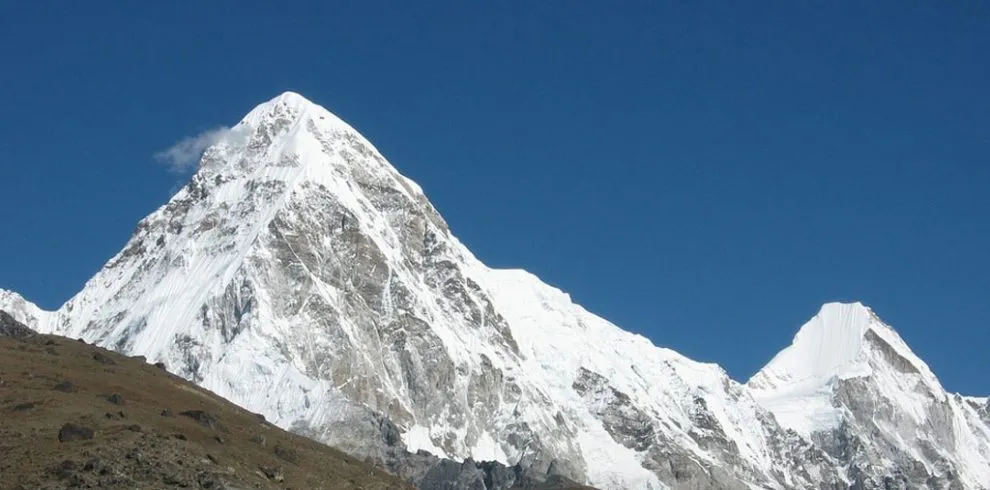
Mount Pumori, rising to 7,161 metres in Nepal's Everest region, is one of the prominent peaks of the Everest Massif. Although it is significantly lower than Mount Everest, Pumori presents demanding high-altitude climbing conditions and has long attracted mountaineers seeking technical Himalayan experience.
In May 2021, an expedition organized by the Indian Mountaineering Foundation (IMF) achieved a significant milestone on Mt. Pumori. Members of the IMF Everest Massif Expedition 2021 became the first Indian climbers to summit Pumori, with Hem Raj and Stanzin Norboo reaching the summit on May 10. Two days later, Baljeet Kaur and Gunbala Sharma became the first Indian women to summit Mt. Pumori.
The expedition was part of an ambitious two-month Himalayan project that attempted four major peaks of the Everest Massif: Mt. Nuptse (7,861 m), Mt. Pumori (7,161 m), Mt. Lhotse (8,516 m), and Mt. Everest (8,848.86 m). The IMF describes the expedition as a landmark undertaking and states that its team attempted all four peaks during the 2021 expedition.
Peak Promotion Pvt. Ltd. of Nepal was involved in handling the expedition, adding an important Nepal-based logistical component to the ambitious climbing project. Peak Promotion itself lists the IMF Everest Massif Expedition 2021 among its major achievements.
Mt. Pumori: A 7,161-Metre Himalayan Peak
Mt. Pumori is located in Nepal's Everest region, close to Mount Everest and above the Khumbu Valley.
At 7,161 metres, Pumori is a major Himalayan climbing objective. Its location within the Everest Massif places it in one of the world's most recognizable high-altitude mountain environments.
The mountain's elevation alone does not fully explain its difficulty. Climbers must deal with:
- Extreme altitude
- Low oxygen availability
- Steep terrain
- Snow and ice
- Rapidly changing weather
- Cold temperatures
- Technical climbing sections
- Avalanche and objective hazards
- Long summit days
- Complex expedition logistics
For these reasons, a Pumori expedition requires considerably more preparation than an ordinary trekking journey.
The IMF Everest Massif Expedition 2021
The 2021 expedition was organized by the Indian Mountaineering Foundation, India's national body for mountaineering and allied activities.
According to IMF's own expedition documentation, the project ran from March 26 to June 11, 2021, and involved a selected team of young Indian climbers. The expedition was sponsored by India's Ministry of Youth Affairs & Sports.
What made the project particularly ambitious was its objective of attempting four major peaks in the Everest Massif during a single expedition.
| Peak | Elevation | Expedition Objective |
| Mt. Pumori | 7,161 m | Attempted and successfully summited |
| Mt. Nuptse | 7,861 m | Attempted, but summit attempt was abandoned |
| Mt. Lhotse | 8,516 m | Successfully summited |
| Mt. Everest | 8,848.86 m | Successfully summited |
The IMF later reported that the team successfully climbed Pumori, Lhotse, and Everest, while the Nuptse summit attempt had to be called off because of dangerous snow conditions and unprecedented weather.
This made the expedition much more than a single-peak climbing project.
It was a coordinated attempt to tackle several major Himalayan objectives within one expedition framework.
First Indian Ascent of Mt. Pumori
The first major Pumori milestone of the expedition came on May 10, 2021.
According to contemporary reporting and the IMF's later account, Hem Raj and Stanzin Norboo reached the summit of Mt. Pumori, becoming the first Indian climbers to make the ascent.
The achievement represented an important milestone for Indian mountaineering because Pumori had become the first successful summit objective of the larger Everest Massif expedition.
The climb also demonstrated the value of careful expedition planning, acclimatization, technical preparation, and teamwork.
For high-altitude climbing, reaching the summit is only one part of the challenge. Climbers must also descend safely, manage their physical condition, and operate effectively as part of a larger expedition team.
First Indian Women to Summit Mt. Pumori
Two days after the first Indian ascent, another important milestone was achieved.
On May 12, 2021, Baljeet Kaur and Gunbala Sharma became the first Indian women to summit Mt. Pumori. Contemporary reporting by The Indian Express states that Kaur and Sharma reached the summit after beginning their summit push from Camp III around midnight.
Their achievement added an important dimension to the expedition's history.
Baljeet Kaur, from Himachal Pradesh, and Gunbala Sharma, from Rajasthan, were among the Indian climbers selected for the IMF's ambitious Everest Massif project.
Their Pumori ascent demonstrated the growing participation of Indian women in high-altitude mountaineering and became an important milestone in their individual climbing careers.
Later reporting continued to identify Kaur and Sharma as the first Indian women to summit Pumori.
Who Summited Mt. Pumori During the Expedition?
The original Peak Promotion report listed Indian climbers and Nepali Sherpa members who reached the summit during the Pumori phase of the expedition.
The summit team included:
| Climber | Nationality | Significance |
| Hem Raj | 🇮🇳 India | First Indian climber to summit Pumori during the expedition |
| Stanzin Norboo | 🇮🇳 India | First Indian climber to summit Pumori during the expedition |
| Baljeet Kaur | 🇮🇳 India | First Indian woman to summit Pumori |
| Gunbala Sharma | 🇮🇳 India | First Indian woman to summit Pumori |
| Mingma Thindu Sherpa | 🇳🇵 Nepal | Nepali expedition support |
| Phuri Sherpa | 🇳🇵 Nepal | Nepali expedition support |
| Nuri Sherpa | 🇳🇵 Nepal | Nepali expedition support |
| Gelu Sherpa | 🇳🇵 Nepal | Nepali expedition support |
| Kami Sherpa | 🇳🇵 Nepal | Nepali expedition support |
| Mingmar Tendi Sherpa | 🇳🇵 Nepal | Nepali expedition support |
Contemporary reporting confirms the first Indian ascent by Hem Raj and Stanzin Norboo on May 10, followed by the first Indian women's ascent by Baljeet Kaur and Gunbala Sharma on May 12.
The Role of Nepali Sherpa Support
High-altitude expeditions in Nepal depend heavily on teamwork.
Sherpa mountain professionals can contribute extensive experience in Himalayan environments, including route support, load carrying, camp establishment, climbing assistance, logistics, and high-altitude decision-making.
The Pumori expedition similarly involved Nepali Sherpa climbers alongside the Indian mountaineers.
This collaboration illustrates an important feature of Himalayan mountaineering: successful expeditions are rarely the achievement of a single climber working alone.
They depend on coordinated efforts between climbers, guides, Sherpa teams, expedition organizers, logistics personnel, medical staff, base-camp teams, and other support members.
Peak Promotion's Role in the Everest Massif Expedition
The Everest Massif Expedition 2021 was handled in Nepal by Peak Promotion Pvt. Ltd., according to contemporary reporting and Peak Promotion's own records.
Peak Promotion's current achievements page lists the IMF Everest Massif Expedition among its expedition projects, alongside other Himalayan expeditions and mountain-related operations.
For a multi-peak expedition, logistical coordination is particularly important.
An expedition operating across several major mountains may involve:
- Expedition planning
- Transportation
- Base-camp logistics
- High-altitude equipment
- Sherpa coordination
- Food and supplies
- Camp management
- Communication
- Permit coordination
- Route and schedule planning
- Weather-related adjustments
- Emergency preparedness
The technical climbing is only one component of such an expedition.
Behind every summit attempt is a substantial logistical operation designed to move people and equipment through some of the world's most challenging environments.
Why the Everest Massif Expedition Was Significant?
The IMF's 2021 project was unusual because it attempted multiple major peaks during a single expedition.
The organization described it as the first expedition in the history of the Everest Massif to attempt four major peaks—Pumori, Nuptse, Lhotse, and Everest—in this manner.
The expedition therefore combined several different levels of Himalayan climbing.
★ Pumori
At 7,161 metres, Pumori provided the first successful summit objective of the expedition.
★ Nuptse
At 7,861 metres, Nuptse presented a considerably higher and technically demanding objective. The expedition ultimately abandoned the summit attempt because of dangerous snow conditions and weather.
★ Lhotse
At 8,516 metres, Lhotse is one of the world's 8,000-metre peaks. IMF records that members of the expedition successfully reached its summit.
★ Everest
The expedition culminated with successful Everest summits by members of the Indian team. Contemporary reporting recorded multiple Indian climbers reaching the summit during the final phase.
Climbing Pumori: Challenges at 7,161 Metres
A mountain's height is one indicator of difficulty, but it is not the only one.
Pumori's terrain, weather, snow conditions, altitude, and technical climbing requirements all contribute to the challenge.
➜ Altitude
At more than 7,000 metres, Pumori exposes climbers to an extremely low-oxygen environment.
The body requires time to acclimatize, and expedition schedules must account for this physiological challenge.
➜ Weather
Himalayan weather can change rapidly.
Heavy snowfall, high winds, cloud cover, and unstable conditions can force climbers to change plans or abandon summit attempts.
The IMF expedition experienced this directly during its wider Nuptse attempt, which was abandoned because of dangerous snow conditions and unprecedented weather.
➜ Technical Terrain
Pumori involves steep snow and ice terrain, requiring appropriate climbing skills and equipment.
Depending on route conditions, climbers may need specialized equipment such as:
- Mountaineering boots
- Crampons
- Ice axe
- Harness
- Helmet
- Ascender
- Descender
- Ropes
- Carabiners
- High-altitude clothing
- Technical climbing protection
Equipment requirements vary according to route, season, conditions, and expedition strategy.
Acclimatization Before a High-Altitude Summit
Acclimatization is one of the most important components of a Himalayan expedition.
Before attempting a high summit, climbers typically spend time progressively gaining elevation and allowing their bodies to adapt to reduced oxygen availability.
The IMF expedition's original strategy included an acclimatization climb of Lobuche Peak at 6,119 metres before moving toward its higher objectives. Contemporary reporting described this as part of the team's initial acclimatization process.
This highlights an important principle of Himalayan mountaineering:
The summit push begins long before summit day.
Preparation, acclimatization, camp establishment, route planning, weather assessment, nutrition, hydration, rest, and teamwork all contribute to the final attempt.
Expedition Logistics Behind a Himalayan Summit
The public often sees the final summit photograph, but an expedition involves weeks or months of preparation behind that moment.
For a multi-peak expedition, logistics can include:
• Base Camp Operations
Base camp serves as the central operational point for climbers and support teams.
• Higher Camp Establishment
Climbers and support teams must establish and supply higher camps according to the chosen route and climbing strategy.
• Equipment Movement
Food, fuel, climbing equipment, oxygen systems where applicable, tents, communication equipment, and other supplies need to be moved through challenging terrain.
• Weather Monitoring
Summit attempts need to account for weather windows and changing mountain conditions.
• Team Coordination
Indian climbers, Nepali Sherpa teams, guides, expedition leaders, logistics teams, and other personnel must coordinate their movements.
• Emergency Planning
High-altitude expeditions require plans for responding to injuries, illness, severe weather, route problems, and other emergencies.
This logistical complexity is particularly important when several major peaks are being attempted within one expedition.
Mountaineering During the COVID-19 Pandemic
The 2021 Everest season occurred during the COVID-19 pandemic, adding another layer of complexity to Himalayan expeditions.
The IMF's own retrospective account notes that the expedition faced extreme weather conditions and an outbreak of COVID-19 in the Nepal Himalaya.
The expedition therefore required climbers and support teams to operate under conditions that were already demanding from a mountaineering perspective while also dealing with a global health crisis.
This context makes the expedition's logistical and organizational requirements particularly notable.
Beyond One Summit: A Multi-Peak Achievement
The Pumori summit was only one part of the wider IMF expedition.
After the successful Pumori climb, the expedition continued toward its other objectives.
The IMF later reported that the team successfully climbed Pumori, Lhotse, and Everest, while the Nuptse summit attempt was abandoned.
The expedition therefore demonstrated how a Himalayan project can evolve throughout a season.
Mountain conditions are not always predictable.
A successful expedition is not necessarily one in which every planned summit is completed. Sometimes making the decision not to climb is an essential part of responsible mountaineering.
The decision to abandon the Nuptse summit attempt because of dangerous conditions illustrates the importance of evaluating risk rather than treating summit success as the only objective.
Baljeet Kaur and Gunbala Sharma's Pumori Milestone
The Pumori ascent was particularly significant for Indian women's mountaineering.
Baljeet Kaur and Gunbala Sharma became the first Indian women to summit the 7,161-metre peak in May 2021.
For Baljeet Kaur, the achievement became one of several significant milestones in her Himalayan climbing career.
Later in 2022, Kaur went on to climb several 8,000-metre peaks, with reporting noting her Pumori achievement as an important earlier milestone.
The Pumori ascent therefore formed part of a broader story about the participation and achievements of Indian women in Himalayan mountaineering.
What This Expedition Teaches About Himalayan Mountaineering?
The 2021 Pumori expedition provides several lessons relevant to aspiring climbers.
• Preparation Matters
High-altitude climbing requires preparation well before reaching base camp.
• Teamwork Matters
Successful expeditions depend on collaboration among climbers, guides, Sherpa teams, logistics staff, and organizers.
• Acclimatization Matters
The body needs time to adapt to altitude.
• Weather Can Change Plans
Mountain conditions can force even carefully prepared teams to change objectives.
• Safety Comes Before the Summit
A summit is an objective, not a guarantee.
The decision to abandon an unsafe climb can be as important as the decision to continue.
• Local Expertise Matters
Nepal's mountain professionals have extensive experience working in high-altitude environments, making local coordination an important part of many Himalayan expeditions.
Pumori Expedition at a Glance
| Detail | Information |
| Mountain | Mt. Pumori |
| Elevation | 7,161 metres |
| Region | Everest / Khumbu region, Nepal |
| Expedition | IMF Everest Massif Expedition 2021 |
| Organizer | Indian Mountaineering Foundation |
| Nepal handling | Peak Promotion Pvt. Ltd. |
| First Indian climbers to summit during expedition | Hem Raj and Stanzin Norboo |
| First Indian women to summit | Baljeet Kaur and Gunbala Sharma |
| First Indian ascent | May 10, 2021 |
| First Indian women's ascent | May 12, 2021 |
| Wider expedition objectives | Pumori, Nuptse, Lhotse and Everest |
| Expedition period | March–June 2021 |
The dates and achievement details above are supported by contemporary reporting and IMF documentation.
Frequently Asked Questions (FAQ's):
Q. How high is Mt. Pumori?
Mt. Pumori is 7,161 metres high and is located in Nepal's Everest region.
Q. Who were the first Indian climbers to summit Mt. Pumori?
Hem Raj and Stanzin Norboo became the first Indian climbers to summit Mt. Pumori during the IMF Everest Massif Expedition 2021. They reached the summit on May 10, 2021.
Q. Who were the first Indian women to summit Mt. Pumori?
Baljeet Kaur and Gunbala Sharma became the first Indian women to summit Mt. Pumori on May 12, 2021.
Q. What was the IMF Everest Massif Expedition 2021?
It was a major Indian mountaineering expedition organized by the Indian Mountaineering Foundation that attempted four major peaks: Pumori, Nuptse, Lhotse, and Everest.
Q. Which peaks were part of the Everest Massif Expedition?
The expedition targeted Mt. Pumori, Mt. Nuptse, Mt. Lhotse, and Mt. Everest.
Q. Did the expedition successfully climb all four peaks?
No. The IMF reports that the expedition successfully climbed Pumori, Lhotse, and Everest, while the Nuptse summit attempt was abandoned because of dangerous snow conditions and unprecedented weather.
Q. What was Peak Promotion's role in the expedition?
Peak Promotion Pvt. Ltd. handled the expedition in Nepal according to contemporary reporting and lists the IMF Everest Massif Expedition 2021 among its achievements.
Q. Is Mt. Pumori difficult to climb?
Yes. Its 7,161-metre altitude, steep terrain, snow and ice, weather variability, and high-altitude environment make it a serious mountaineering objective.
Q. Why is acclimatization important on Pumori?
At high altitude, oxygen availability is significantly reduced. Acclimatization allows the body to progressively adapt before climbers attempt higher elevations.
Q. What equipment is needed to climb Pumori?
Equipment depends on the route and conditions but can include mountaineering boots, crampons, ice axes, harnesses, ropes, helmets, technical clothing, climbing protection, and high-altitude camping equipment.
Q. What makes the Everest Massif Expedition historically significant?
The IMF describes the 2021 project as a landmark expedition that attempted four major peaks of the Everest Massif during one expedition. It ultimately achieved summits on Pumori, Lhotse, and Everest.
Q. What role do Sherpa climbers play in Himalayan expeditions?
Sherpa professionals can provide essential high-altitude expertise, climbing assistance, logistics, route support, camp operations, and other expedition services. Their roles vary depending on the expedition.
Q. Can trekkers climb Mt. Pumori?
Pumori is a mountaineering objective rather than an ordinary trekking destination. Climbing requires appropriate technical skills, equipment, permits, preparation, and professional expedition support.
Conclusion: A Historic Chapter in Himalayan Mountaineering
The IMF Everest Massif Expedition 2021 was an ambitious project that brought together Indian climbers and Nepali mountain professionals for an extraordinary multi-peak objective.
The successful ascent of Mt. Pumori at 7,161 metres created important milestones. Hem Raj and Stanzin Norboo made the first Indian ascent during the expedition, while Baljeet Kaur and Gunbala Sharma became the first Indian women to summit the mountain.
But the significance of the expedition extends beyond the Pumori summit.
The team went on to achieve successful ascents of Lhotse and Everest, while the Nuptse attempt was abandoned because conditions became too dangerous. The experience demonstrated the importance of preparation, acclimatization, teamwork, logistics, local expertise, and responsible decision-making in Himalayan mountaineering.
For Peak Promotion, the expedition represents another chapter in its involvement in major Himalayan mountaineering projects. The company's records identify the IMF Everest Massif Expedition 2021 among its achievements and reflect its role in supporting expedition operations in Nepal.
Mt. Pumori remains a powerful symbol of Himalayan challenge, while the 2021 expedition demonstrates what careful preparation, international teamwork, and experienced mountain support can achieve.