Peak Promotion Extends Deepest Condolences Following the Broad Peak Avalanche Tragedy
The Peak Promotion family is profoundly saddened by the devastating avalanche that struck Broad Peak (8,047 m) in Pakistan's Karakoram Range on July 30, 2026, claiming the lives of 10 members of an international mountaineering expedition.
Among those who lost their lives was renowned Nepali-born mountaineer Nirmal "Nimsdai" Purja, whose achievements had made him one of the most recognizable figures in modern high-altitude mountaineering.
The tragedy has deeply affected the international climbing community, particularly in Nepal and Pakistan, where mountaineering is closely connected with generations of climbers, guides, Sherpas, high-altitude workers, and mountain communities.
Peak Promotion extends its deepest condolences to the families, friends, colleagues, expedition partners, and communities mourning this devastating loss.
We also express our profound respect and gratitude to the rescue personnel, local volunteers, high-altitude workers, military aviation teams, mountaineers, and authorities who took part in the difficult search and recovery operations under extremely challenging conditions.
Remembering Those Lost on Broad Peak
The July 2026 Broad Peak avalanche involved an international expedition whose members came from several countries, reflecting the way high mountains bring together people from different backgrounds through a shared passion for exploration and mountaineering.
Those who lost their lives included climbers and high-altitude mountaineering professionals from Nepal, Pakistan, Oman, China, and the United States.
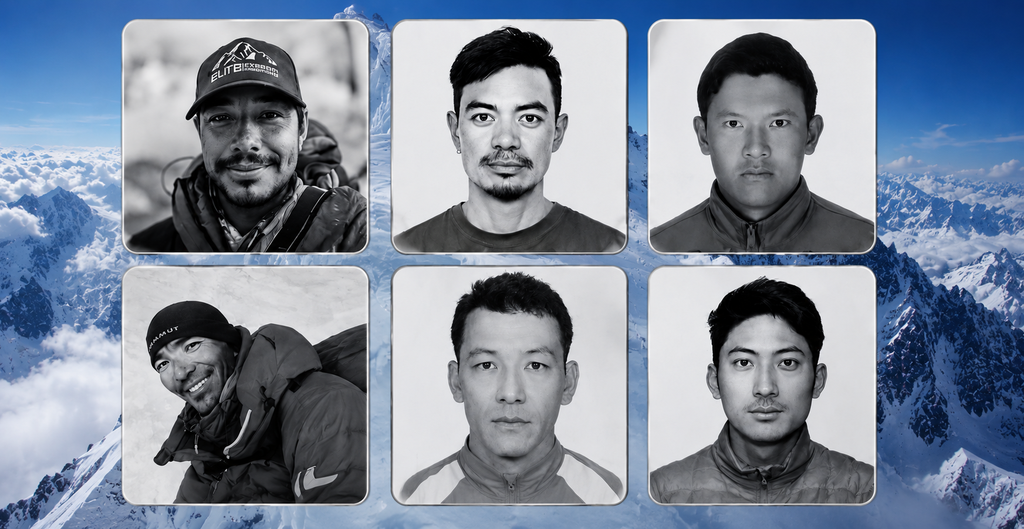
The expedition included:
- Nirmal "Nimsdai" Purja
- Pur Bahadur "Yukta" Gurung
- Kili Pemba Sherpa
- Nima Sherpa
- Nawang Thindhu Sherpa
- Gyalu Sherpa
- Wang Zhong
- Mallory Geis
- Nadhira Ahmed Abdullah Al Harthy
- Sohail Sakhi
The Alpine Club of Pakistan and other authorities coordinated search and recovery efforts following the avalanche. The operation was made particularly difficult by steep terrain, unstable snow, weather conditions, and the continuing risk faced by those attempting to reach the affected area.
The body of Pakistani climber Sohail Sakhi was later recovered by local volunteers from Shigar, highlighting the courage and commitment of people who continued working in dangerous mountain conditions to help bring victims home.
The loss of every climber represents a personal tragedy for families and loved ones, as well as a profound loss for the international mountaineering community.
The Broad Peak Avalanche Tragedy
Broad Peak rises to approximately 8,047 metres in Pakistan's Karakoram Range and is one of the world's fourteen 8,000-metre peaks.
On July 30, 2026, an avalanche struck an international expedition as the climbers were moving on the mountain. Initial reports described all members of the team as missing after communications were lost. Search teams subsequently began locating and recovering victims under extremely hazardous conditions.
The accident demonstrated the extreme objective risks associated with climbing above 8,000 metres.
At such elevations, climbers operate in an environment where:
- Snow and ice conditions can change rapidly.
- Avalanches can occur with little warning.
- Weather can deteriorate quickly.
- Rescue operations become extremely difficult.
- Helicopter operations may be restricted by altitude and weather.
- Exhaustion and reduced oxygen availability can affect decision-making.
- Even experienced mountaineers remain exposed to forces beyond human control.
The tragedy is therefore not simply a reminder of the physical difficulty of climbing an 8,000-metre mountain. It is also a reminder of the unpredictable nature of the high-altitude environment.
Remembering Nirmal "Nimsdai" Purja
The death of Nirmal "Nimsdai" Purja has been particularly significant for Nepal's mountaineering community.
Purja became internationally known after completing the world's 14 highest mountains in a record period in 2019. His achievements, expedition leadership, and involvement in major Himalayan and Karakoram climbs helped bring considerable international attention to Nepali mountaineering.
He was also part of the historic all-Nepali team that achieved the first winter ascent of K2 in 2021.
His death on Broad Peak represents the loss of a highly accomplished mountaineer and a prominent figure in Nepal's international climbing community.
Yet beyond records and achievements, his loss represents something much more personal: a husband, father, son, brother, colleague, teammate, and friend.
For that reason, Peak Promotion joins climbers and mountain communities around the world in remembering him not only for his achievements, but also for his connection with the mountains and the people who shared his passion.
The Human Cost Behind Every Expedition
Mountaineering stories often focus on summits.
They celebrate successful ascents, records, new routes, difficult climbs, and extraordinary achievements.
But every expedition is ultimately made up of people.
Behind every summit photograph are:
- Climbers who have trained for years.
- Guides who lead teams through difficult terrain.
- Sherpas and high-altitude workers who carry essential equipment.
- Expedition staff managing logistics.
- Families waiting for climbers to return.
- Rescue teams prepared to respond when conditions deteriorate.
- Local communities supporting mountain operations.
The Broad Peak tragedy reminds us that the human element of mountaineering must never be forgotten.
For families, the conclusion of an expedition is not measured by whether a summit was reached. The most important outcome is that their loved ones return safely.
Respect for the Mountains Must Come First
Mountains have always represented challenge, exploration, courage, and determination.
At the same time, they demand humility.
No amount of experience can completely eliminate the risks associated with avalanches, storms, rockfall, altitude, ice movement, extreme cold, or other natural hazards.
This is why responsible mountaineering requires continuous attention to changing conditions.
Safety Must Remain Central to Every Expedition
Effective expedition planning involves much more than choosing a route.
It can include:
- Detailed weather monitoring
- Route assessment
- Avalanche awareness
- Acclimatization planning
- Appropriate climbing equipment
- Experienced guides and high-altitude staff
- Reliable communication systems
- Emergency planning
- Medical preparedness
- Evacuation and rescue arrangements
- Clear turnaround and retreat decisions
- Continuous assessment of changing mountain conditions
These measures cannot remove every risk.
They can, however, help expedition teams recognize hazards, prepare for emergencies, and make informed decisions when conditions change.
The Importance of Search and Rescue in the Mountains
The Broad Peak recovery operation also highlighted the extraordinary difficulties faced by rescuers.
Searching for missing climbers at high altitude can expose rescue personnel to the same environmental hazards that caused the original accident.
In the aftermath of the Broad Peak avalanche, Pakistan Army aviation personnel, government authorities, mountaineers, local volunteers, and other rescue personnel contributed to the search and recovery effort. The Alpine Club of Pakistan publicly recognized the work of military and civilian teams involved in the operation.
Local volunteers also played an important role.
The recovery of Sohail Sakhi by volunteers from Shigar demonstrated the important role that local mountain communities can play during difficult recovery operations.
Their efforts deserve recognition and respect.
Why Rescue Operations Become So Difficult at High Altitude?
Mountain rescue is fundamentally different from rescue operations at lower elevations.
On an 8,000-metre mountain, rescuers may face:
• Extreme Altitude
The lack of oxygen makes physical work significantly more demanding and limits the time rescuers can safely spend at high elevations.
• Unstable Snow and Avalanche Terrain
A rescue team entering avalanche debris may face the possibility of additional avalanches.
• Severe Weather
Cloud, snowfall, strong winds, and rapidly changing weather can prevent helicopters from operating and make ground movement dangerous.
• Difficult Terrain
Crevasses, steep slopes, ice formations, loose snow, and exposed ridges can make even short distances extremely difficult to cross.
• Limited Communication
Reliable communication is essential during an emergency, but mountainous terrain and extreme conditions can complicate communications.
These challenges explain why mountain rescue operations require specialized personnel, equipment, planning, and considerable coordination.
The Broader Mountaineering Community Stands Together
One of the most powerful aspects of mountaineering is the sense of community that exists beyond national borders.
Climbers from Nepal, Pakistan, Europe, North America, Asia, and other parts of the world regularly share the same mountains.
They may represent different expedition companies and countries, but they encounter many of the same challenges.
When tragedy strikes, those boundaries often disappear.
The Broad Peak tragedy brought together climbers, rescue workers, government agencies, local communities, expedition operators, and families from multiple countries.
Messages of condolence from the international mountaineering community reflected a shared sense of grief and solidarity. The Alpine Club of Pakistan also expressed condolences to the affected families and the wider global mountaineering fraternity.
Lessons for Responsible Mountaineering
A tragedy such as Broad Peak should not be reduced to a discussion about risk alone.
It should also encourage reflection on how the mountaineering community approaches safety, preparation, leadership, and responsibility.
1. Mountain Conditions Must Be Respected
Mountains are dynamic environments.
Weather, snowpack, temperature, wind, and route conditions can change quickly.
Expedition plans should therefore remain flexible.
2. Experience Does Not Eliminate Objective Risk
Experienced climbers can make better-informed decisions, but experience cannot control an avalanche or prevent a sudden change in mountain conditions.
3. Team Communication Is Essential
Clear communication between climbers, guides, expedition leaders, base camps, and support teams is an important component of expedition safety.
4. Turnaround Decisions Are Part of Mountaineering
Reaching a summit is only one part of an expedition.
Returning safely should always remain a fundamental objective.
5. Rescue Planning Matters Before an Emergency Happens
Emergency contacts, communication systems, evacuation procedures, medical support, and contingency plans should be considered during expedition planning rather than only after an accident occurs.
6. Local Mountain Expertise Matters
Local guides, Sherpas, high-altitude workers, and mountain communities possess extensive knowledge of the terrain and conditions.
Their experience is an important part of responsible mountain operations.
Peak Promotion's Commitment to Responsible Mountaineering
As a company involved in Himalayan trekking, mountaineering, and expedition logistics, Peak Promotion understands that mountain travel involves both opportunity and responsibility.
Our work in the Himalayas is built around supporting expeditions, trekkers, climbers, guides, and mountain communities while recognizing the importance of careful planning and responsible operations.
Explore Peak Promotion's Mount Everest Expedition
View Peak Promotion's Achievements
The mountains are not simply destinations.
They are environments that require respect, preparation, cooperation, and humility.
Honoring the Spirit of Mountaineering
The people who climb the world's highest mountains are driven by different motivations.
Some seek personal achievement.
Some pursue exploration.
Some follow family traditions.
Some work professionally in the mountains.
Others simply feel an enduring connection with high-altitude landscapes.
Whatever the motivation, mountaineering represents a relationship between people and some of the most demanding environments on Earth.
The Broad Peak avalanche reminds us that this relationship comes with significant responsibility.
The goal should never be to underestimate the mountain.
It should be to approach it with preparation, humility, respect, and a willingness to make responsible decisions.
A Message of Condolence from Peak Promotion
Peak Promotion extends its deepest condolences to the families, friends, teammates, colleagues, and communities affected by the Broad Peak avalanche.
We honor the lives of:
- Nirmal "Nimsdai" Purja
- Pur Bahadur "Yukta" Gurung
- Kili Pemba Sherpa
- Nima Sherpa
- Nawang Thindhu Sherpa
- Gyalu Sherpa
- Wang Zhong
- Mallory Geis
- Nadhira Ahmed Abdullah Al Harthy
- Sohail Sakhi
We also recognize the dedication and courage of the people involved in the search and recovery operations.
Their efforts under difficult and dangerous conditions deserve our deepest respect.
The mountain community extends far beyond those who stand on a summit. It includes families, guides, Sherpas, rescuers, expedition staff, local communities, authorities, and supporters around the world.
At a time of profound loss, that community stands together.
May the departed souls rest in eternal peace.
May their families and loved ones find strength and comfort.
And may the memory of those lost on Broad Peak remain part of the history and spirit of the global mountaineering community.
Peak Promotion stands in solidarity with everyone affected by this tragedy.
Frequently Asked Questions (FAQ's):
1. What happened on Broad Peak in 2026?
An avalanche struck an international mountaineering expedition on Broad Peak in Pakistan's Karakoram Range on July 30, 2026. The 10 members of the expedition were subsequently confirmed dead.
2. Where is Broad Peak located?
Broad Peak is located in Pakistan's Karakoram Range in the Gilgit-Baltistan region, near K2.
3. How high is Broad Peak?
Broad Peak is approximately 8,047 metres high and is one of the world's fourteen 8,000-metre mountains.
4. Who was Nirmal "Nimsdai" Purja?
Nirmal "Nimsdai" Purja was a renowned Nepali-born mountaineer known internationally for his high-altitude climbing achievements, including his record-setting completion of the world's 14 highest mountains in 2019.
5. How many climbers died in the Broad Peak avalanche?
Ten members of the international expedition died in the July 2026 Broad Peak avalanche.
6. What countries were represented in the expedition?
The expedition included climbers and high-altitude personnel from Nepal, Pakistan, Oman, China, and the United States.
7. Were rescue teams involved after the avalanche?
Yes. Pakistani authorities, military aviation personnel, local volunteers, mountaineers, and other rescue teams participated in search and recovery operations.
8. Why are avalanches dangerous for mountaineers?
Avalanches can release large amounts of snow and debris with little time for people on the mountain to respond. At high altitude, difficult terrain, limited oxygen, severe weather, and restricted rescue access can make survival and recovery particularly challenging.
9. Can mountaineering experience completely prevent accidents?
No. Experience and preparation can help climbers assess hazards and make informed decisions, but objective mountain hazards such as avalanches, storms, rockfall, and changing snow conditions cannot be completely eliminated.
10. Why is responsible mountaineering important?
Responsible mountaineering emphasizes preparation, respect for mountain conditions, appropriate equipment, communication, environmental responsibility, teamwork, and informed decision-making.
11. What can the mountaineering community learn from the Broad Peak tragedy?
The tragedy reinforces the importance of careful expedition planning, weather and route assessment, communication, emergency preparedness, respect for local mountain expertise, and the willingness to change plans when conditions become unsafe.
12. How is Peak Promotion responding to the tragedy?
Peak Promotion joins the international mountaineering community in mourning those who lost their lives and extends its condolences to their families, friends, colleagues, and communities. The company also recognizes the rescue teams and local volunteers who participated in the recovery effort.
Conclusion
The Broad Peak avalanche of 2026 is a painful reminder that the world's highest mountains demand humility and respect.
For the families who lost loved ones, the consequences of the tragedy extend far beyond the mountain. For the mountaineering community, it represents the loss of climbers, guides, high-altitude professionals, and passionate members of a global community united by the mountains.
Peak Promotion extends its deepest condolences to everyone affected.
We remember those who lost their lives, honor those who attempted to bring them home, and stand with the global mountaineering community during this time of grief.
May they rest in peace, and may their families find strength and comfort in the support of the worldwide mountain community.
Explore Peak Promotion's Everest Base Camp Trek
Learn More About Peak Promotion's Expedition Services
Alpine Club of Pakistan – Broad Peak Condolence Statement
Government of Gilgit-Baltistan – Broad Peak Avalanche Incident