ISLAND PEAK CLIMBING
Duration
18 Days
Difficulty
Moderate-Hard
Max Altitude
6,189m
Group Size
2–14
Best Season
Sep–Nov, Mar–May
Region
Everest Region
Overview
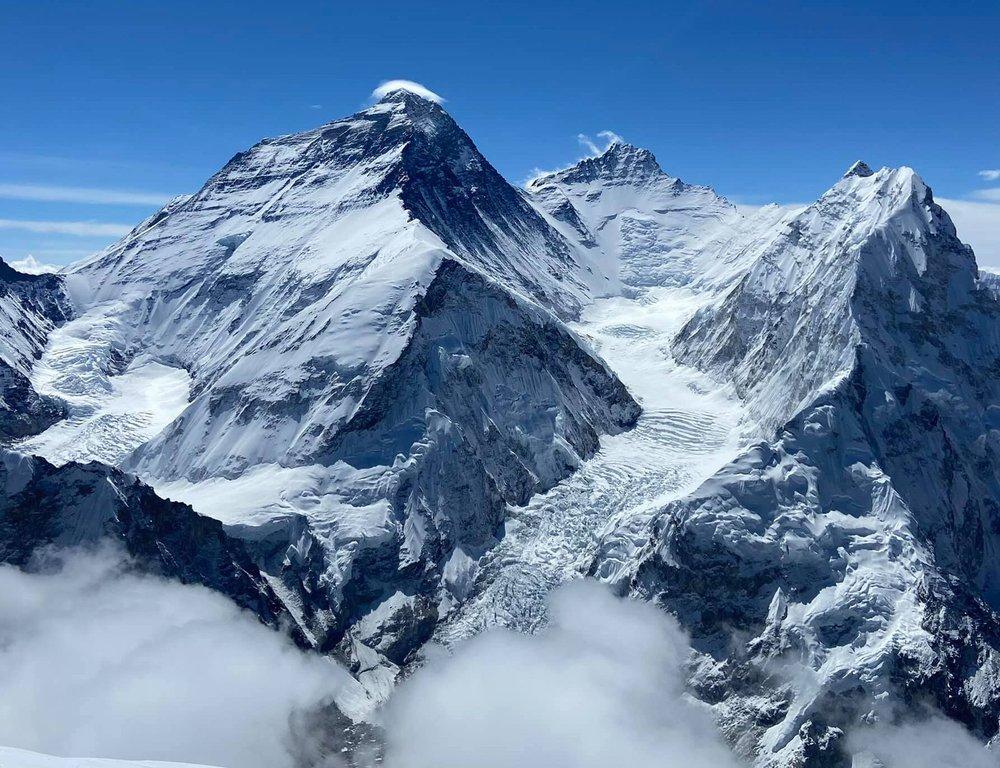
Island Peak climbing in the Himalayas is one of the most famous trekking peak adventures in Nepal, offering an extraordinary experience filled with breathtaking impressions, peaceful emotions, and lifelong memories. Along the route, climbers are rewarded with exceptional views of Mount Everest, Ama Dablam, and Lhotse, creating a truly unforgettable Himalayan journey.
Standing at 6,189 meters, Island Peak is located in the heart of the Nepalese Himalayas and is considered a natural extension of the southern ridge of Lhotse Shar. The peak is also widely known by its local name, Imja Tse. It appears like an island rising from a vast ocean of ice, surrounded by Himalayan giants such as Nuptse (7,861 m), Lhotse (8,516 m), Lhotse Central (8,410 m), and Lhotse Shar (8,383 m) forming a dramatic semicircle to the north.
To the east, massive icefalls descend from Lhotse Shar, while beyond Cho Polu (6,735 m) the striking red granite face of Makalu (8,463 m) dominates the skyline. In the south, the view stretches across the icy slopes of Baruntse (7,162 m) and the Amphu region, leading toward the iconic pyramid of Ama Dablam (6,812 m), which stands like a guardian overlooking the glacial valley around Island Peak.
The first successful ascent of Island Peak was made in 1953 by Charles Evans, Charles Wylie, Alf Gregory, and Tenzing Norgay Sherpa, along with a team of Sherpas, via the southeast slope and south ridge. This expedition was conducted as part of Everest preparation, including the testing of early oxygen equipment.
The name “Island Peak” was first given in 1951 by members of the British Everest expedition led by Eric Shipton, as the mountain appears like an island in a sea of ice when viewed from Dingboche and surrounding valleys. In 1983, the peak was officially renamed Imja Tse, though the original name “Island Peak” remains more widely used in the mountaineering world.
The journey begins with a scenic flight to Lukla, followed by the classic Everest trekking route to Namche Bazaar, the capital of the Sherpa community. The trail then continues through the beautiful Khumbu Valley toward Dingboche and Chhukung. From Dingboche, the peak appears modest against the towering South Face of Lhotse. However, as climbers approach closer from the glacier descending from the western side of Lhotse, Island Peak reveals its full majestic form—offering one of the most rewarding summit experiences in the Himalayas.
Trip Highlights
Trip Information
Send Your Enquiry
Interested in ISLAND PEAK CLIMBING ? Fill out the form and we'll get back to you within 24 hours.