Everest Base Camp vs Annapurna Base Camp: Which Trek Is Right for You?
Nepal is home to some of the world's most spectacular trekking destinations, and two routes consistently capture the imagination of adventure travelers: the Everest Base Camp Trek and the Annapurna Base Camp Trek.
Both journeys take you deep into the Himalayas, but they offer distinctly different experiences. Everest Base Camp takes trekkers into the legendary Khumbu region, where Sherpa culture, Buddhist monasteries, glaciers and some of the world's highest mountains define the landscape. Annapurna Base Camp, meanwhile, leads through lush forests, traditional villages, dramatic mountain scenery and the spectacular Annapurna Sanctuary.
So, when comparing Everest Base Camp vs Annapurna Base Camp, which trek should you choose?
The answer depends on what you want from your Himalayan adventure.
If your dream is to walk beneath Mount Everest and experience the legendary Khumbu region, Everest Base Camp may be the trek that matches your goals. If you prefer a shorter journey featuring dramatic changes in landscape, lush rhododendron forests and a spectacular natural amphitheater surrounded by Himalayan peaks, Annapurna Base Camp offers a different kind of adventure.
This guide compares the two treks across altitude, difficulty, duration, scenery, culture, accommodation, accessibility, acclimatization, seasons and overall trekking experience.
At Peak Promotion Pvt. Ltd., we help trekkers experience Nepal's mountains through professionally organized trekking and mountaineering adventures. With experienced guides and Sherpa teams, we can help you plan an itinerary around the route, season and trekking experience that best suits your goals.
Everest Base Camp vs Annapurna Base Camp at a Glance
Before looking at each trek in detail, here's a quick comparison.
| Feature | Everest Base Camp | Annapurna Base Camp |
| Region | Khumbu / Everest Region | Annapurna Region |
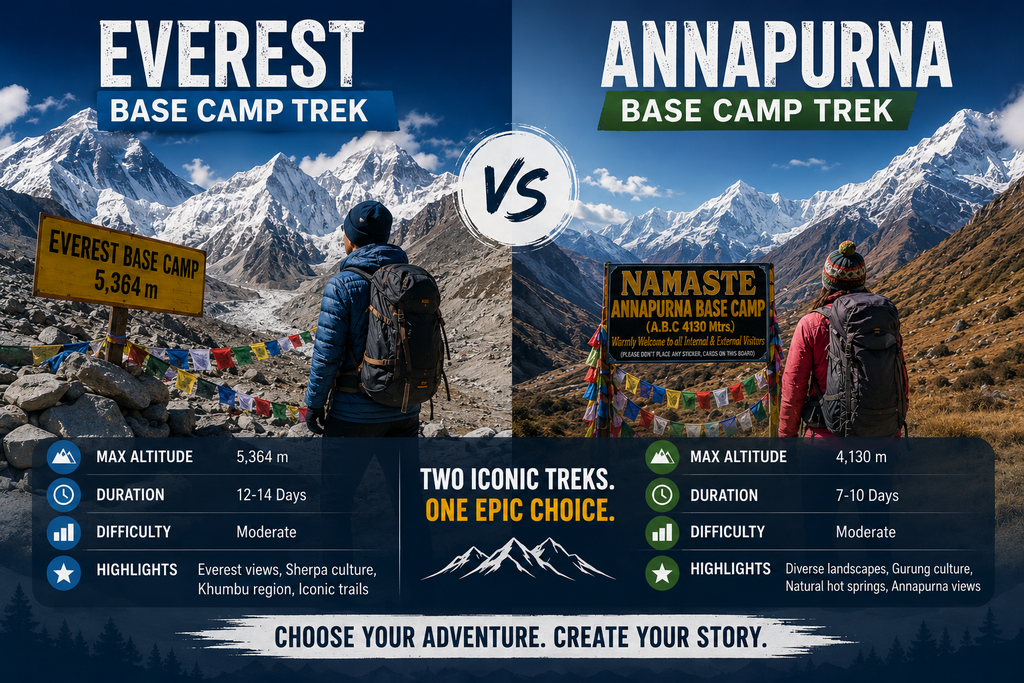
| Base Camp Elevation | Around 5,364–5,380 m | Around 4,130–4,395 m depending on the reference/route |
| Typical Trek Duration | Around 11–14 days | Generally shorter, depending on starting point and itinerary |
| Maximum Trekking Altitude | Around 5,545 m at Kala Patthar on common itineraries | Around 4,130–4,395 m at ABC |
| Difficulty | Moderate to challenging, mainly because of altitude | Moderate, with substantial uphill and downhill walking |
| Major Attraction | Mount Everest and the Khumbu region | Annapurna Sanctuary and mountain amphitheater |
| Culture | Strong Sherpa and Tibetan Buddhist influence | Gurung, Magar and other Himalayan cultures |
| Landscape | Valleys, glaciers, alpine terrain and high mountains | Forests, waterfalls, villages, terraced landscapes and high mountains |
| Acclimatization | More important because of higher altitude | Generally less demanding than EBC |
| Popular Starting Point | Lukla | Several access points depending on itinerary |
| Ideal For | Everest enthusiasts and high-altitude trekkers | Trekkers seeking diverse landscapes and a shorter high-Himalayan experience |
The exact duration, elevation profile and starting point can vary depending on the itinerary selected.
The Nepal Tourism Board describes Everest Base Camp as one of Nepal's most visited trekking destinations and notes that the classic trek from Lukla is approximately a two-week journey.
1. Everest Base Camp Trek: The Journey to the World's Highest Mountain
The Everest Base Camp Trek is one of the world's best-known trekking adventures.
Located in Nepal's Khumbu region, the route takes trekkers through Sagarmatha National Park, a UNESCO World Heritage Site, toward the base of Mount Everest.
The journey traditionally begins at Lukla, followed by a gradual ascent through villages and valleys toward Namche Bazaar, Tengboche, Dingboche or Pheriche, Lobuche and Gorak Shep before reaching Everest Base Camp.
The route also offers the opportunity to climb Kala Patthar, a famous viewpoint providing dramatic views of Mount Everest and the surrounding Himalayan peaks.
The Nepal Tourism Board highlights the route's Sherpa villages, monasteries, glaciers and mountain scenery, including views of Everest, Lhotse and Ama Dablam.
What Makes Everest Base Camp Special?
The biggest attraction is obvious: Mount Everest.
But Everest Base Camp is more than a destination for seeing the world's highest mountain.
Along the route, trekkers encounter:
- Namche Bazaar
- Sherpa villages
- Tengboche Monastery
- Sagarmatha National Park
- Ama Dablam
- Lhotse
- Khumbu Glacier
- Gorak Shep
- Kala Patthar
- Everest Base Camp
The journey also provides a strong cultural experience, with Buddhist monasteries, prayer flags, mani walls and Sherpa communities forming an important part of the trek.
2. Annapurna Base Camp Trek: Into the Annapurna Sanctuary
The Annapurna Base Camp Trek offers a contrasting Himalayan experience.
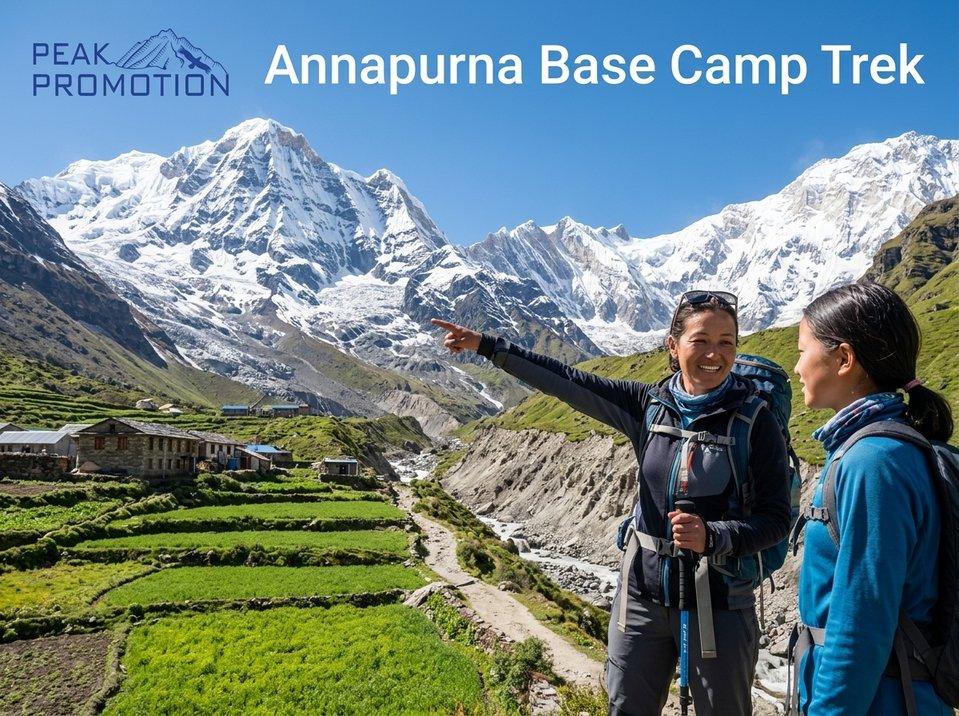
Rather than following the high, dry and increasingly alpine landscape of the Everest region, the Annapurna route passes through a remarkable variety of environments.
Depending on the itinerary, trekkers can encounter:
- Terraced farmland
- Traditional villages
- Rhododendron forests
- Waterfalls
- River valleys
- Bamboo forests
- Alpine landscapes
- Snow-covered mountains
- The Annapurna Sanctuary
The Annapurna region is one of Nepal's most established trekking destinations. The Nepal Tourism Board describes it as an area of major landscape and cultural contrasts, with routes passing through forests, mountain villages and high Himalayan terrain.
What Makes Annapurna Base Camp Special?
One of the defining features of the ABC Trek is the transition from relatively lush lower elevations to the dramatic mountain environment of the Annapurna Sanctuary.
As trekkers climb higher, the scenery changes rapidly.
Dense forests gradually give way to alpine landscapes, while the surrounding mountains become increasingly prominent.
The Annapurna massif includes Annapurna I, which rises to 8,091 meters and is the world's tenth-highest mountain.
At the base camp, trekkers are surrounded by an impressive collection of Himalayan peaks.
3. Everest vs Annapurna: Which Trek Is More Difficult?
Difficulty is one of the first things trekkers consider when comparing Everest Base Camp vs Annapurna Base Camp.
However, difficulty is not determined only by how many kilometers you walk.
Altitude, daily elevation gain, terrain, weather, duration and acclimatization all influence the experience.
✦ Everest Base Camp Difficulty
Everest Base Camp is generally considered a moderate to challenging high-altitude trek.
The biggest challenge is altitude.
The route climbs from Lukla at approximately 2,850 meters toward Everest Base Camp at more than 5,300 meters. Kala Patthar, often included in EBC itineraries, rises to approximately 5,545 meters.
This means acclimatization is an essential part of the itinerary.
✦ Annapurna Base Camp Difficulty
Annapurna Base Camp is generally a moderate trek, although it should not be underestimated.
Trekkers still face long walking days, steep stone staircases, elevation changes and changing weather.
However, the maximum elevation is considerably lower than on the standard Everest Base Camp itinerary.
The Key Difference
The most important difference is therefore altitude exposure.
| Difficulty Factor | Everest Base Camp | Annapurna Base Camp |
| High-altitude exposure | Higher | Lower |
| Acclimatization requirement | Significant | Generally less demanding |
| Steep sections | Yes | Yes |
| Long walking days | Yes | Yes |
| Main physical challenge | Altitude + endurance | Elevation changes + endurance |
The Nepal Tourism Board specifically advises gradual acclimatization in the Everest region because altitude gains become significant as trekkers move toward Base Camp.
4. Which Trek Reaches a Higher Altitude?
This is one area where the difference is substantial.
✦ Everest Base Camp
Everest Base Camp sits at approximately 5,364–5,380 meters, depending on the reference used.
A typical EBC itinerary can also include Kala Patthar at around 5,545 meters.
✦ Annapurna Base Camp
Annapurna Base Camp is considerably lower, generally cited at approximately 4,130 meters, while some official tourism material references the Annapurna Base Camp area around 4,395 meters, depending on the specific location or route reference.
For trekkers concerned about high-altitude exposure, this difference is important.
The Nepal Tourism Board advises trekkers to limit sleeping-altitude gains above 2,500 meters and recommends rest days after significant elevation gains.
If altitude is your biggest concern, compare itineraries carefully rather than looking only at the trek's name.
5. Everest Base Camp vs Annapurna Base Camp: Scenery
Both treks offer exceptional scenery, but the visual experience is different.
Everest Scenery
The Everest region is characterized by dramatic high-altitude landscapes.
You can expect:
- Massive Himalayan peaks
- Glacial valleys
- Rocky mountain terrain
- High-altitude settlements
- Khumbu Glacier
- Ama Dablam
- Lhotse
- Everest
- Alpine landscapes
The landscape becomes increasingly rugged as you climb higher.
Annapurna Scenery
Annapurna offers greater ecological variation over a relatively short journey.
Depending on the route, trekkers may walk through:
- Subtropical vegetation
- Rhododendron forests
- Bamboo forests
- Terraced farmland
- Mountain villages
- Waterfalls
- Alpine meadows
- Snow-covered mountain landscapes
The Annapurna region is particularly known for its contrasting environments and extensive trekking network.
Which Has More Diverse Landscapes?
If your priority is dramatic high-altitude Himalayan scenery, Everest is difficult to overlook.
If your priority is rapidly changing landscapes from forests to high mountains, Annapurna provides an especially diverse experience.
Rather than deciding which landscape is objectively better, consider which type of scenery you personally want to experience.
6. Cultural Experience: Sherpa vs Gurung and Himalayan Communities
The cultural experience is another major difference between the two routes.
Culture Along the Everest Trek
The Everest region is strongly associated with Sherpa culture and Tibetan Buddhism.
Trekkers encounter:
- Buddhist monasteries
- Prayer wheels
- Mani walls
- Chortens
- Prayer flags
- Sherpa villages
- Buddhist traditions
Namche Bazaar, Khumjung, Khunde and Tengboche are among the notable cultural locations along the route.
Tengboche Monastery is particularly famous for its location surrounded by Himalayan peaks.
Culture Along the Annapurna Trek
Annapurna offers exposure to several ethnic communities, particularly Gurung and Magar communities, alongside other Himalayan and hill communities.
Traditional villages, local architecture, agricultural landscapes and mountain hospitality are integral parts of the journey.
The Nepal Tourism Board notes that the Annapurna region includes Gurung, Magar, Thakali and other communities across its wider trekking area.
Cultural Difference at a Glance
| Everest | Annapurna |
| Strong Sherpa identity | Strong Gurung and Magar presence |
| Tibetan Buddhist influence | Diverse Himalayan and hill traditions |
| Monasteries and chortens | Traditional villages and local communities |
| Namche Bazaar | Ghandruk and other traditional settlements |
| Tengboche Monastery | Annapurna Sanctuary communities |
7. Which Trek Is Shorter?
For travelers with limited vacation time, duration can make a major difference.
The Nepal Tourism Board lists Everest Base Camp at around 11–14 days in its Nepal trekking overview.
Actual itineraries can be longer depending on acclimatization days, travel arrangements and additional destinations.
Annapurna Base Camp can generally be organized as a shorter itinerary, although its duration varies depending on the starting and ending points and whether road transport is incorporated.
This means ABC can be attractive to travelers who want a substantial Himalayan experience without committing to the longer high-altitude itinerary typically associated with EBC.
8. Accommodation and Trekking Infrastructure
Both Everest and Annapurna are well-established trekking regions.
Tea houses and lodges are available along major routes, although facilities vary by location and altitude.
✦ Everest
The Everest route has a strong network of:
- Tea houses
- Lodges
- Guesthouses
- Restaurants
- Mountain shops
- Trekking services
The Nepal Tourism Board notes that tea houses are common along the classic Everest route.
✦ Annapurna
The Annapurna region also has extensive trekking infrastructure.
The Nepal Tourism Board notes that many trekking routes in the Annapurna region are well serviced by tea houses, with hotels, lodges and other accommodation options available along the trekking network.
The experience can therefore be relatively comfortable compared with more remote trekking routes in Nepal, although conditions become more basic at higher elevations.
9. Getting to the Trekking Routes
The two treks also differ in how the journey begins.
✦ Everest Base Camp
The classic EBC route starts from Lukla.
Trekkers commonly fly from Kathmandu toward Lukla before beginning the trek.
The Nepal Tourism Board identifies Lukla as the gateway to the Everest region and notes that the classic trek starts and finishes there.
Alternative approaches through the lower Solu region are also possible for travelers with more time.
✦ Annapurna Base Camp
Annapurna has multiple access options, and the exact starting point depends on the chosen itinerary.
Road access has changed the logistics of many Annapurna routes, allowing trekkers to start farther along the traditional trail than in the past.
This flexibility can make it easier to customize the duration of an Annapurna itinerary.
10. Best Time to Trek Everest Base Camp
The most popular trekking seasons for Everest are generally spring and autumn.
✦ Spring: March to May
Spring brings relatively favorable trekking and mountaineering conditions, with improving weather and mountain views.
It is also a major expedition season in the Everest region.
✦ Autumn: September/October to November
Autumn generally provides stable weather and excellent visibility.
This is one of the most popular periods for trekking in Nepal.
Winter trekking is possible, but temperatures can become extremely cold, especially at higher elevations.
The Nepal Tourism Board identifies October-November and March-May among the important periods for the Everest region.
11. Best Time to Trek Annapurna Base Camp
The principal trekking seasons are also spring and autumn.
✦ Spring
March to May offers warmer conditions at lower elevations, blooming rhododendrons and generally favorable trekking conditions.
✦ Autumn
September to November typically offers clearer mountain views and comfortable trekking conditions.
Winter can bring snow at higher elevations, while the monsoon season can produce rain, clouds and slippery trails.
The exact experience can vary depending on the section of the Annapurna region and the altitude.
12. Cost: Everest vs Annapurna
Cost depends heavily on the type of trip you choose.
Factors include:
- Transportation
- Accommodation
- Guide
- Porter
- Permits
- Food
- Insurance
- Equipment
- Number of trekking days
- Personal expenses
- Additional acclimatization days
In general, Everest Base Camp can cost more than Annapurna Base Camp because of its greater altitude, longer itinerary in many cases, logistics and transportation to the Khumbu region.
However, there is no single fixed price for either trek.
A budget tea-house trek and a premium guided trek can have very different costs.
What Should Your Budget Include?
A realistic trekking budget should consider more than the package price.
Include:
Transportation + accommodation + meals + guide/porter + permits + insurance + equipment + emergency contingency
This provides a more realistic picture of the total trip cost.
13. Which Trek Is Better for First-Time Trekkers?
Both routes can be suitable for first-time trekkers who are appropriately prepared.
However, your first trekking experience should be matched to your fitness, available time and comfort with altitude.
Consider Everest Base Camp If:
- Seeing Mount Everest is a major personal goal.
- You are prepared for high altitude.
- You have enough time for acclimatization.
- You enjoy longer mountain journeys.
- You want a strong Sherpa and Buddhist cultural experience.
Consider Annapurna Base Camp If:
- You want a relatively shorter Himalayan trek.
- You prefer greater landscape diversity.
- You want to experience forests and mountain villages.
- You want to reach a spectacular Himalayan sanctuary at a lower altitude.
- You have less time available.
Neither option is automatically suitable for everyone.
The right choice depends on your fitness, experience, schedule, altitude tolerance and trekking goals.
14. Altitude Acclimatization: An Important Difference
Altitude is one of the most important factors when comparing EBC and ABC.
As altitude increases, the amount of available oxygen decreases. Trekkers can experience altitude-related symptoms even when they are physically fit.
Common symptoms can include:
- Headache
- Fatigue
- Dizziness
- Loss of appetite
- Nausea
- Difficulty sleeping
Severe altitude illness can be life-threatening.
The Nepal Tourism Board recommends gradual altitude gain, adequate hydration and appropriate rest days.
Everest Base Camp requires particular attention because the route reaches considerably higher elevations.
That does not mean Annapurna is risk-free. Altitude awareness remains important on any Himalayan trek.
A responsible itinerary should allow your body enough time to adapt.
15. What Should You Pack?
Packing requirements overlap considerably between the two treks.
Essential items may include:
✦ Clothing
- Base layers
- Fleece layer
- Insulated jacket
- Waterproof jacket
- Trekking trousers
- Warm hat
- Gloves
- Trekking socks
✦ Footwear
- Comfortable trekking boots
- Camp shoes
- Good-quality trekking socks
✦ Equipment
- Sleeping bag appropriate for the season
- Trekking poles
- Headlamp
- Water bottles
- Backpack
- Sunglasses
- Sunscreen
✦ Personal Items
- Personal medication
- Basic first-aid supplies
- Toiletries
- Identification and travel documents
- Insurance information
- Power bank
The exact equipment list should depend on the season, itinerary and accommodation arrangements.
16. Responsible Trekking on Both Routes
Everest and Annapurna are not simply adventure routes. They are living environments containing fragile ecosystems and communities.
Trekkers can help protect these destinations by:
- Carrying reusable water bottles
- Avoiding unnecessary plastic
- Using designated waste-disposal facilities
- Respecting local customs
- Staying on established trails
- Avoiding damage to vegetation
- Supporting local businesses
- Conserving water
- Following park and trekking regulations
The Nepal Tourism Board emphasizes permits and regulated trekking arrangements across protected areas, while Everest and Annapurna both fall within important protected landscapes.
Responsible trekking helps ensure that these destinations remain accessible to future generations.
17. Everest Base Camp vs Annapurna Base Camp: Which Experience Matches You?
Instead of asking which trek is universally better, consider what kind of adventure you want.
| If You Want... | Consider |
| To see Mount Everest | Everest Base Camp |
| A higher-altitude trekking experience | Everest Base Camp |
| Sherpa culture and Buddhist monasteries | Everest Base Camp |
| A shorter Himalayan adventure | Annapurna Base Camp |
| Diverse vegetation and landscapes | Annapurna Base Camp |
| Rhododendron forests | Annapurna Base Camp |
| Lower maximum altitude | Annapurna Base Camp |
| A dramatic enclosed mountain sanctuary | Annapurna Base Camp |
| A legendary bucket-list trek | Everest Base Camp |
| More itinerary flexibility | Annapurna Base Camp |
This comparison is not a ranking. Each trek offers a different way to experience Nepal's Himalayas.
18. Everest or Annapurna: Choosing Your Himalayan Dream
Your choice ultimately comes down to the kind of story you want to take home.
If you imagine yourself walking through Namche Bazaar, watching Ama Dablam rise above the valley, visiting Tengboche Monastery and eventually standing beneath Mount Everest, Everest Base Camp may be the adventure you've been waiting for.
If you imagine walking through rhododendron forests, crossing mountain villages, climbing stone stairways and eventually entering a spectacular sanctuary surrounded by Annapurna peaks, Annapurna Base Camp may be the better match for your travel goals.
Both routes offer something that photographs cannot fully capture: the experience of moving through the Himalayan landscape on foot.
Planning Your Himalayan Adventure with Peak Promotion
Choosing between Everest Base Camp vs Annapurna Base Camp is only the first step.
A successful Himalayan trek also requires careful planning around:
- Trekking season
- Route selection
- Daily walking distance
- Acclimatization
- Accommodation
- Permits
- Transportation
- Equipment
- Travel insurance
- Guides and porters
- Emergency planning
At Peak Promotion Pvt. Ltd., our trekking and mountaineering services are designed to help travelers explore Nepal's mountains with experienced local support.
Our professional guides and Sherpa teams can assist with route planning, logistics, accommodation coordination and high-altitude trekking support.
Whether your dream is to stand at Everest Base Camp or enter the spectacular Annapurna Sanctuary, the right preparation can make the journey safer, smoother and more rewarding.
Frequently Asked Questions (FAQ's):
Q. Which is better, Everest Base Camp or Annapurna Base Camp?
Both treks offer different experiences. Everest Base Camp is particularly suited to travelers focused on Everest, high-altitude trekking and Sherpa culture, while Annapurna Base Camp offers diverse landscapes, traditional villages and a lower maximum altitude.
Q. Is Everest Base Camp harder than Annapurna Base Camp?
Everest Base Camp generally presents greater altitude-related challenges because the route reaches above 5,300 meters. Annapurna Base Camp reaches a lower elevation, although it still requires good fitness and preparation.
Q. Which trek is higher, Everest Base Camp or Annapurna Base Camp?
Everest Base Camp is considerably higher. EBC is around 5,364–5,380 meters, while Annapurna Base Camp is generally around 4,130 meters, depending on the specific reference and route.
Q. How many days do you need for Everest Base Camp?
A standard Everest Base Camp itinerary commonly takes around 11–14 trekking days, although the total trip can be longer when flights, acclimatization and additional days are included.
Q. How many days do you need for Annapurna Base Camp?
The duration varies according to the starting point, transportation and itinerary. Many itineraries can be completed in fewer days than the classic Everest Base Camp journey.
Q. Which trek has better mountain views?
Both provide exceptional mountain scenery. Everest focuses strongly on the high Himalayas around Everest, Lhotse and Ama Dablam, while Annapurna combines high mountain scenery with forests, villages, waterfalls and varied landscapes.
Q. Which trek has more cultural experiences?
Both have strong cultural experiences. Everest is particularly associated with Sherpa communities and Tibetan Buddhist traditions, while Annapurna provides opportunities to experience Gurung, Magar and other Himalayan and hill communities.
Q. Can beginners do the Everest Base Camp Trek?
Yes, beginners can undertake Everest Base Camp with appropriate preparation, a well-designed itinerary, gradual acclimatization and professional support. Previous trekking experience can be helpful but is not the only factor determining suitability.
Q. Is Annapurna Base Camp suitable for first-time trekkers?
Annapurna Base Camp can be suitable for first-time trekkers who are physically prepared and follow an appropriate itinerary. The lower maximum altitude compared with EBC can make it an attractive option for some beginners.
Q. What is the best season for Everest Base Camp?
Spring and autumn are among the most popular trekking seasons. March to May and autumn months generally provide favorable conditions, although mountain weather can change quickly.
Q. What is the best season for Annapurna Base Camp?
Spring and autumn are generally preferred because of favorable weather and mountain visibility. Spring also offers the opportunity to see rhododendrons in bloom.
Q. Do I need a guide for Everest Base Camp?
Current Nepal Tourism Board guidance lists Everest Base Camp among the Everest-region routes requiring trekkers to be accompanied by a licensed trekking guide and to carry an agency-issued TIMS card under the revised TIMS provisions effective March 31, 2023.
Q. Do I need travel insurance for either trek?
Travel insurance is strongly recommended for Himalayan trekking. A suitable policy should be checked carefully for trekking altitude, emergency evacuation and other activities included in your itinerary.
Q. Which trek should I choose if I have limited time?
An Annapurna Base Camp itinerary can often be arranged as a shorter trip, while the classic Everest Base Camp journey generally requires more time because of its altitude and acclimatization requirements. Your exact itinerary should be planned around available days and transport options.
Conclusion: Two Treks, Two Himalayan Experiences
The choice between Everest Base Camp vs Annapurna Base Camp is ultimately a choice between two different ways of experiencing Nepal.
Everest Base Camp offers the legendary Khumbu landscape, Sherpa culture, Buddhist monasteries, glaciers and the extraordinary experience of walking beneath the world's highest mountain.
Annapurna Base Camp offers a different journey through forests, villages, diverse landscapes and the dramatic Annapurna Sanctuary, with a lower maximum altitude and flexible trekking options.
Neither journey needs to be defined simply as better or worse.
The real question is:
What does your Himalayan dream look like?
If Everest has always been calling your name, follow the trail toward the world's highest mountain.
If you dream of walking through forests and villages before entering a spectacular Himalayan sanctuary, Annapurna may be your route.
Whichever path you choose, careful preparation, responsible trekking and experienced local support can help turn your Himalayan dream into a memorable journey.
Ready to explore Nepal's Himalayas? Plan your Everest Base Camp or Annapurna Base Camp adventure with Peak Promotion Pvt. Ltd. and start preparing for your journey into the mountains.