Peak Climbing vs Trekking in Nepal
Nepal is famous for both Himalayan trekking and mountaineering. Travelers can spend days walking through mountain valleys and villages, or take on the additional challenge of climbing a Himalayan peak.
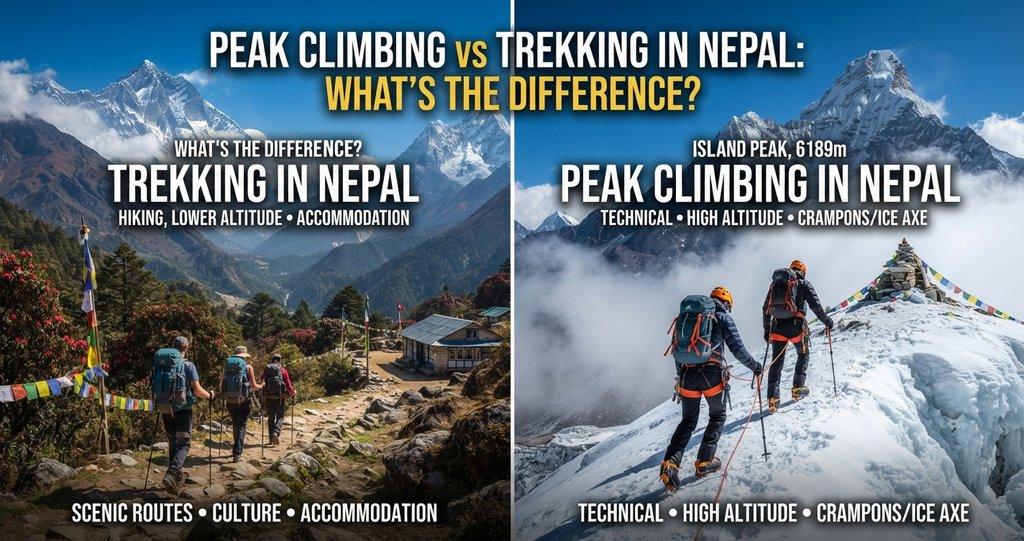
The simplest distinction is that trekking focuses on the journey through the mountains, while peak climbing adds a specific summit objective and, depending on the mountain, technical climbing skills and equipment.
This guide explains the difference between trekking and peak climbing in Nepal, including difficulty, preparation, equipment, altitude, duration, cost, safety, and the type of experience each activity offers.
What Is Trekking in Nepal?
Trekking is a multi-day journey on foot through Nepal's hills, valleys, forests, villages, mountain passes, and high-altitude landscapes.
Most trekking routes follow established trails and do not require technical mountaineering skills. Depending on the destination, trekkers may stay in teahouses, lodges, guesthouses, or camps.
Popular Trekking Destinations
- Everest Base Camp
- Annapurna Base Camp
- Annapurna Circuit
- Manaslu Circuit
- Langtang Valley
- Mardi Himal
- Gokyo Valley
- Upper Mustang
- Ghorepani and Poon Hill
Trekking is not necessarily about reaching a mountain summit. The journey itself is a major part of the experience, allowing travelers to explore Himalayan scenery, local communities, monasteries, culture, and mountain landscapes.
What Is Peak Climbing in Nepal?
Peak climbing combines trekking with mountaineering. A climbing expedition normally begins with an approach trek before becoming focused on reaching a specific mountain summit.
Depending on the mountain and route, climbing may involve snow or ice, steeper terrain, fixed ropes, and specialized mountaineering equipment.
Peak Climbing Equipment and Skills
- Crampons
- Ice axe
- Climbing harness
- Helmet
- Carabiners
- Ascender and descender
- Climbing ropes
- Snow and ice movement
- Fixed-rope techniques
- High-altitude mountaineering skills
Popular climbing objectives in Nepal include Mera Peak, Island Peak, Lobuche, Pisang Peak, Chulu East, Chulu West, Yala Peak, and Hiunchuli.
Peak Climbing vs Trekking: The Main Difference
Trekking is primarily about travelling through the mountains, while peak climbing adds a mountain summit objective and may require technical mountaineering skills.
| Factor | Trekking | Peak Climbing |
| Main Objective | Explore the route and mountain environment | Reach a specific mountain summit |
| Technical Skills | Usually not required | May be required depending on the peak |
| Equipment | Standard trekking equipment | Trekking equipment plus mountaineering equipment |
| Training | Physical preparation and hiking endurance | Physical preparation plus technical training where required |
| Terrain | Trails, valleys, passes, and mountain paths | Trails plus steeper, snowy, or technical terrain |
| Duration | Several days to several weeks | Often longer because of acclimatization and summit planning |
| Accommodation | Often teahouses and lodges | Teahouses, lodges, and expedition camps |
| Support | Guide and porter support may be used | Professional climbing and expedition support may be required |
Is Peak Climbing Harder Than Trekking?
Peak climbing generally introduces additional technical and logistical challenges, but there is no single rule that every climbing trip is harder than every trek.
Nepal has demanding high-altitude trekking routes as well as climbing peaks with very different levels of technical difficulty.
Look at the individual route, not just the activity name. The actual challenge depends on altitude, terrain, distance, technical requirements, weather, duration, and the experience of the traveler.
Popular Peak Climbing Options in Nepal
✦ Mera Peak
6,476 metres
Mera Peak is one of Nepal's best-known trekking peaks and combines a high-altitude approach trek with a summit objective.
✦ Island Peak
6,189 metres
Also known as Imja Tse, Island Peak is located in the Everest region and is commonly combined with trekking in the Khumbu.
✦ Lobuche Peak
Approximately 6,119 metres
Located in the Everest region, Lobuche can be incorporated into a broader Khumbu trekking and climbing itinerary.
✦ Pisang Peak
6,091 metres
Located in the Annapurna region, Pisang Peak provides an opportunity to combine trekking with a climbing objective.
Do You Need Climbing Experience for Peak Climbing?
It depends on the mountain. Some climbing peaks can provide an introduction to Himalayan mountaineering for appropriately prepared climbers, while more technical mountains require substantial previous experience.
Depending on the mountain, climbers may need to understand:
- Movement on snow and ice
- Use of crampons and an ice axe
- Climbing harnesses and ropes
- Fixed-rope systems
- Basic mountaineering techniques
- High-altitude decision-making
- Cold-weather and expedition procedures
Important: A peak described as a trekking or entry-level peak should not be interpreted as risk-free. Altitude, weather, terrain, and technical requirements still need to be taken seriously.
Physical Preparation for Trekking
Trekking preparation depends on the route's distance, altitude, terrain, and number of walking days.
A useful preparation program can include:
- Walking and hiking endurance
- Cardiovascular conditioning
- Leg strength
- Core strength
- Balance and stability
- Longer walks on consecutive days
- Hiking with an appropriate backpack
Physical and Technical Preparation for Peak Climbing
Peak climbing requires broader preparation because the activity can combine long-distance trekking with technical mountain terrain.
Preparation may include:
- Long-distance hiking
- Uphill training
- Cardiovascular conditioning
- Leg and core strength
- Hiking with a loaded backpack
- Technical climbing training
- Snow and ice training where relevant
- Rope-system training
- Cold-weather preparation
What Equipment Do You Need?
✦ Trekking Equipment
- Trekking boots
- Backpack
- Warm layers
- Waterproof jacket and trousers
- Sleeping bag
- Trekking poles
- Headlamp
- Water bottle
- Sunglasses
- Sunscreen
- Personal first-aid supplies
✦ Peak Climbing Equipment
- Mountaineering boots
- Crampons
- Ice axe
- Climbing harness
- Helmet
- Carabiners
- Ascender and descender
- Climbing ropes
- Technical clothing
- High-altitude gloves
- Goggles
Altitude: An Important Consideration for Both
Altitude is an important consideration in both trekking and peak climbing in Nepal.
Some trekking routes reach very high elevations without involving technical climbing. Everest Base Camp, for example, is a high-altitude trekking destination rather than a mountain summit climb.
As altitude increases, the available oxygen decreases and the body needs time to adapt. Responsible itineraries therefore include gradual elevation gain and appropriate acclimatization.
Remember: Physical fitness does not eliminate altitude-related risks. Acclimatization, sensible pacing, and responsible mountain planning remain important.
Trekking or Peak Climbing: Which Experience Fits You?
✦ Trekking
- Explore Himalayan landscapes
- Experience mountain villages and culture
- Enjoy mountain photography
- Walk through established mountain trails
- Avoid technical climbing
- Experience the Himalayas through a multi-day journey
✦ Peak Climbing
- Have a mountain summit objective
- Learn or use mountaineering techniques
- Travel on snow or ice where required
- Use specialized climbing equipment
- Take part in a structured climbing expedition
- Develop mountaineering experience
Can Trekking and Peak Climbing Be Combined?
Yes. One of the distinctive features of Himalayan travel in Nepal is that trekking and climbing can often be combined in the same itinerary.
The approach to a climbing peak may follow an established trekking route, allowing travelers to experience mountain villages, monasteries, local culture, and Himalayan landscapes before reaching the climbing area.
Common Combinations:
- Everest Base Camp and Island Peak — combine a Khumbu trekking experience with a climbing objective.
- Khumbu trekking and Mera Peak — combine an approach trek with a high-altitude climbing objective.
- Annapurna trekking and Pisang Peak — combine trekking in the Annapurna region with a climbing objective.
How Long Does Peak Climbing Take?
Trekking itineraries can range from a few days to several weeks. Peak climbing itineraries often require additional time because of acclimatization, climbing preparation, summit attempts, and weather contingencies.
A Climbing Itinerary May Include
- Travel to the mountain region
- Approach trekking
- Acclimatization
- Climbing preparation
- Base camp activities
- Summit attempt
- Weather contingency days
- Return journey
Cost: Trekking vs Peak Climbing
Peak climbing generally involves more expenses than standard trekking because it may require additional permits, technical equipment, climbing staff, expedition logistics, and longer itineraries.
Factors Affecting Total Cost
- Mountain and route
- Duration
- Permits
- Guides and climbing staff
- Accommodation
- Transportation
- Equipment
- Food and camping logistics
- Insurance
- Additional acclimatization days
Travel planning tip: When comparing trekking or climbing packages, request a detailed breakdown of what is included and excluded rather than comparing headline prices alone.
Safety and Responsible Adventure
Both trekking and peak climbing require responsible preparation. The level of planning should match the route and mountain.
Before departure, consider:
- The route and itinerary
- Altitude and acclimatization requirements
- Guide and support arrangements
- Required permits
- Equipment requirements
- Weather contingencies
- Insurance requirements
- Emergency arrangements
Himalayan conditions can change quickly. Experienced local support can help manage mountain risks, but no expedition can completely eliminate natural hazards.
Can a Trekker Become a Peak Climber?
Trekking can provide valuable experience for people who later want to explore mountaineering.
A traveler may begin with a moderate trek, develop experience with multi-day mountain travel, progress to a high-altitude trekking route, and eventually consider a suitable climbing peak.
Short Trek → High-Altitude Trek → Climbing Peak → Technical Peak → Major Expedition
Frequently Asked Questions (FAQ's):
Q. What is the difference between trekking and peak climbing in Nepal?
Trekking primarily involves travelling through mountain trails, valleys, villages, and high-altitude landscapes. Peak climbing combines trekking with a summit objective and may require technical mountaineering skills and specialized equipment.
Q. Is peak climbing harder than trekking?
Peak climbing generally introduces additional technical and logistical challenges, but difficulty varies considerably between individual trekking routes and climbing peaks.
Q. Can beginners go peak climbing in Nepal?
Some climbing peaks can provide an introduction to Himalayan mountaineering for appropriately prepared beginners. Requirements vary by mountain, altitude, route, season, and technical difficulty.
Q. Do I need special equipment for peak climbing?
Depending on the mountain, climbers may need equipment such as crampons, an ice axe, climbing harness, helmet, ropes, and other mountaineering equipment in addition to standard trekking gear.
Q. Which is better for a first Himalayan adventure?
The appropriate choice depends on your interests, preparation, experience, available time, and the type of adventure you want. Trekking provides an opportunity to explore the Himalayas without a technical summit objective, while peak climbing adds a mountaineering component.
Q. Can trekking and peak climbing be combined?
Yes. Several Nepal adventures combine established trekking routes with climbing objectives, including combinations such as Everest Base Camp and Island Peak or trekking in the Annapurna region with a suitable climbing peak.
Final Thoughts
Nepal offers an extraordinary range of Himalayan adventures, from established trekking routes to mountaineering expeditions.
Trekking and peak climbing are different experiences, even when they take place in the same mountain region.
Trekking focuses on the journey through the mountains, including landscapes, communities, culture, trails, and high-altitude environments. Peak climbing adds a summit objective and, depending on the mountain, technical mountaineering skills and specialized equipment.
For travelers visiting Nepal for the first time, trekking can provide an introduction to the Himalayan environment. For those with appropriate mountain experience who want to explore mountaineering, a suitable climbing peak can provide the next stage of adventure.
Whatever route you choose, the most important consideration is matching the journey to your experience and preparation and working with knowledgeable local professionals who understand Nepal's mountains.
Explore Nepal's Himalayas with preparation, respect, and a spirit of adventure.