Everest Base Camp Trek Preparation: Training, Fitness & Packing Guide
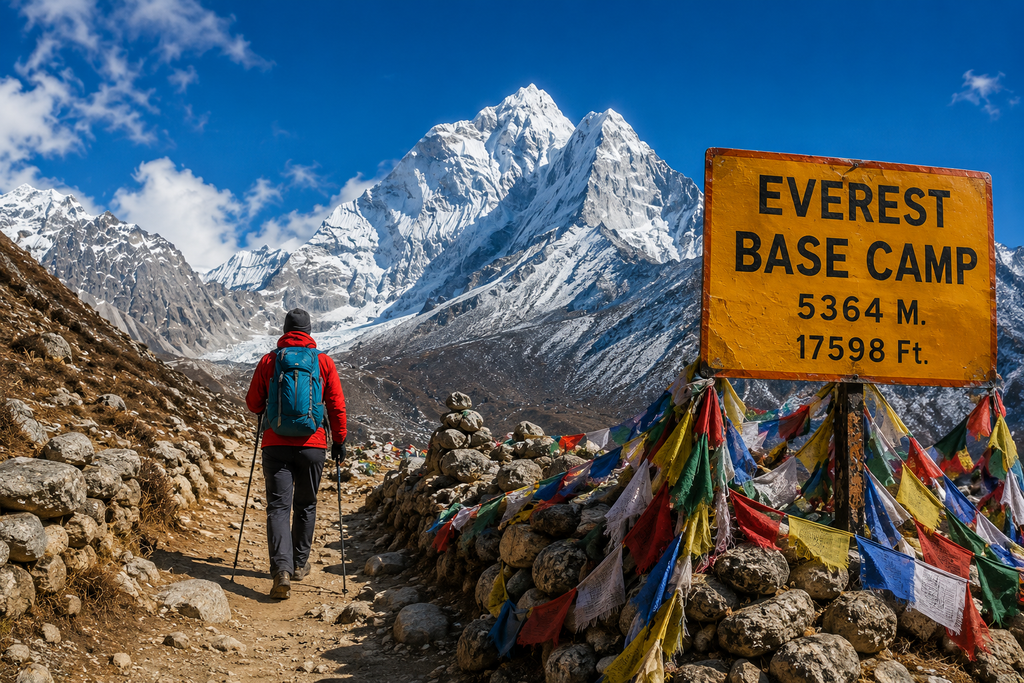
The Everest Base Camp Trek is one of the world's most iconic Himalayan adventures. The journey takes trekkers through the spectacular Khumbu region of Nepal, offering views of some of the world's highest mountains, encounters with Sherpa communities and monasteries, and the unforgettable experience of reaching Everest Base Camp at approximately 5,364 meters.
But reaching Everest Base Camp is not simply about wanting to get there.
Proper Everest Base Camp Trek preparation is essential.
Although the classic EBC trek does not require technical mountaineering skills such as rope climbing or glacier climbing, it involves long days of walking, steep and uneven trails, significant altitude gains and changing mountain conditions.
The Nepal Tourism Board describes the classic Everest Base Camp journey as roughly a two-week trek beginning and ending at Lukla, with important acclimatization stops in places such as Namche Bazaar and Dingboche or Pheriche.
With the right physical training, equipment, itinerary and mindset, you can arrive in Nepal better prepared for the challenges ahead.
At Peak Promotion Pvt. Ltd., we have been organizing trekking and mountaineering adventures in Nepal for more than three decades. Our experienced guides and Sherpa teams provide professional support to help trekkers prepare for and experience the Himalayas responsibly.
Is the Everest Base Camp Trek Difficult?
The Everest Base Camp Trek is generally considered a moderately challenging high-altitude trek.
You do not normally need technical climbing skills for the standard trekking route. However, the trek requires endurance because you may walk for several hours on consecutive days while gradually gaining altitude.
The challenge comes from a combination of:
- Long walking days
- Steep uphill and downhill sections
- Rocky and uneven trails
- High altitude
- Cold temperatures
- Changing weather
- Limited oxygen at elevation
- Basic mountain accommodation
- Consecutive days of physical activity
The highest point of a typical EBC itinerary is often Kala Patthar at around 5,545 meters, while Everest Base Camp itself is around 5,364 meters.
The Biggest Challenge: Altitude
Altitude is one of the most important factors separating the EBC Trek from ordinary hiking.
As you ascend, atmospheric pressure decreases and less oxygen is available to your body.
This means that even someone who is physically fit can experience altitude-related illness.
The CDC specifically notes that physical fitness does not prevent altitude illness. The rate at which you ascend and how your body responds to altitude are major factors.
That is why preparation should involve much more than simply exercising harder.
How Far in Advance Should You Prepare for Everest Base Camp?
For most trekkers, beginning a structured training program around 8–12 weeks before the trek is a practical approach.
If you are already active, you may need less preparation.
If you have a mostly sedentary lifestyle, starting earlier gives you more time to gradually build endurance and strength.
A good preparation program should develop five areas:
- Cardiovascular endurance
- Leg and lower-body strength
- Core stability
- Balance and mobility
- Mental endurance
You don't need to become an elite athlete.
The objective is to make several hours of walking feel manageable rather than exhausting.
How Fit Do You Need to Be for Everest Base Camp?
You do not need to be a professional runner, athlete or mountaineer to complete the EBC Trek.
However, you should be comfortable with sustained physical activity.
Before your trek, ideally you should be able to:
- Walk for several hours without excessive fatigue
- Handle consecutive days of physical activity
- Walk uphill at a steady pace
- Descend safely without excessive knee discomfort
- Carry a daypack
- Walk on uneven surfaces
- Maintain a comfortable pace without constantly stopping
Your training should therefore imitate the physical demands of trekking as much as possible.
The best training is not necessarily the hardest training. It is consistent training that prepares your body for the specific demands of mountain walking.
1. Hiking: The Best Everest Base Camp Training
If you can access hiking trails, hiking should be one of the central parts of your EBC preparation.
Walking on a treadmill can improve cardiovascular fitness, but real hiking provides additional benefits.
It teaches your body to handle:
- Uneven ground
- Uphill walking
- Downhill walking
- Rocks and loose surfaces
- Long-duration activity
- Backpack weight
- Changing weather
How Often Should You Hike?
Aim for approximately one or two hikes per week during the later stages of your training.
Start with shorter hikes and gradually increase:
- Distance
- Duration
- Elevation gain
- Backpack weight
Avoid increasing everything at once.
Practice With a Backpack
Eventually, practice hiking with the daypack you expect to use during the trek.
A moderate training load can help your body adapt to carrying equipment.
There is no need to carry your entire trekking load during every training session.
2. Stair Climbing for EBC Preparation
Stair climbing is one of the simplest ways to train your legs for repeated elevation gain.
The Everest trail contains numerous uphill and downhill sections, so stair training can help strengthen the muscles involved in climbing.
Try:
- 30–60 minutes per session
- 2–4 sessions per week
- Gradually increasing duration
- Maintaining a steady pace rather than sprinting
If you have access to a long staircase, use it for controlled repetitions.
If you use a stair machine at a gym, gradually increase the duration.
Why Stair Training Helps?
Stair climbing develops:
- Quadriceps
- Glutes
- Calves
- Hamstrings
- Cardiovascular endurance
However, don't rely exclusively on stairs.
Combine stair climbing with outdoor walking and hiking to develop a more complete trekking base.
3. Running and Cycling for Cardiovascular Fitness
Cardiovascular endurance helps you sustain physical activity over long periods.
Running is one option, but it is not mandatory.
You can also use:
- Cycling
- Brisk walking
- Swimming
- Elliptical training
- Incline treadmill walking
If you already run regularly, continue with a sensible program.
If you are new to exercise, brisk walking and gradual incline training may be a better starting point.
A Practical Cardio Routine
A general training target could be:
30–45 minutes per session, 3–5 times per week.
The exact intensity should depend on your current fitness level.
The goal is to build endurance gradually rather than exhaust yourself before the trek even begins.
4. Strength Training for Everest Base Camp
Strength training is another important part of Everest Base Camp Trek preparation.
Strong legs help you manage repeated uphill and downhill movement.
Focus on:
- Quadriceps
- Hamstrings
- Glutes
- Calves
- Core
- Lower back
Useful Exercises:
• Squats
Squats strengthen several major lower-body muscle groups.
• Lunges
Lunges help develop unilateral leg strength and balance.
• Step-Ups
Step-ups are particularly useful because their movement resembles climbing stairs.
• Deadlifts
Deadlifts can strengthen the posterior chain when performed with appropriate technique.
• Calf Raises
Calf raises help develop lower-leg strength.
• Planks
Planks strengthen the core and can improve overall stability.
You don't need to lift extremely heavy weights.
Focus on controlled movement, good technique and consistent progression.
5. Don't Forget Downhill Training
Many people prepare extensively for climbing but underestimate the physical demands of descending.
Downhill walking can place considerable stress on the knees and quadriceps.
Include downhill hiking in your training when possible.
Practice:
- Controlled steps
- Shorter strides
- Proper foot placement
- Trekking-pole technique
Trekking poles can also provide additional balance on uneven terrain.
Nepal Tourism Board recommends walking sticks for high-altitude and steep terrain because they can help with balance and reduce pressure on the knees during descents.
6. Flexibility, Mobility and Balance
Strength and cardio are important, but mobility should not be ignored.
Include stretching and mobility work after training sessions.
Useful activities include:
- Yoga
- Hip mobility exercises
- Ankle mobility
- Hamstring stretches
- Calf stretches
- Balance exercises
Better mobility can make movement more comfortable and help you maintain efficient walking mechanics.
Balance training is particularly useful when preparing for rocky or uneven mountain trails.
A Simple 12-Week Everest Base Camp Training Plan
If you have approximately three months before your trek, you can gradually increase your workload.
| Training Period | Main Focus | Example |
| Weeks 1–4 | Build basic fitness | Walking, light cardio, strength training |
| Weeks 5–8 | Increase endurance | Longer hikes, stairs, strength, cardio |
| Weeks 9–10 | Trek-specific training | Long hikes with backpack, elevation gain |
| Weeks 11–12 | Peak preparation + taper | Longest hikes followed by reduced workload |
| Final days | Recovery | Light walking and mobility |
The exact training load should be adjusted according to your existing fitness and any medical or musculoskeletal limitations.
Do not attempt to dramatically increase your training volume in the final week.
Arriving rested is more useful than arriving exhausted.
Altitude Acclimatization: The Most Important Part of EBC Preparation
Fitness preparation is only one part of the equation.
You cannot train your body at sea level to completely eliminate altitude risk.
Acclimatization happens after you reach altitude.
The human body needs time to adapt to reduced oxygen availability.
The CDC recommends gradual ascent and emphasizes that altitude illness risk depends heavily on altitude and rate of ascent. Above approximately 3,000 meters, it recommends limiting increases in sleeping altitude and incorporating additional acclimatization time as elevation increases.
The Nepal Tourism Board similarly emphasizes gradual ascent and rest days above 2,500 meters.
Why Acclimatization Days Matter on the EBC Trek?
A well-designed Everest itinerary includes acclimatization stops.
Namche Bazaar is an important early acclimatization point.
The Nepal Tourism Board recommends spending additional time around Namche rather than rushing through it.
Another acclimatization period is commonly included around Dingboche or Pheriche before the route continues toward Lobuche and Gorak Shep.
These rest days do not necessarily mean sitting inside a lodge all day.
They may include short hikes to higher elevations followed by returning to the lower sleeping altitude.
This approach gives the body additional time to adapt.
Understanding Acute Mountain Sickness
Acute Mountain Sickness (AMS) can occur at high altitude and should always be taken seriously.
Common symptoms include:
- Headache
- Nausea
- Loss of appetite
- Fatigue
- Dizziness
- Difficulty sleeping
Nepal Tourism Board advises trekkers not to continue ascending when experiencing symptoms and recommends descending if symptoms worsen.
More Serious Warning Signs:
Severe symptoms can include:
- Difficulty walking normally
- Confusion
- Severe fatigue
- Shortness of breath at rest
- Persistent or severe vomiting
These can indicate a serious altitude-related condition.
Do not attempt to simply “push through” worsening altitude symptoms.
If you develop concerning symptoms, inform your guide immediately and follow professional medical advice.
Hydration During the Everest Trek
Staying hydrated is an important part of trekking preparation and high-altitude travel.
Your water requirements depend on:
- Weather
- Physical activity
- Individual needs
- Food intake
- Altitude
- Sweating
Instead of relying on a single fixed number for everyone, drink regularly and monitor your hydration.
Carry a reliable water bottle or hydration system and use safe water-treatment methods when required.
Avoid Alcohol at High Altitude
Alcohol can worsen dehydration and interfere with sleep and acclimatization.
The Nepal Tourism Board advises trekkers not to consume alcohol while trekking at high altitude, while CDC guidance recommends avoiding alcohol during the early acclimatization period.
Nutrition Before and During the Trek
Your body needs sufficient energy for long trekking days.
Before the trek, focus on a balanced diet containing:
- Complex carbohydrates
- Protein
- Healthy fats
- Fruits
- Vegetables
- Adequate fluids
During the trek, practical energy sources can include:
- Nuts
- Dried fruit
- Energy bars
- Chocolate
- Biscuits
- Fruit
- Trail mix
Meals on the trail commonly include carbohydrate-rich foods that provide energy for long walking days.
Don't wait until you are completely exhausted before eating.
Everest Base Camp Trek Packing List
Your packing strategy should balance preparedness with weight.
You don't need to carry everything you own.
A professional packing list should prioritize warmth, weather protection, safety, hydration and essential personal items.
✦ Clothing
- Moisture-wicking base layers
- Fleece jacket
- Insulated/down jacket
- Waterproof jacket
- Waterproof trousers
- Trekking trousers
- Thermal underwear
- Warm hat
- Sun hat
- Gloves
- Warm trekking socks
- Extra underwear
Layering is more practical than relying on one extremely heavy jacket because mountain temperatures can change significantly throughout the day.
✦ Footwear for Everest Base Camp
Good footwear is essential.
Consider:
- Waterproof trekking boots
- Comfortable camp shoes or sandals
- Trekking socks
- Optional gaiters
Wear your trekking boots before the expedition.
Do not arrive in Nepal with brand-new boots and immediately begin a long trek.
Breaking in footwear beforehand helps identify pressure points and reduces the chance of painful blisters.
✦ Trekking Equipment
A practical EBC equipment list can include:
- 30–40 L daypack
- Duffel bag
- Trekking poles
- Sleeping bag suitable for the expected conditions
- Headlamp
- Water bottles
- Water purification method
- Sunglasses
- Sunscreen
- Lip balm
- Power bank
- Camera
- Small personal first-aid kit
Your exact sleeping bag and clothing requirements should depend on the season and itinerary.
At high altitude, cold temperatures and strong UV exposure make appropriate clothing and sun protection particularly important.
✦ Important Documents and Personal Items
Don't forget the practical items that can be just as important as trekking gear.
Carry:
- Passport
- Required permits and trekking documentation
- Travel insurance details
- Emergency contact information
- Personal medication
- Prescription copies where appropriate
- Small first-aid supplies
- Cash
- Phone
- Power bank
For Everest Base Camp specifically, Nepal Tourism Board currently lists the EBC Trek among the routes where trekkers must be accompanied by a licensed trekking guide and carry an agency-issued TIMS card under the revised TIMS provisions effective March 31, 2023.
Always confirm current requirements before departure because trekking regulations can change.
Do You Need Technical Mountaineering Training?
For the standard Everest Base Camp Trek, technical climbing training is generally not required.
You do not normally need to train for:
- Rope climbing
- Ice climbing
- Crampon techniques
- Technical glacier travel
- Ice-axe climbing
Those skills become relevant to technical mountaineering and peak-climbing expeditions rather than the standard EBC trekking route.
However, you should understand:
- Basic mountain safety
- Trekking at high altitude
- Layering
- Hydration
- Nutrition
- Weather awareness
- Altitude sickness symptoms
- Trekking-pole technique
- Emergency procedures
Your guide and trekking agency should explain important safety procedures before and during the trek.
Mental Preparation for Everest Base Camp
Physical preparation gets a lot of attention, but mental preparation matters too.
The trek may not always go exactly according to plan.
You may experience:
- Weather delays
- Cold mornings
- Long walking days
- Slow progress
- Basic accommodation
- Poor sleep
- Appetite changes
- Unexpected itinerary adjustments
A flexible mindset helps.
Prepare Yourself to:
• Walk slowly.
You don't need to race other trekkers.
• Accept changing conditions.
Mountain weather can alter plans.
• Respect acclimatization days.
Rest is part of the trek, not wasted time.
• Listen to your body.
Fatigue and altitude symptoms should not be ignored.
• Stay patient.
Some of the most memorable parts of the trek happen when you slow down.
How to Prepare for Teahouse Accommodation?
The EBC Trek is not a luxury holiday.
Tea houses provide accommodation along much of the classic route, but facilities become more basic as you move higher.
The Nepal Tourism Board notes the availability of tea houses along the Everest route.
You should be prepared for:
- Basic rooms
- Shared facilities in some locations
- Limited hot water at higher elevations
- Simple meals
- Cold rooms
- Variable Wi-Fi/mobile connectivity
- Charging costs or limited electricity
A sleeping bag and appropriate layers can make a significant difference to comfort.
Train With the Right Mindset, Not Just the Right Exercises
One common mistake is focusing entirely on gym workouts.
The Everest Base Camp Trek is a walking expedition, so your training should eventually resemble walking.
A balanced weekly program could look like:
| Day | Training |
| Monday | Strength training |
| Tuesday | Cardio / brisk walking |
| Wednesday | Rest or mobility |
| Thursday | Stair training + strength |
| Friday | Cardio |
| Saturday | Long hike |
| Sunday | Recovery walk / rest |
As the trek approaches, gradually increase the length and elevation of your weekend hikes.
If you feel persistent pain or unusual symptoms during training, reduce the workload and seek appropriate professional advice.
Common Everest Base Camp Preparation Mistakes
Avoiding common mistakes can make your preparation much more effective.
1. Starting Training Too Late
Don't wait until two weeks before departure.
Give your body time to adapt.
2. Only Training in the Gym
Gym workouts are useful, but they cannot fully reproduce mountain walking.
Include actual hikes whenever possible.
3. Ignoring Downhill Walking
Descending can be surprisingly demanding.
Train for both directions.
4. Buying New Boots at the Last Minute
Break them in before your trip.
5. Overpacking
Every unnecessary kilogram becomes more noticeable after several hours of walking.
6. Trying to Walk Too Fast
A steady pace is more sustainable than constantly pushing your limits.
7. Assuming Fitness Prevents AMS
It does not.
The CDC notes that physical fitness does not protect against altitude illness.
8. Ignoring Symptoms
Headache, nausea, dizziness and unusual fatigue at altitude should not automatically be dismissed as normal trekking fatigue.
A Final EBC Preparation Checklist
Before leaving for Nepal, ask yourself:
✦ Fitness
- Can I walk for several hours comfortably?
- Have I completed regular hikes?
- Have I trained my legs?
- Have I practiced uphill and downhill walking?
- Have I gradually increased my endurance?
✦ Altitude
- Do I understand AMS?
- Is my itinerary designed for gradual acclimatization?
- Do I know when to stop ascending?
- Will I tell my guide if I feel unwell?
✦ Equipment
- Are my trekking boots broken in?
- Do I have appropriate layers?
- Do I have waterproof protection?
- Do I have a sleeping bag suitable for the season?
- Do I have trekking poles?
- Do I have sun protection?
✦ Documents
- Is my passport valid?
- Do I have appropriate travel insurance?
- Have I checked current trekking permits and TIMS requirements?
- Do I have copies of important documents?
✦ Mindset
- Am I prepared for changing weather?
- Am I comfortable with basic teahouse accommodation?
- Am I prepared to walk at a slower pace?
- Am I willing to change plans if safety requires it?
If the answer to most of these questions is yes, you're moving in the right direction.
Why Professional Trekking Support Matters?
Good preparation doesn't mean doing everything alone.
A professional trekking operator can help with:
- Itinerary planning
- Acclimatization schedules
- Accommodation
- Permits
- Guide arrangements
- Porter support
- Transportation
- Equipment advice
- Emergency coordination
- Route adjustments
This becomes particularly important in the Everest region, where altitude, weather and trail conditions can affect the itinerary.
The Nepal Tourism Board specifically emphasizes the importance of gradual acclimatization and mountain safety, while the Everest route includes several planned acclimatization points.
Preparing for Everest Base Camp with Peak Promotion
At Peak Promotion Pvt. Ltd., we understand that an Everest Base Camp adventure begins long before you reach Lukla.
Preparation starts with choosing an appropriate itinerary, understanding altitude, building physical endurance and carrying the right equipment.
Our experienced trekking guides and Sherpa teams provide local knowledge and operational support throughout the journey.
Whether you're an experienced trekker or preparing for your first Himalayan adventure, our team can help you understand what to expect and prepare accordingly.
From itinerary planning and acclimatization days to trekking logistics and mountain support, the objective is to help you focus on the experience while your trekking team manages the practical details.
Your Everest Base Camp journey starts with preparation. The better prepared you are, the more confidently you can experience the Himalayas.
Frequently Asked Questions (FAQ's):
Q. How long should I train before the Everest Base Camp Trek?
A structured training program of around 8–12 weeks is a practical starting point for many trekkers. Beginners or people with lower fitness levels may benefit from starting earlier.
Q. Do I need to be extremely fit for Everest Base Camp?
No. You don't need to be an athlete, but you should develop good cardiovascular endurance, leg strength and walking stamina before the trek.
Q. Is Everest Base Camp a technical climb?
The standard Everest Base Camp Trek is a trekking route rather than a technical mountaineering expedition. Technical climbing skills such as rope climbing and ice climbing are generally not required.
Q. How many hours do you walk each day on the EBC Trek?
Walking time varies by itinerary and terrain. Many trekking days involve several hours of walking, with some days being longer than others.
Q. How early should I start training for Everest Base Camp?
Starting 8–12 weeks before departure gives many trekkers enough time to progressively develop endurance and strength. If you're currently inactive, starting earlier is sensible.
Q. Is hiking the best training for Everest Base Camp?
Hiking is one of the most useful forms of EBC preparation because it combines walking endurance, elevation gain, uneven terrain and backpack practice.
Q. Can running prepare me for Everest Base Camp?
Running can improve cardiovascular fitness, but it should ideally be combined with hiking, stair training and strength exercises because trekking places different demands on the body.
Q. Do I need to train for altitude before Everest Base Camp?
Fitness training can prepare your body for physical exertion, but it cannot fully acclimatize you to high altitude before you reach the mountains. Acclimatization occurs through gradual exposure to altitude during the trek.
Q. How can I reduce my risk of altitude sickness?
Gradual ascent, appropriate acclimatization days, hydration, avoiding alcohol during early acclimatization and paying attention to symptoms are important. Never continue ascending when symptoms are worsening.
Q. What are the symptoms of Acute Mountain Sickness?
Common symptoms include headache, nausea, loss of appetite, dizziness and fatigue. More serious symptoms such as difficulty walking, confusion or shortness of breath at rest require urgent attention.
Q. Do I need trekking poles for Everest Base Camp?
Trekking poles are not mandatory, but they can provide balance on uneven terrain and help reduce stress on the knees, particularly during descents.
Q. What should I pack for Everest Base Camp?
Essential items generally include layered clothing, waterproof protection, trekking boots, warm layers, sleeping equipment, trekking poles, water bottles, sun protection, personal medication and important documents.
Q. Do I need travel insurance for the EBC Trek?
Travel insurance is strongly recommended. Check that your policy specifically covers trekking at the altitude included in your itinerary and understand the conditions for emergency evacuation.
Q. Do I need a guide for Everest Base Camp?
Under Nepal Tourism Board's current TIMS provisions, Everest Base Camp is among the listed routes requiring trekkers to be accompanied by a licensed trekking guide and carry an agency-issued TIMS card.
Conclusion: Prepare Well, Trek Confidently
The Everest Base Camp Trek is an extraordinary journey, but reaching the world's highest mountain region requires preparation.
You don't need to become an elite athlete.
You need to build consistent endurance, strong legs, good walking habits and the ability to manage several days of physical activity.
Just as importantly, you need to respect altitude.
A good training program cannot replace acclimatization, and physical fitness does not make you immune to altitude sickness. A carefully planned itinerary, gradual ascent and willingness to respond to symptoms are essential parts of responsible high-altitude trekking.
Start preparing several weeks before departure.
Hike. Walk. Train your legs. Practice with your backpack. Break in your boots. Learn about altitude. Pack intelligently. And prepare yourself mentally for the realities of mountain travel.
Then, when you finally reach the trail toward Everest, you can spend less time worrying about whether you're prepared and more time appreciating the incredible landscape around you.
Planning your Everest Base Camp adventure? Let Peak Promotion help you prepare, organize and experience your journey into the heart of the Himalayas.