Trek Nepal with Respect
Nepal is more than a destination for spectacular mountain views. Its trekking routes pass through traditional villages, sacred monasteries, forests, protected landscapes and communities with distinct languages, customs and ways of life. From the Everest region and Annapurna foothills to Langtang and remote Himalayan valleys, every trail offers an opportunity to experience the country's natural and cultural diversity.
However, trekking responsibly means more than carrying the right equipment or following a route map. The way you interact with local people, behave around religious sites, treat guides and porters, and manage your waste can influence the places and communities you visit.
This is where trekking etiquette in Nepal becomes important.
Simple actions make a difference: greeting people politely, asking before taking photographs, respecting local customs, staying on established trails, minimizing waste and supporting locally owned businesses. These practices help protect the environment and make trekking more rewarding for both visitors and host communities.
Whether you are preparing for the Everest Base Camp Trek, the Ghorepani Poon Hill Trek, the Annapurna Circuit or a shorter village walk, this guide explains how to trek respectfully and responsibly in Nepal.
Understand and Respect Local Culture
Nepal is culturally diverse. Customs and traditions vary among communities, regions, religions and households. A practice that is familiar in one village may differ in another, so travelers should remain observant and follow local guidance.
▸ Greet People Politely
A friendly greeting is one of the easiest ways to show respect.
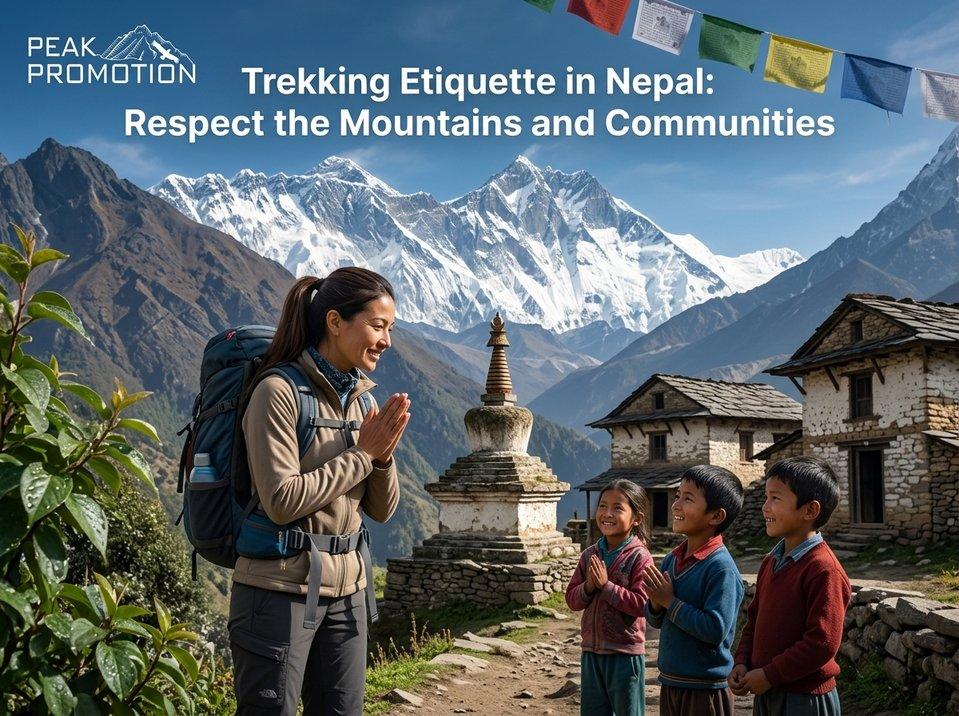
“Namaste,” often accompanied by joining your palms together, is a widely recognized greeting in Nepal. It is appropriate in many everyday interactions, although local languages and greetings vary by region.
Use a friendly tone, smile when appropriate and avoid treating local residents as attractions simply because you are visiting their village.
▸ Dress Considerately
Comfortable trekking clothes are practical on the trail, but modest clothing is advisable when visiting villages, monasteries, temples and other sacred places.
Consider carrying clothing that covers your shoulders and knees when entering religious or culturally sensitive spaces. Follow posted instructions and local advice rather than assuming every place has identical expectations.
▸ Respect Local Customs and Beliefs
Nepal is home to Hindu, Buddhist and many other religious and cultural traditions. Religious practices may be part of everyday life in villages along trekking routes.
You may encounter prayer flags, mani walls, stupas, shrines and prayer wheels. Observe how local people behave and follow their example when appropriate.
If you are unsure whether an action is permitted, ask your guide or a local host before proceeding.
▸ Be Careful With Your Feet and Hands
In many Nepali cultural settings, touching someone or a sacred object with your feet can be considered disrespectful. Avoid pointing your feet toward religious objects or people when seated in a home or prayer space.
Using the right hand or both hands when offering or receiving something can also be a considerate gesture, particularly in formal or traditional settings.
These are general cultural guidelines, not universal rules for every person or situation. When in doubt, be polite and follow local guidance.
Show Respect at Temples, Monasteries and Sacred Sites
Trekking routes frequently pass religious landmarks that are important to the communities living there. These places are not simply sightseeing stops; they may be active spaces for prayer, ceremonies and community gatherings.
▸ Follow Entry Rules
Some temples restrict entry to certain areas or visitors. Monasteries may have specific rules about footwear, photography, clothing and access to prayer halls.
Before entering:
- Look for signs and posted instructions.
- Remove your shoes when requested.
- Ask whether photography is allowed.
- Keep your voice low inside prayer spaces.
- Avoid interrupting ceremonies or prayers.
- Follow instructions from monks, caretakers or your guide.
Never assume that a religious site is open to everyone just because its entrance is accessible.
▸ Walk Clockwise Around Buddhist Shrines
In many Buddhist traditions, stupas, chortens and mani structures are traditionally circumambulated clockwise.
When walking around these structures, follow the customary direction and avoid cutting across sacred spaces. If you are unsure about the correct route, observe local visitors or ask your guide.
▸ Treat Prayer Flags and Mani Walls Respectfully
Prayer flags and mani walls are important cultural and religious features in many Himalayan regions.
Do not remove prayer flags, climb on sacred structures, write on mani stones or rearrange religious objects for photographs. Keep to the established path and avoid placing bags or equipment on sacred structures.
The Nepal Tourism Board provides additional guidance in its Cultural Etiquette recommendations.
Ask Before Photographing People
Photography is a major part of many trekking experiences. Mountain villages, local markets, traditional clothing and daily activities can make compelling subjects. However, people deserve privacy and control over how their images are taken.
▸ Ask for Permission First
Before photographing someone, smile and ask whether they are comfortable being photographed. A simple gesture or a question through your guide may help when language is a barrier.
If someone declines, respect their decision. Do not continue taking photographs from a distance or pressure them to participate.
▸ Be Especially Careful With Children
Always be considerate when photographing children. Seek permission from a parent or responsible adult when appropriate, and avoid photographing children in sensitive situations.
Do not assume that a friendly interaction means someone has agreed to have their photograph published online.
▸ Respect Religious Ceremonies
Some ceremonies, rituals and prayer activities are private or sensitive. Ask before taking pictures, and avoid using flash or moving around in ways that disrupt the event.
▸ Share Photos Responsibly
Think about how an image might affect the person pictured. Avoid publishing photographs that reveal sensitive personal information or portray communities in a misleading or demeaning way.
Responsible photography treats people as participants in their own lives, not merely as scenery for a travel story.
Protect the Environment and Leave No Trace
Nepal's mountain environments are beautiful but can be vulnerable to litter, erosion, pollution and pressure from tourism. Waste management is especially challenging in remote areas where collection and disposal facilities may be limited.
The Nepal Tourism Board encourages visitors to use established routes, reduce waste, carry rubbish out of sensitive areas and support responsible local services.
▸ Carry Your Waste Back
A wrapper or empty bottle may seem insignificant, but waste left on the trail can accumulate and harm wildlife or contaminate the environment.
Follow these practices:
- Carry a reusable water bottle.
- Use refill points where water is treated appropriately.
- Bring a small bag for your rubbish.
- Carry out batteries and other hazardous waste.
- Use designated waste bins when available.
- Avoid leaving food wrappers, tissues or cigarette ends behind.
Do not assume that waste placed in an unmarked bin will be recycled or safely processed. Ask your guide or lodge how to dispose of particular items.
▸ Stay on Established Trails
Taking shortcuts can damage vegetation, increase soil erosion and create new paths that other trekkers may follow.
Stay on marked or established trails and avoid trampling plants to take photographs. Do not create alternate routes around muddy sections unless your guide confirms that a diversion is safe and appropriate.
▸ Do Not Disturb Wildlife
Observe animals from a respectful distance. Avoid feeding wildlife, chasing animals for photographs or making loud noises to attract their attention.
Never purchase products made from protected wildlife or collect plants, flowers, stones or other natural materials from protected areas where removal is prohibited.
▸ Use Water Responsibly
Clean water can be limited in mountain settlements, and providing hot showers or washing facilities may require significant energy.
Use water thoughtfully, avoid unnecessary long showers and follow local guidance on water treatment and conservation.
For further guidance, read the Nepal Tourism Board's Responsible Tourism recommendations.
Be Courteous to Other Trekkers on the Trail
Trekking etiquette also involves sharing narrow paths safely and respectfully. On busy routes, small courtesies can prevent congestion and reduce the risk of accidents.
▸ Give Way Considerately
On narrow or steep sections, communicate with other walkers before passing. Move to a stable, safe part of the trail when appropriate rather than stepping onto loose slopes or fragile vegetation.
Follow your guide's instructions about passing other groups and navigating difficult sections.
▸ Respect Pack Animals
Mules, yaks and other pack animals may carry supplies along established trekking routes.
When animals approach:
- Follow your guide's instructions.
- Move to the safe side of the trail when directed.
- Avoid standing on the exposed edge of a narrow path.
- Do not shout, tease or suddenly approach the animals.
- Keep a safe distance and allow the animals to pass.
Do not assume that the same side is safest on every trail. Terrain and local conditions determine the appropriate position.
▸ Keep Noise Under Control
Avoid playing loud music, shouting across valleys or disturbing other trekkers at viewpoints and lodges.
Many people trek to enjoy nature, reflect or experience the quiet of the mountains. Keep conversations considerate, particularly early in the morning and late in the evening.
▸ Follow Local Trail Guidance
If your guide asks the group to stop, change direction or wait for another group, follow the instruction. Local guides may be familiar with terrain, trail conditions and customary practices that are not obvious to visitors.
Treat Guides and Porters Fairly
Guides and porters play important roles in Nepal's trekking and tourism industry. They contribute local knowledge, route planning, logistics, communication and, where relevant, support during difficult situations.
Respectful trekking includes treating them fairly and recognizing that they are professionals, not simply part of the scenery or equipment.
▸ Agree on Responsibilities Before the Trek
Before departure, understand what your guide and porter are expected to do, what services are included in your package and what you are responsible for carrying.
Discuss any special requirements in advance, such as dietary needs, pace preferences or planned rest days.
▸ Respect Workload and Safety
Do not ask porters to carry unreasonable loads or equipment that has not been agreed upon. Follow the trekking provider's guidance on weight limits, and make sure your personal luggage is packed appropriately.
Porters and guides also need adequate food, rest, clothing and suitable accommodation. Ask your trekking agency about its staff welfare and working practices.
▸ Communicate Clearly and Politely
Let your guide know if you feel unwell, need a break or are struggling with the pace. Share concerns early rather than waiting until the situation becomes difficult.
Listen to safety advice, especially when weather changes, altitude symptoms or trail hazards arise.
▸ Understand Tipping Practices
Tipping is common in trekking, but appropriate amounts depend on the length of the trip, group size, service and your budget. Ask your trekking agency for current guidance rather than assuming there is a universal amount.
Any tip should be given respectfully and without treating it as a substitute for fair wages or agreed payments.
Support Local Communities Through Responsible Spending
Trekking can provide income for lodges, restaurants, guides, porters, transport operators, farmers and small businesses. Where possible, make choices that help tourism spending benefit the communities along your route.
▸ Choose Locally Owned Accommodation
Staying in locally owned lodges or homestays can help support local livelihoods. These stays may also offer opportunities to learn about the area's food, traditions and everyday life.
Ask about available accommodation and choose options that fit your comfort needs and itinerary.
▸ Buy Local Products and Services
Consider purchasing meals, snacks, crafts and other appropriate goods from local businesses. Use local guides and services through reputable providers.
Avoid bargaining in ways that become disrespectful over small amounts. It is reasonable to discuss prices, but the conversation should remain fair and courteous.
▸ Respect Community Spaces
A village is someone's home, workplace and community—not a theme park.
Avoid entering private courtyards, homes or agricultural land without permission. Do not disturb people at work or during community activities simply to take photographs.
▸ Learn About Local Traditions
Ask your guide about the region's history, architecture, food and customs. Listen with curiosity rather than expecting every community to explain itself in the same way.
Responsible travel involves learning from people and respecting their right to decide what they want to share.
Respect Nature and Sacred Mountains
Mountains have cultural, spiritual and environmental significance in many Himalayan communities. Some peaks and landscapes are regarded as sacred, while others hold deep historical or religious meaning.
Even when a trek is primarily an outdoor adventure, visitors should be aware that the mountains may have significance beyond their recreational value.
▸ Avoid Disrespectful Behavior at Viewpoints
Do not damage cairns, prayer flags or other structures to create a better photograph. Avoid littering, shouting or disturbing others at viewpoints.
If a site has signs requesting quiet or restricted access, follow them.
▸ Follow Local Restrictions
Some areas may have rules about camping, fires, photography, access or collecting natural materials. Ask your guide about restrictions before setting up equipment or exploring beyond the main trail.
▸ Avoid Unnecessary Fires
Firewood collection can put pressure on mountain forests, and open fires may be prohibited or unsafe in some places.
Use the heating and cooking arrangements provided by your lodge or trekking operator. Do not start a campfire unless it is permitted and appropriate for the location.
Practice Responsible Behavior in Teahouses and Villages
Teahouses are an important part of Nepal's trekking experience. They provide food, accommodation and places for trekkers to rest after a day on the trail.
Good etiquette helps make these shared spaces comfortable for guests, staff and local residents.
▸ Be Considerate About Noise and Shared Facilities
Keep noise low during sleeping hours, particularly when rooms share walls or dining areas are used by several groups.
Use bathrooms responsibly, keep shared spaces clean and follow the lodge's instructions about hot water, electricity and waste.
▸ Understand Local Resource Limitations
In remote areas, supplies may need to be transported over long distances. Electricity, hot water, internet and certain foods may not always be available.
Ask about services politely and avoid becoming frustrated when facilities differ from those in a city hotel.
▸ Follow Local Food Customs
Try local dishes when you feel comfortable doing so, and communicate dietary requirements clearly. Avoid wasting large amounts of food and follow the host's instructions about meals and shared dining spaces.
▸ Ask Before Using Private Spaces
Do not enter kitchens, bedrooms, storerooms or other private areas without permission. If you want to observe food preparation or local activities, ask your host first.
Follow Safety Rules and Respect Local Advice
Responsible trekking is also about making decisions that protect yourself, your group and the people who may need to assist you.
▸ Listen to Your Guide
A guide may recommend changing the itinerary because of weather, trail damage, altitude symptoms or other safety concerns.
Do not dismiss local advice simply because a route appears easy on a map or another group is continuing. Conditions can differ between routes and individuals.
▸ Do Not Push Beyond Your Limits
Take breaks, drink safe water and tell your guide if you feel unwell. Symptoms such as worsening headache, nausea, dizziness, unusual fatigue or breathing problems at altitude should not be ignored.
Severe symptoms, including confusion, difficulty walking straight or breathlessness at rest, require urgent medical attention. Follow qualified medical guidance and do not continue ascending when altitude illness is suspected.
▸ Respect Permits and Access Rules
Some trekking regions have specific permit requirements, conservation rules or restrictions on independent travel. Confirm current requirements before departure and carry the necessary documents.
The Nepal Tourism Board provides information on trekking and access requirements. Rules can change, so verify them with the relevant authority or your trekking provider.
▸ Be Prepared for Emergencies
Carry essential medication, suitable clothing, a headlamp, a first-aid kit and reliable communication options appropriate to your route.
Share your itinerary with a trusted person, understand your insurance coverage and discuss emergency procedures with your guide before setting off.
A Practical Trekking Etiquette Checklist
Before your trip, use this checklist to make sure you are ready to trek respectfully.
| Area | Responsible Practice |
| Cultural respect | Greet people politely and follow local customs |
| Sacred places | Observe entry rules, remove shoes when required and respect ceremonies |
| Photography | Ask permission before photographing people |
| Environment | Carry out rubbish and stay on established trails |
| Wildlife | Keep your distance and never feed or chase animals |
| Guides and porters | Agree on responsibilities and treat staff fairly |
| Local economy | Use reputable local services and consider locally owned accommodation |
| Teahouses | Respect shared spaces, noise levels and resource limitations |
| Trail safety | Follow guide instructions and give others space on narrow paths |
| Emergency planning | Carry essential supplies and understand local procedures |
A responsible trekker does not need to know every custom before arriving. What matters is being willing to learn, ask questions, listen and adjust behavior when appropriate.
Common Trekking Etiquette Mistakes to Avoid in Nepal
Even well-intentioned travelers can make mistakes when they are unfamiliar with local customs. The following are worth avoiding.
- Taking photographs without permission: Ask first, especially in villages, homes and religious settings.
- Touching sacred objects casually: Observe how religious structures are used and follow local guidance.
- Leaving waste behind: Carry wrappers, bottles, batteries and other rubbish until appropriate disposal is available.
- Entering private property: Wait for an invitation before entering homes or courtyards.
- Ignoring guide instructions: Local knowledge can be crucial when conditions change.
- Treating porters unfairly: Respect agreed workloads, working conditions and payments.
- Making excessive noise: Keep shared spaces and natural viewpoints peaceful.
- Assuming every community has identical customs: Ask rather than generalize.
- Demanding city-level facilities in remote locations: Be patient and understand local resource constraints.
- Continuing despite serious symptoms: Safety must take priority over completing the itinerary.
How Peak Promotion Nepal Encourages Responsible Trekking?
A successful trekking experience depends on more than reaching a viewpoint or completing a route. It also depends on how visitors interact with the people, culture and environment encountered along the way.
Peak Promotion Nepal has supported Himalayan trekking and expedition activities since 1992. When planning a trip, discuss your itinerary, local customs, environmental responsibilities and safety arrangements with your trekking provider.
Whether you are exploring the Everest region, walking through Annapurna's villages or choosing a quieter Himalayan trail, responsible preparation can help you travel with greater awareness and respect.
Explore these trekking resources from Peak Promotion Nepal:
- All Trekking Routes
- Everest Base Camp Trek
- Ghorepani Poon Hill Trek
- Mardi Himal Trek
- Langtang Valley Trek
Frequently Asked Questions (FAQ's):
Q. What is trekking etiquette in Nepal?
Trekking etiquette in Nepal means behaving respectfully toward local communities, religious traditions, other trekkers and the natural environment. It includes asking before taking photographs, respecting sacred places, minimizing waste, supporting local businesses and following safety guidance.
Q. How should I greet people while trekking in Nepal?
“Namaste,” often accompanied by joining your palms together, is a widely recognized greeting. A friendly smile and polite manner are also appropriate. Local greetings may vary by region and community.
Q. Is it okay to take photographs of local people in Nepal?
Ask permission before photographing people, particularly in villages, homes, markets and religious settings. If someone declines, respect their decision. Be especially considerate when photographing children or private ceremonies.
Q. What should I wear when visiting monasteries and temples in Nepal?
Wear clothing that is respectful of the setting, and cover your shoulders and knees where appropriate. Remove your shoes when requested, follow signs and ask whether particular areas are open to visitors.
Q. How can I reduce my environmental impact while trekking in Nepal?
Carry reusable bottles, minimize single-use packaging, pack out your rubbish, stay on established trails, avoid disturbing wildlife and conserve water and energy. Follow local waste-management rules and avoid collecting plants or other natural materials.
Q. Should I tip guides and porters in Nepal?
Tipping is common on many trekking trips, but the amount depends on the service, trip duration, group size and your budget. Ask your trekking provider for current guidance, and remember that tips do not replace fair wages and appropriate working conditions.
Q. How can I support local communities while trekking?
Consider staying in locally owned lodges, buying local products, using reputable local guides and respecting village customs. Ask permission before entering private property and avoid disrupting residents' daily activities.
Q. Is it disrespectful to touch prayer flags or mani walls?
Prayer flags and mani walls have religious and cultural significance in many Himalayan communities. Avoid removing, damaging, climbing on or rearranging these structures. Follow local customs and your guide's advice.
Q. What should I do when passing yaks, mules or other pack animals?
Follow your guide's instructions, keep a safe distance and move to a suitable part of the trail when directed. Avoid sudden movements or loud noises, and do not place yourself on an unsafe edge while making room.
Q. Why is responsible trekking important in Nepal?
Responsible trekking helps protect fragile mountain environments, supports local livelihoods and respects the cultural traditions of communities along the trail. It also encourages safer interactions between visitors, guides, porters and other trekkers.
Q. Do I need a guide to understand local trekking customs?
A knowledgeable local guide can explain customs, help you navigate cultural expectations and communicate with communities. Guide requirements also vary by route, so check current regulations when planning your trek.
Q. What is the most important rule of trekking etiquette in Nepal?
Treat people, sacred places and the natural environment with respect. Ask when you are unsure, follow local guidance, minimize your impact and remember that the trail passes through living communities—not just tourist attractions.
Ready to Trek Nepal?
Explore Nepal's Himalayas with experienced local support, carefully planned routes and reliable trekking logistics.
Peak Promotion Pvt. Ltd.
Contact: +977 9841135705
Email: info@peakpromotionnepal.com
Location: Lazimpat, Kathmandu 44600, Nepal
Plan Your Trek with Peak Promotion Nepal.