Mountaineering in Nepal: A Guide for International Climbers
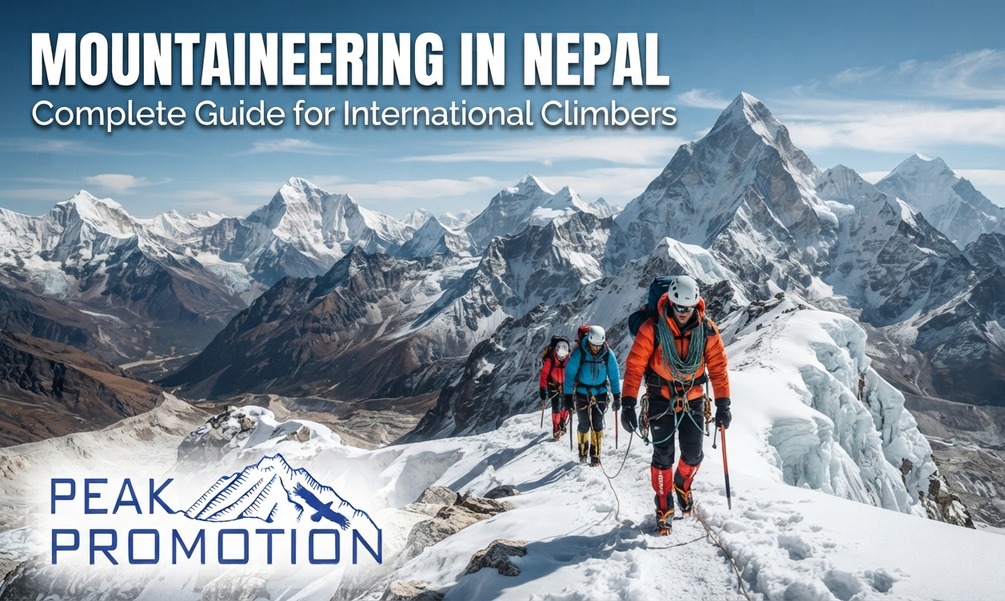
Nepal is one of the world's most important destinations for Himalayan mountaineering. Home to Mount Everest and numerous other high Himalayan peaks, Nepal offers climbing opportunities ranging from high-altitude trekking peaks to technically demanding expeditions.
For international climbers, planning a mountain expedition in Nepal requires more than selecting a peak. Climbers need to understand the mountain, climbing season, permits, route, acclimatization, equipment, insurance, logistics, guides, and local regulations.
This guide explains what international climbers should know before planning a mountaineering expedition in Nepal.
Why Is Nepal Popular for Mountaineering?
Nepal combines exceptional Himalayan geography with decades of mountaineering experience and an established tourism industry.
The country's mountain regions provide different types of climbing experiences. Some peaks can be approached through established trekking routes, while others require extended expeditions through remote valleys and high-altitude terrain.
Nepal's government regulates mountaineering and related tourism activities, while different mountain areas have their own access, conservation, and operational considerations.
The attraction extends beyond the summit. A Nepal expedition can include trekking through Himalayan villages, visiting monasteries, experiencing Sherpa and other mountain cultures, and traveling through some of the world's most dramatic landscapes.
Best Mountains for Mountaineering in Nepal
Nepal offers mountains for climbers with different levels of experience. The appropriate mountain depends on technical ability, previous altitude experience, available time, and expedition objectives.
✦ Mount Everest
8,848.86 metres
Mount Everest is Nepal's most internationally recognized mountaineering destination and the world's highest mountain.
The Nepal-side expedition generally approaches Everest through the Khumbu region, with climbers traveling through locations such as Lukla, Namche Bazaar, and Everest Base Camp before entering the higher mountain route.
An Everest expedition requires extensive preparation, high-altitude experience, acclimatization, and professional expedition logistics.
Important: Everest should not be treated as a beginner climbing objective.
✦ Mount Manaslu
8,163 metres
Manaslu is one of Nepal's major 8,000-metre expedition mountains.
The mountain is located in the Gorkha region and is known for its relatively remote approach and demanding high-altitude environment.
Manaslu has become an important destination for climbers seeking an 8,000-metre Himalayan expedition.
✦ Mount Makalu
8,485 metres
Makalu is one of the world's highest mountains and is recognized for its steep and technically demanding terrain.
The expedition also involves a relatively remote approach to the mountain.
It is generally an objective for experienced mountaineers rather than first-time Himalayan climbers.
✦ Mount Kanchenjunga
8,586 metres
Kanchenjunga is the world's third-highest mountain and is located in eastern Nepal.
Its remote location gives climbers a very different experience from the more heavily traveled Everest region.
Expeditions require careful logistical planning because access and infrastructure are more limited in many parts of the region.
✦ Annapurna I
8,091 metres
Annapurna I is another major Himalayan expedition peak.
The broader Annapurna region is also one of Nepal's most popular trekking destinations, making the area particularly interesting for visitors combining mountaineering with trekking and cultural exploration.
The mountain itself, however, is a serious expedition objective and should not be confused with trekking in the Annapurna region.
Trekking Peaks and Entry-Level Himalayan Climbing
Not every international climber needs to begin with an 8,000-metre mountain.
Nepal has numerous designated climbing peaks that can provide experience in high-altitude mountaineering.
Popular Climbing Peaks:
- Mera Peak
- Island Peak / Imja Tse
- Lobuche
- Chulu East
- Chulu West
- Pisang Peak
- Hiunchuli
- Yala Peak
Nepal's official tourism statistics show significant climbing activity on several of these peaks. For example, 2024 statistics recorded thousands of permitted foreign climbers across peaks including Mera Peak, Island Peak, and Lobuche.
Remember: "Trekking peak" does not mean risk-free. High altitude, weather, terrain, and technical requirements still need to be taken seriously.
When Is the Best Time for Mountaineering in Nepal?
The ideal season depends on the mountain and route.
✦ Spring: March to May
Spring is one of the principal periods for Himalayan expeditions. For major high-altitude mountains, climbers often plan their expedition around the seasonal weather window.
Spring can provide suitable conditions for major Himalayan climbing, although mountain weather remains unpredictable.
✦ Autumn: September to November
Autumn follows the main monsoon period and is another important season for trekking and mountaineering.
Visibility can be excellent and temperatures can be more favorable at lower elevations.
✦ Winter
Winter brings significantly colder conditions and can make high-altitude climbing more demanding.
✦ Monsoon
The summer monsoon affects many parts of Nepal with rainfall, clouds, and difficult trail conditions.
Some Himalayan areas lying in rain-shadow regions have different conditions and can be considered for specialized trekking and expedition itineraries.
Always check current mountain conditions and expedition-specific recommendations rather than choosing dates based only on a general seasonal calendar.
Mountaineering Permits in Nepal
Permits are an essential part of planning a mountain expedition in Nepal.
Nepal's Ministry of Culture, Tourism and Civil Aviation is responsible for policies, regulations, and standards relating to mountaineering and trekking.
Permit Requirements Can Vary According To:
- Mountain
- Altitude
- Season
- Route
- Expedition type
- Applicable regulations
- Government or conservation-area requirements
Nepal also maintains separate arrangements for peaks managed under different regulatory frameworks. Government tourism documentation identifies peaks managed by the Nepal Mountaineering Association and distinguishes different expedition categories.
Because fees and regulations can change, international climbers should verify current permit requirements directly with the relevant Nepalese authorities or through a properly registered expedition operator before booking.
Important: Do not rely on an old blog post for current climbing permit fees.
How Much Does Mountaineering in Nepal Cost?
There is no single price for a Nepal mountain expedition.
The total budget depends heavily on the mountain, expedition duration, group size, support services, and equipment.
Nepal Government Mountaineering Royalty — Foreign Climbers
The following are government mountaineering royalty rates for foreign climbers:
| Mountain / Height | Spring | Autumn | Winter / Summer |
| Everest – Normal Route | USD 15,000 | USD 7,500 | USD 3,750 |
| Everest – Other Routes | USD 10,000 | USD 5,000 | USD 2,500 |
| Other 8,000m+ Mountains | USD 3,000 | USD 1,500 | USD 750 |
| Manaslu | USD 1,500 | USD 3,000 | USD 1,500 |
| 7,501–7,999m | USD 1,000 | USD 500 | USD 250 |
| 7,001–7,500m | USD 800 | USD 400 | USD 200 |
| 6,501–7,000m | USD 500 | USD 250 | USD 200 |
| Ama Dablam (6,812m) | USD 1,000 | USD 1,000 | USD 500 |
| Below 6,500m | USD 350 | USD 175 | USD 175 |
Source note: These figures are published by the Nepal Department of Tourism. Fees and regulations can change, so climbers should verify the applicable rates before planning an expedition.
Government royalty is only one component of the expedition budget. It should not be confused with the complete cost of a Nepal mountain expedition.
Other Major Expedition Expenses:
| Expense | What It May Cover |
| International Flights | Travel to and from Nepal |
| Visa | Nepal entry requirements |
| Climbing Permit | Mountain-specific authorization |
| Expedition Operator | Logistics and administration |
| Guide / Sherpa Support | High-altitude climbing support |
| Accommodation | Hotels, lodges, and camps |
| Food | Trekking and expedition meals |
| Transportation | Flights, vehicles, and mountain logistics |
| Equipment | Personal and technical equipment |
| Insurance | Travel, medical, and rescue coverage |
| Communications | Satellite or expedition communications |
| Emergency Services | Depending on circumstances and insurance |
A trekking peak and an 8,000-metre expedition can have dramatically different budgets.
For this reason, international climbers should request a detailed quotation showing what is included and excluded rather than comparing headline prices alone.
How to Prepare for Mountaineering in Nepal?
Physical preparation should begin well before arriving in Nepal.
Training should focus on endurance, strength, hiking ability, and—where necessary—technical climbing skills.
For a serious expedition, climbers should have appropriate experience with the terrain and equipment required by their chosen mountain.
Preparation Can Include:
- Long-distance hiking
- Uphill training
- Cardiovascular conditioning
- Leg and core strength
- Hiking with an appropriate pack
- Technical climbing training
- Glacier-travel training where relevant
- Rope-system training
- Cold-weather preparation
The required preparation depends heavily on the mountain.
Acclimatization and Altitude
Acclimatization is one of the most important elements of Himalayan climbing.
As altitude increases, the available oxygen decreases. The body needs time to adapt.
A responsible expedition normally incorporates gradual elevation gain and planned acclimatization.
Climbers should understand the symptoms of altitude-related illness and follow instructions from qualified expedition personnel.
Physical fitness does not eliminate altitude-related risk.
What Equipment Do You Need?
The equipment required depends on the mountain.
A technical Himalayan expedition may require:
✦ Clothing
- Base layers
- Insulating layers
- Down or synthetic insulated jacket
- Waterproof shell
- Technical trousers
- Warm gloves
- Hat
- Sun protection
✦ Mountaineering Equipment
Depending on the route:
- Mountaineering boots
- Crampons
- Ice axe
- Climbing harness
- Helmet
- Carabiners
- Ascender
- Descender
- Technical ropes
- Trekking poles
✦ Personal Equipment
- Sleeping bag
- Backpack
- Duffel bag
- Headlamp
- Sunglasses
- Goggles
- Water bottles
- Personal first-aid supplies
- Sunscreen
- Personal medication
Your expedition operator should provide a mountain-specific equipment checklist.
Do You Need a Guide for Mountaineering in Nepal?
For serious Himalayan expeditions, professional local support is an important part of expedition planning.
Nepal has extensive experience supporting international mountaineers.
Depending on the Expedition, Local Mountain Professionals Can Support
- Route logistics
- Camp management
- Fixed ropes
- High-altitude logistics
- Equipment movement
- Weather coordination
- Emergency procedures
- Acclimatization planning
When choosing an operator, international climbers should verify registration, experience, staff qualifications, safety procedures, and exactly what is included in the expedition package.
Travel Logistics for International Climbers
Most international mountaineering itineraries begin in Kathmandu.
Climbers Typically Use Kathmandu To:
- Arrive internationally
- Meet expedition teams
- Complete preparations
- Check equipment
- Complete administrative procedures
- Purchase or rent selected equipment
- Begin their journey toward the mountain
Depending on the destination, the approach may involve road travel, domestic aviation, trekking, or a combination of transport methods.
Because mountain flights can be affected by weather, international travelers should include contingency time in their itinerary.
Insurance for Himalayan Expeditions
Insurance deserves special attention.
An ordinary travel insurance policy may not automatically cover high-altitude mountaineering or helicopter evacuation.
Before Traveling, Confirm:
- Maximum altitude covered
- Mountaineering activities covered
- Medical treatment coverage
- Emergency evacuation
- Helicopter rescue
- Repatriation
- Trip cancellation
- Policy exclusions
Keep digital and physical copies of your policy and emergency contact information.
Safety During a Nepal Mountain Expedition
Himalayan mountaineering involves inherent risks.
Potential Hazards Include:
- Extreme cold
- High altitude
- Avalanches
- Crevasses
- Rockfall
- Icefall
- Falls
- Rapid weather changes
- Exhaustion
- Navigation difficulties
Climbers should monitor weather and route conditions and follow decisions made by qualified expedition leaders.
One of the most important principles in mountaineering is knowing when conditions require a change of plan.
The summit is an objective; returning safely is the priority.
Responsible Mountaineering in Nepal
Nepal's mountains are environmentally and culturally significant.
International climbers should minimize their environmental impact by:
- Managing waste responsibly
- Avoiding unnecessary plastic
- Following conservation rules
- Respecting local communities
- Respecting religious sites
- Staying on established routes where appropriate
- Supporting responsible tourism
- Treating guides and porters fairly
Responsible mountaineering helps protect the Himalayan environment and supports the communities that make expeditions possible.
Respecting Himalayan Culture
A mountain expedition is also a journey through local communities.
International visitors should respect local customs and traditions.
Simple practices include asking before photographing people, respecting monasteries and religious sites, learning basic local greetings, and following community norms.
Taking time to understand the communities along the route can make a Himalayan expedition more meaningful.
How to Choose a Mountaineering Company in Nepal?
Before selecting an expedition operator, ask the following questions.
• Is the Company Properly Registered?
Verify its legal status and relevant authorization.
• Does It Have Experience on Your Mountain?
Experience on one trekking route does not necessarily mean experience on a technically demanding expedition peak.
• Who Will Lead the Expedition?
Ask about guide qualifications, high-altitude experience, and responsibilities.
• What Is Included?
Get a written breakdown covering:
- Permits
- Accommodation
- Food
- Transportation
- Staff
- Equipment
- Base-camp services
- Insurance
- Rescue arrangements
• What Are the Additional Costs?
Ask specifically about unexpected accommodation, transportation, equipment rental, extra days, and other potential charges.
Mountaineering in Nepal: International Climber Checklist
Before departure, review the following checklist.
✦ Travel
- Passport
- Nepal visa
- International flights
- Domestic travel
- Flexible itinerary
✦ Expedition
- Mountain selected
- Route understood
- Permit requirements confirmed
- Expedition company verified
- Guide arrangements confirmed
✦ Health and Safety
- Appropriate insurance
- High-altitude coverage
- Emergency contacts
- Rescue arrangements
- Personal medical supplies
✦ Equipment
- Technical equipment
- Cold-weather clothing
- Boots
- Sleeping system
- Personal equipment
- Equipment inspection
✦ Preparation
- Physical training
- Technical training
- Altitude preparation
- Emergency procedures
- Weather awareness
Frequently Asked Questions (FAQ's):
Q. What Is the Best Mountain to Climb in Nepal?
There is no single mountain appropriate for every climber. The choice depends on previous climbing experience, technical ability, altitude experience, available time, and expedition objectives.
Q. What Is the Best Season for Mountaineering in Nepal?
Spring and autumn are major mountaineering seasons, but the appropriate season varies by mountain and route.
Q. Do International Climbers Need a Permit in Nepal?
Climbing permits and other authorizations depend on the specific mountain and applicable regulations. Current requirements should be verified before an expedition.
Q. How Much Does a Nepal Mountain Expedition Cost?
Costs vary significantly depending on the mountain, expedition duration, permits, support staff, transportation, equipment, and services included.
Q. Can Beginners Go Mountaineering in Nepal?
Some climbing peaks can provide an introduction to Himalayan mountaineering, but even relatively accessible peaks require preparation. Beginners should select an objective appropriate to their experience and work with qualified professionals.
Q. Can I Climb Mount Everest Without Previous Mountaineering Experience?
Everest is an extreme high-altitude expedition and is not generally considered an appropriate first mountaineering objective. Climbers should develop relevant technical and high-altitude experience before considering such an expedition.
Q. Is Mountaineering in Nepal Dangerous?
Himalayan mountaineering carries inherent risks including altitude, weather, terrain, and cold. Proper preparation, acclimatization, professional support, and conservative decision-making can help manage—but cannot eliminate—those risks.
Final Thoughts
Mountaineering in Nepal offers international climbers an opportunity to experience some of the world's most remarkable high-altitude environments.
From Everest and Manaslu to Makalu, Kanchenjunga, Annapurna, and the country's many climbing peaks, Nepal provides a broad range of expedition possibilities.
The key to a successful expedition is preparation.
Choose a mountain that matches your experience, understand current regulations, allow adequate time for acclimatization, obtain appropriate insurance, use qualified support, and respect the environment and communities along the route.
The Himalayas should be approached with ambition — but also with preparation, humility, and respect.